
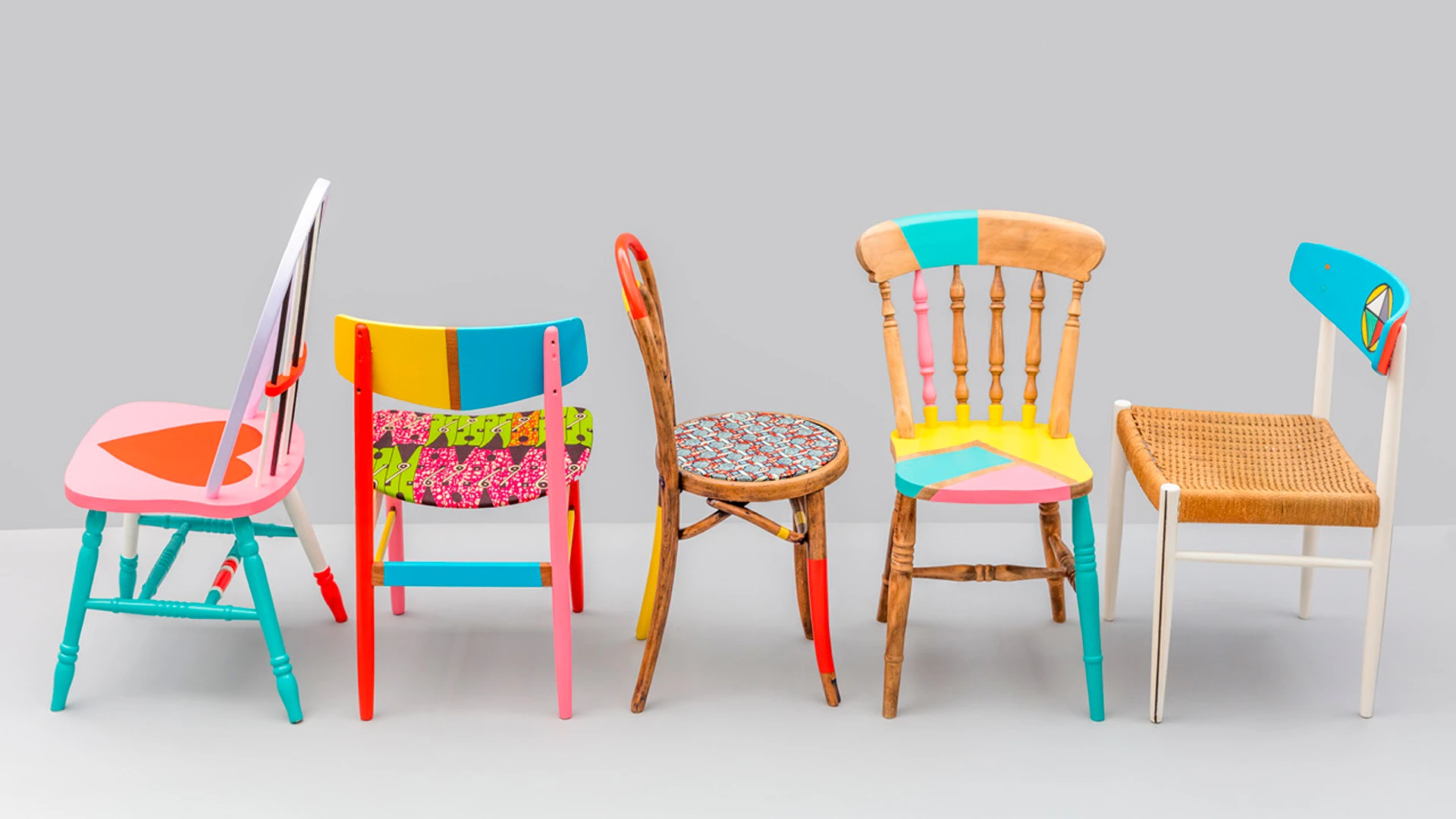
Designing With What Already Exists
19-Mar-2026
Photo Courtesy of Yinka Ilori
Challenging disposability and leveraging reuse.
Our new 4-part series - Long Live Furniture! - explores the essential role of our industry in advancing a more sustainable world by rethinking production, materials, and value. We’ll introduce you to innovators who are leveraging existing resources, designing for longer lifecycles, and reconnecting with local, low-impact manufacturing.
Through case studies and real-world examples of circular design strategies -- an approach to design that focuses on ‘designing out waste and pollution,’ ‘keeping materials in use,’ and ‘regenerating natural ecosystems’ -- this series will highlight the potential to transform circular thinking into tangible products and processes.
This 1st of four articles will show how designers, makers, and manufactures are working with overlooked organic materials and industrial waste streams - and exploring craftsmanship – to challenge disposability and leverage reuse.
Reuse as Creative Opportunity
Creating new products without further depleting Earth's natural resources is a key challenge in sustainable design -- in general. The same is true for furniture. One path lies in reusing discarded materials instead of extracting virgin resources. Extraction and processing of natural resources make up half of total global greenhouse gas emissions and over 90% of water stress and biodiversity loss, according to the International Resource Panel.
By contrast, reuse contributes to climate change mitigation by preventing resource reduction and diverting products and materials from landfills and incineration -- thus preventing associated emissions and reducing energy demand.
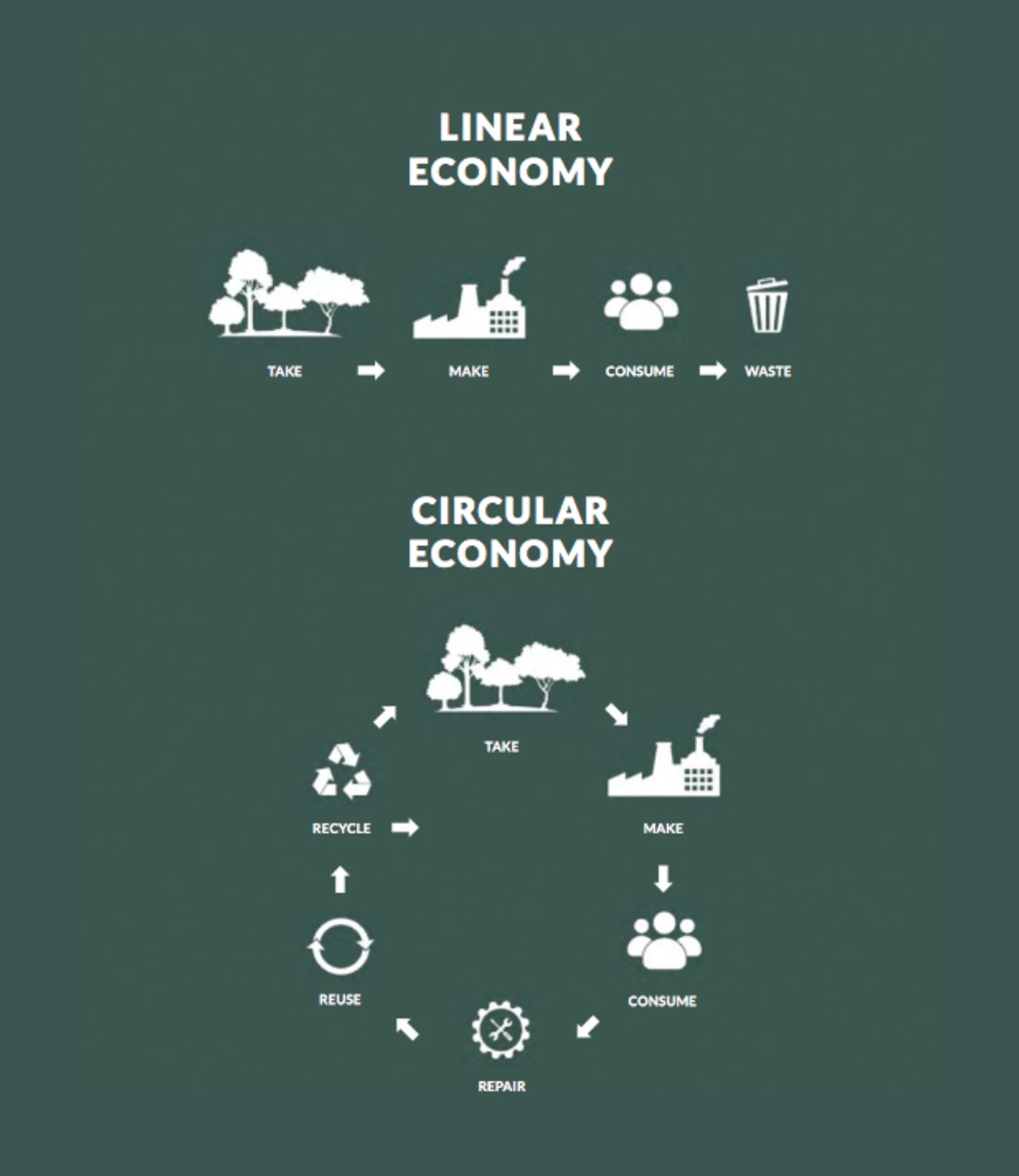
Linear Economy vs Circular Economy infographic from mebl’s Circular Design Glossary: Furniture & Furnishing.
This article spotlights three reuse pathways in designing and building furniture:
- Organic waste,
- Industrial byproducts, and
- Craft-based transformation
Organic Waste: a rich biomaterial resource
Fallen trees, leaves, volcanic lava, manure, and agricultural byproducts are finally earning recognition as organic resources rather than simply as waste. Drawn from abundant, naturally replenishing sources, these organic materials emit far less CO2 during production and processing than virgin resources extracted from the earth -- such as timber or minerals, or synthetic materials like plastics. Organic materials also biodegrade easily, leading to reduced environmental impact.
Sourced close to home, an additional benefit of organic resources is in connecting manufacturers to local communities -- this results from tapping nearby, regional abundance, which in turn cuts transport emissions, preserves time-honored traditions, and delivers regenerative alternatives.
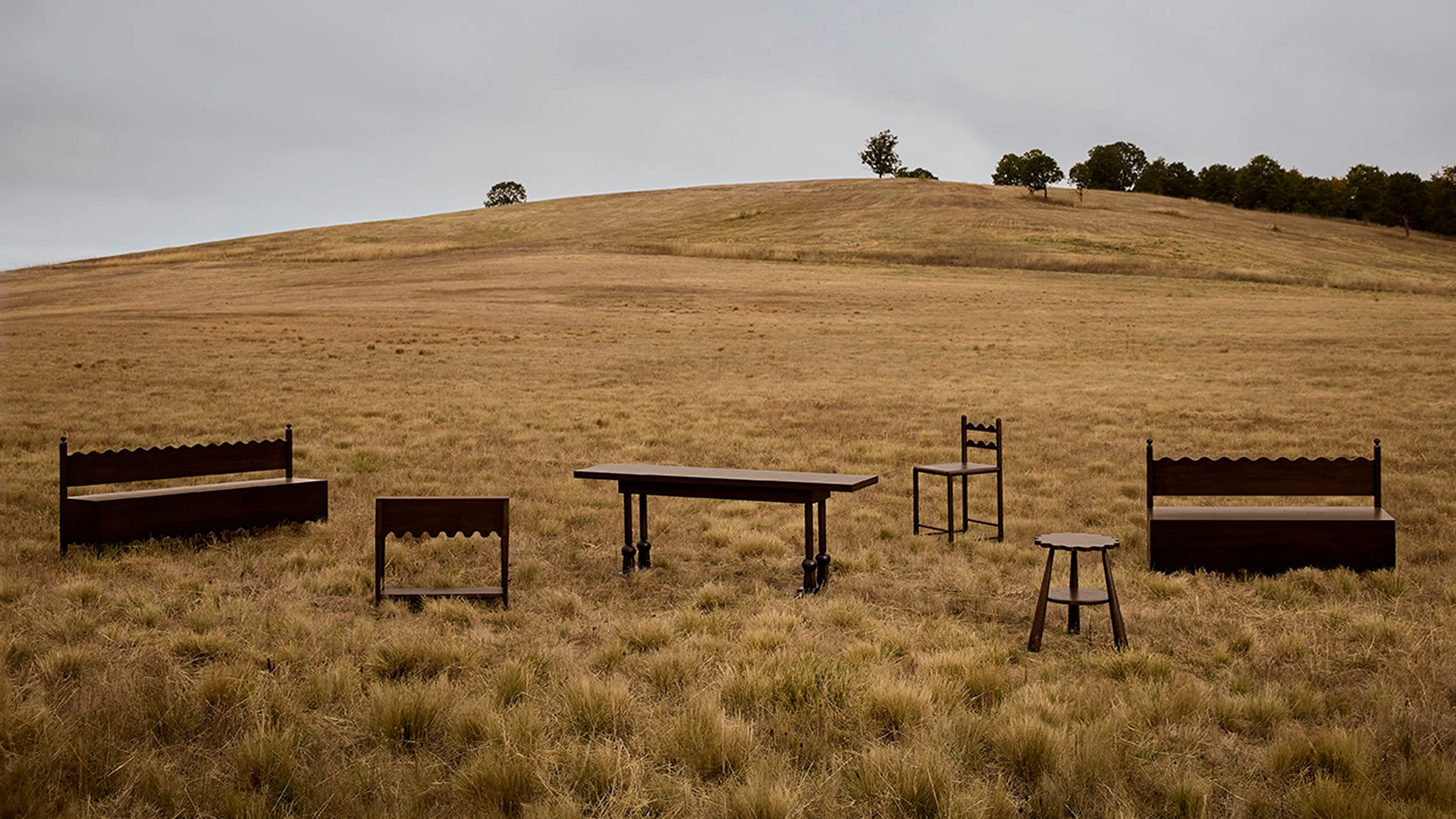
Light and Dwell’s furniture collection -- crafted from fallen trees.
In Oregon, Light and Dwell, an interior design studio, launched a handmade furniture collection crafted entirely from white oak gathered from naturally fallen local trees -- salvaged sustainably rather than harvested by cutting live ones. These trees have usually fallen due to storms, aging, or hazard removal. Based in proximity to Oregon's oak savannas, Light and Dwell combines local material reuse with high-level craftsmanship to produce heirloom-quality furniture.
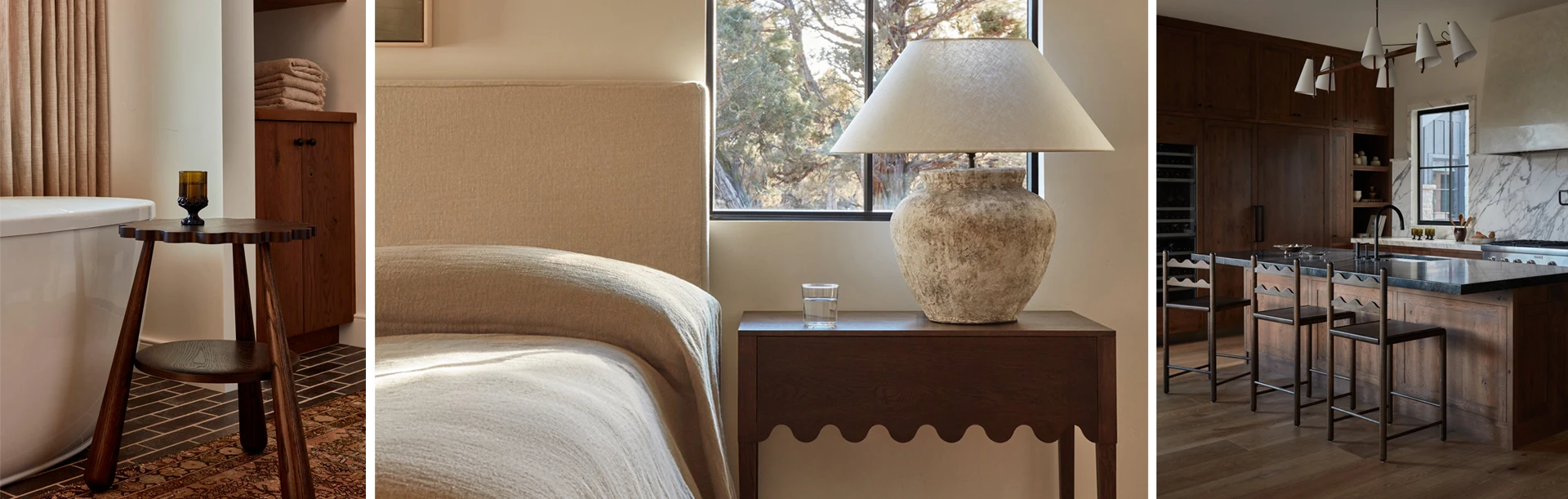
Furniture for the home by Light and Dwell -- Louis Stool (L), Charli Nightstand (C), and Frankie Stool (R).
Shifting to the east coast, NYCitySlab -- a company founded and operated by Robert Rising -- is also devoted to making beautiful furniture out of fallen trees. In New York City, when trees are cut down, they are most often turned into mulch or firewood or dumped into landfill.
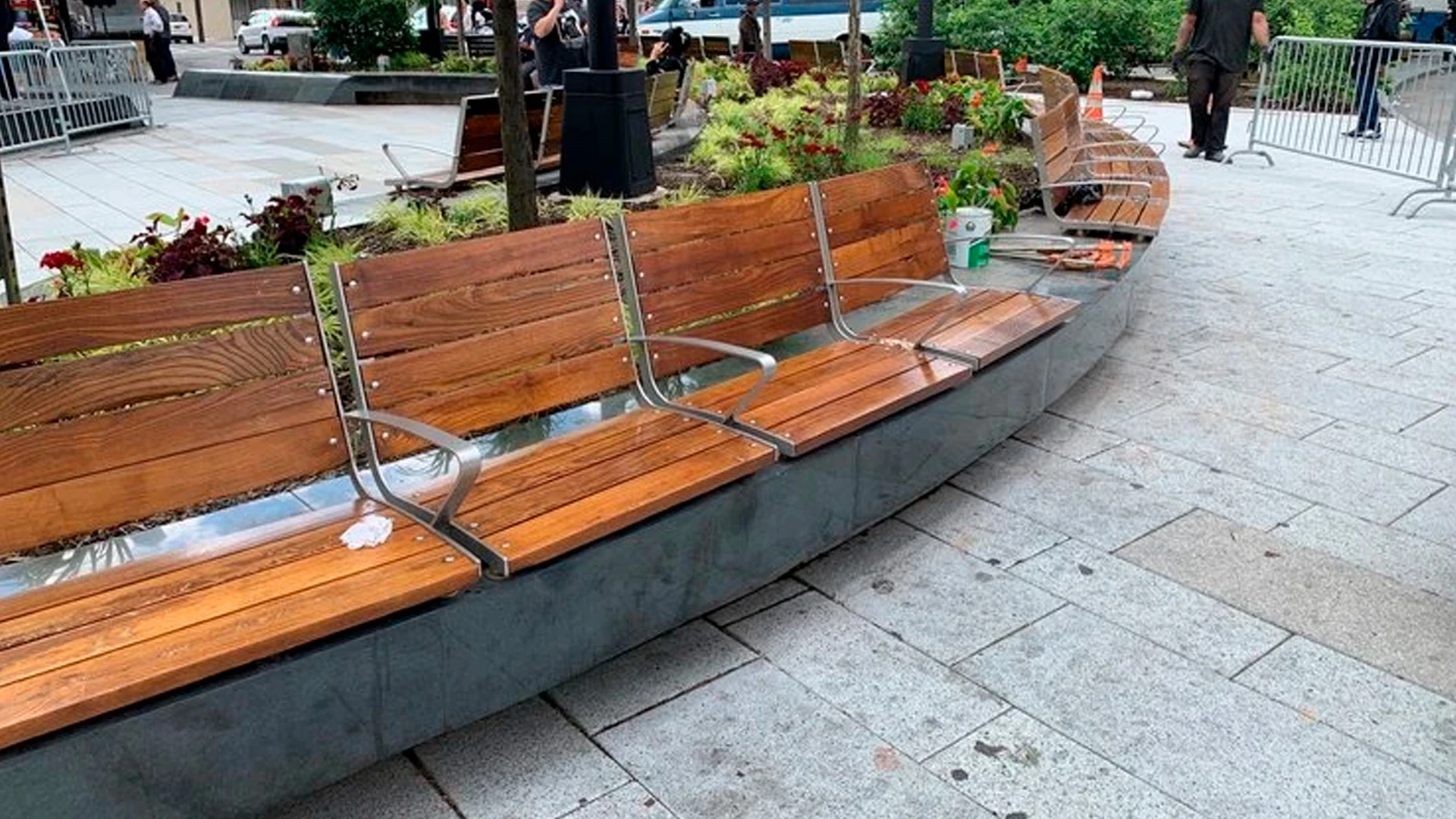
Urban furniture by NYCitySlab, made from downed NYC trees.
NYCitySlab’s approach is to mill the downed trees into wood for furniture. “We save trees that come from parks and yards,’’ says Rising, “and transform these great materials into something that can last a lifetime.’’ NYCitySlab uses over 25 species of local New York City and Northeast native trees. Learn more about NYCitySlab in our Maker Portrait.
In addition to building furniture from fallen-tree wood, another important example of circular timber usage comes from looking at the resources left behind in a forest when trees are harvested.
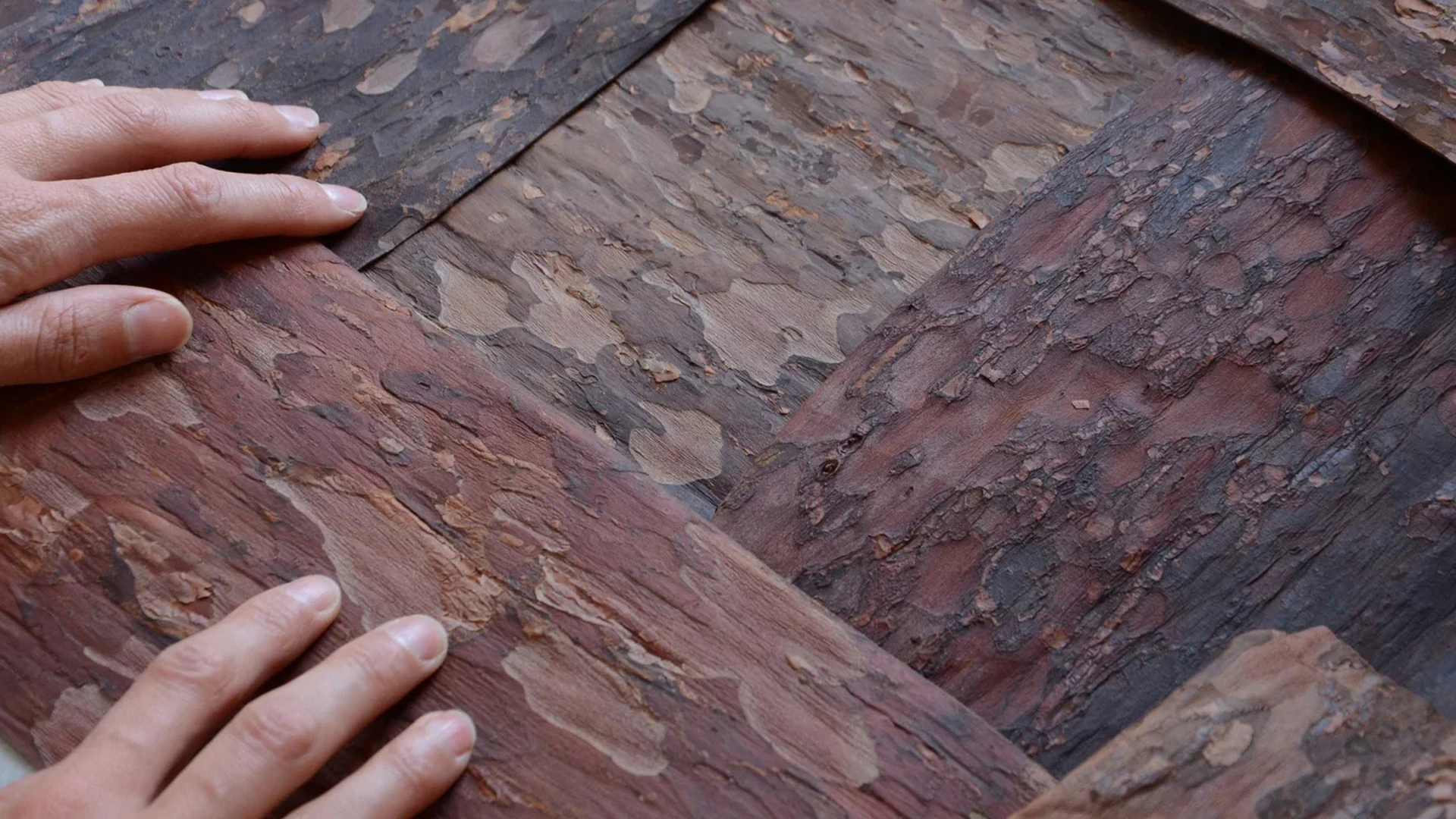
The original appearance of PineSkin -- made from the inner bark of Pine trees -- carries subtle shifts in shades, ranging from earthy brown to pink, from deep terracotta to ash-grey. And they carry a scent of wood.
PineSkin, by designer Sarmīte Poļakova, turns inner pine bark -- a timber industry leftover -- into a flexible, leather-like material. The process requires bio-softening, pigments, and wax. PineSkin has a variety of applications, ranging from walls to surfaces to veneer alternatives. Poļakova’s recent Reminiscent collection explored PineSkin in furniture. The collection is comprised of nightstands and seats.
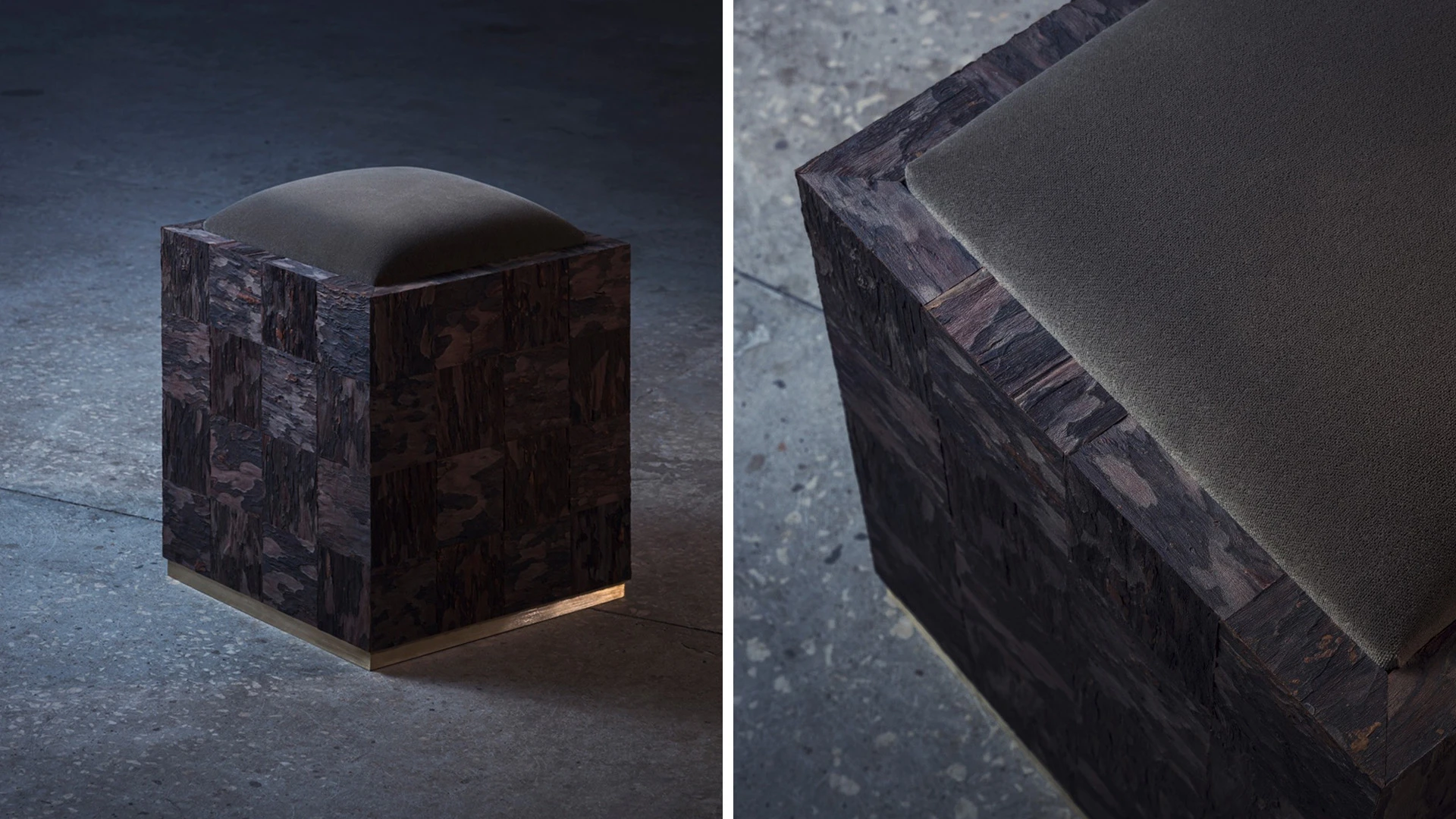
Reminiscent furniture collection, made from PineSkin, by designer Sarmīte Poļakova.
On a broader level, Poļakova explains that PineSkin aims to create alternative production standards for the tree cutting industry with less emphasis on lumber production. This is possible, she notes, by collaborating with a network of small-scale tree cutters to retrieve the bark as they perform seasonal cutting. PineSkin can also drive the production of crafts that generate revenue for local communities and appreciation for materials from the local forest.
Poļakova also explains that her research into discarded pine parts can contribute to creating new standards for the wood industry -- prioritizing bark collection over maximum lumber output. This requires collaboration with small-scale and seasonal tree cutters, who can supply bark from their routine work.
Another important stream of organic resources for furniture production comes from agricultural-based industries. The Dole Sunshine Company, a major pineapple producer, partnered with Ananas Anam to produce Piñatex. This material is derived from pineapple leaves, a by-product of pineapple harvesting -- forming the basis of a plant-based leather alternative.
Historically, after a pineapple harvest, the leaves are burnt. By contrast, as creating Piñatex replaces burning, each linear meter reduces the equivalent of 12kg of CO2 emissions associated with incineration. A further advantage is that this material doesn’t require extra land, water, or pesticides to grow -- and it spurs additional work and income opportunities for local farm communities.

A farmer collecting pineapple leaves in the Philippines. Ananas Anam uses a proprietary method to process the pineapple leaf fibres to premium textile grade, with no bleaching, pulping and or dyeing.
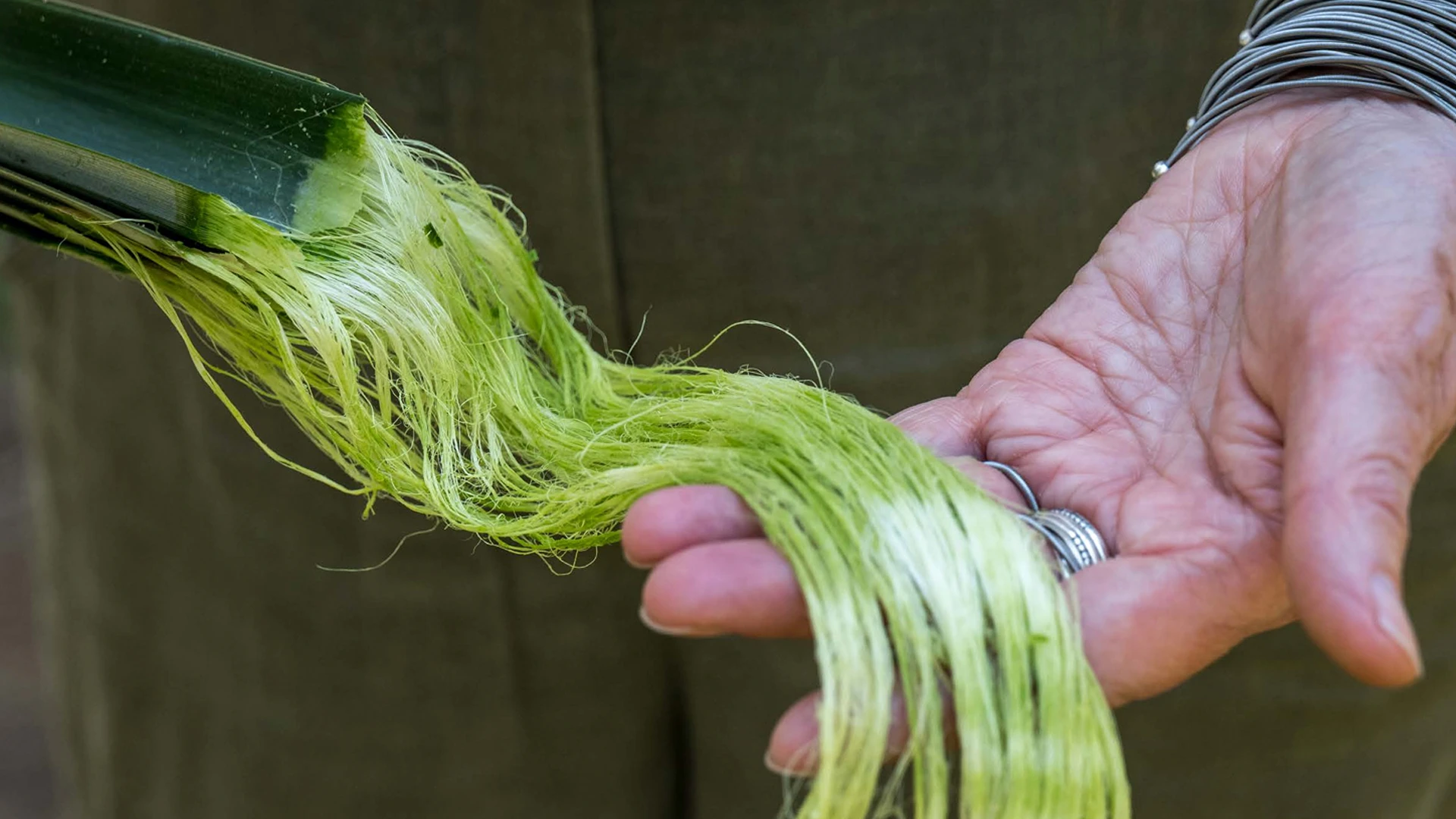
Ananas Anam uses a proprietary method to process the pineapple leaf fibers to premium textile grade, without bleaching, pulping or dyeing.
In furniture applications, designer Tamasine Osher chose Piñatex for his Purton chair -- which was awarded 'Best Statement Piece' in the Peta Vegan Homeware Awards. The Purton chair is cruelty-free to animals.
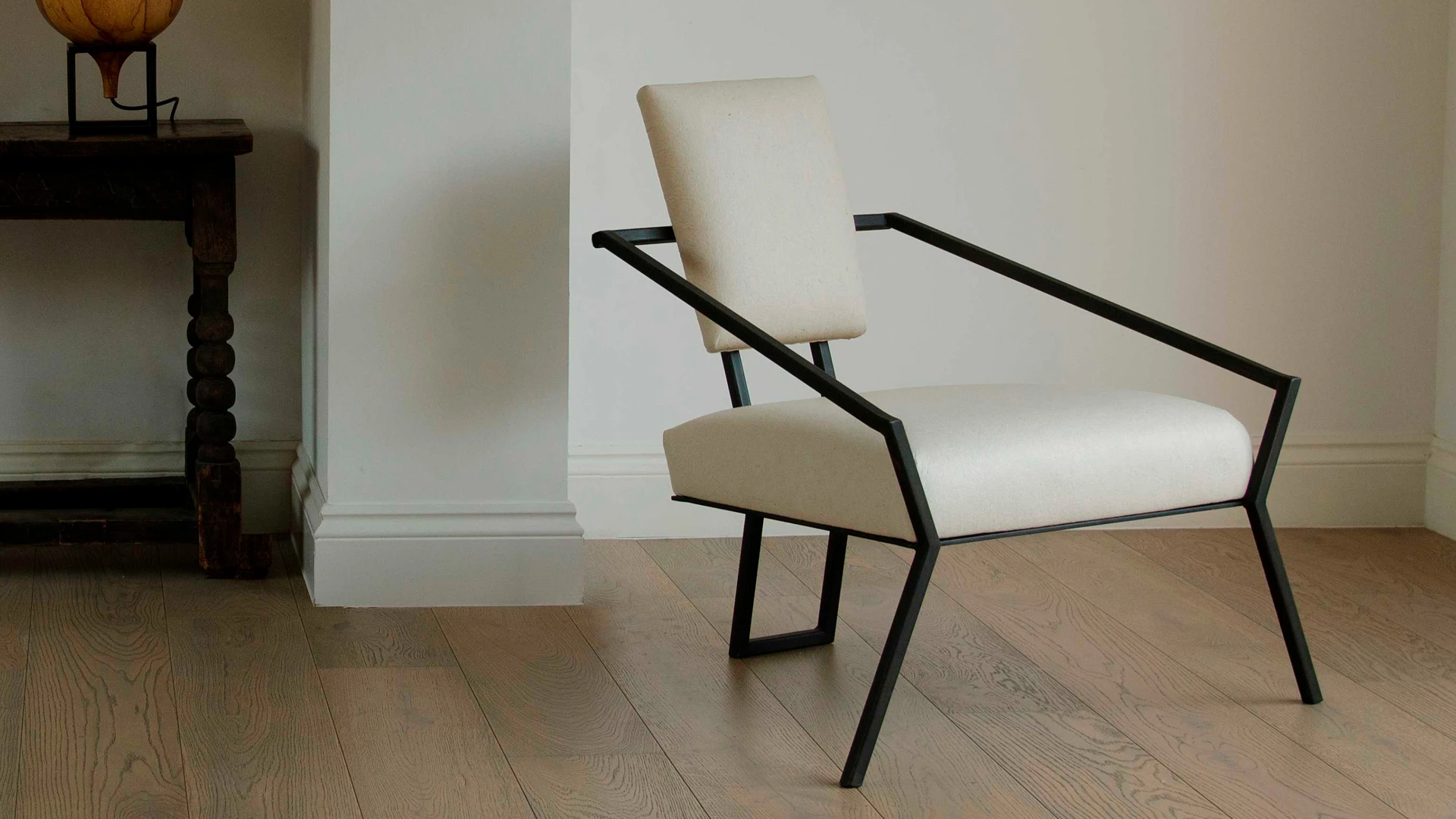
The Purton chair by Tamasine Osher, with Piñatex leather upholstery -- celebrating animal-free luxury and environmental responsibility.
Industrial Waste: untapped design potential
Industrial waste is a problem across many industries -- from construction to electronics to fashion to furniture. Hazardous chemicals, heavy metals, plastics, and electronic waste all contribute to air and water pollution and soil degradation.
While recycling waste materials helps, it also consumes a lot of energy. In contrast, direct reuse saves more while curbing harm. Designers, makers and brands, as well as researchers, are exploring ways to reuse heterogeneous surplus materials -- such as mixed, unsorted leftovers like fabric offcuts, wood scraps or plastic trimmings -- in new products, such as furniture.
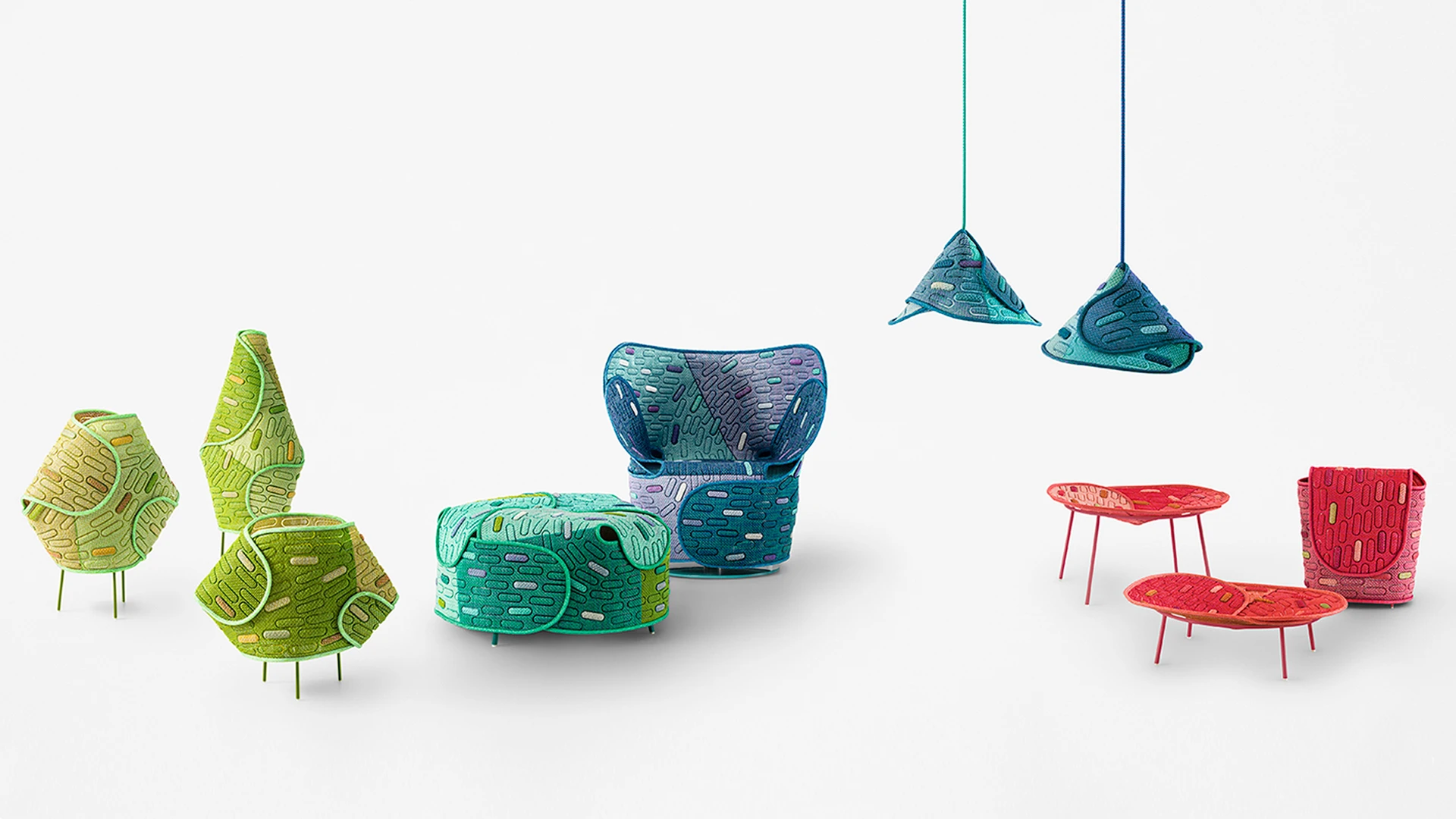
The Hana-arashi furniture collection by Paola Lenti and Japanese designer Oki Sato.
The Hana-arashi furniture collection uses material offcuts and leftovers from production of Paola Lenti furniture -- transforming the offcuts and leftovers into playful armchairs, poufs, lamps and baskets. This collection emerged from a creative collaboration between Italian designer Paola Lenti and Japanese designer Oki Sato, founder of the Nendo design studio.
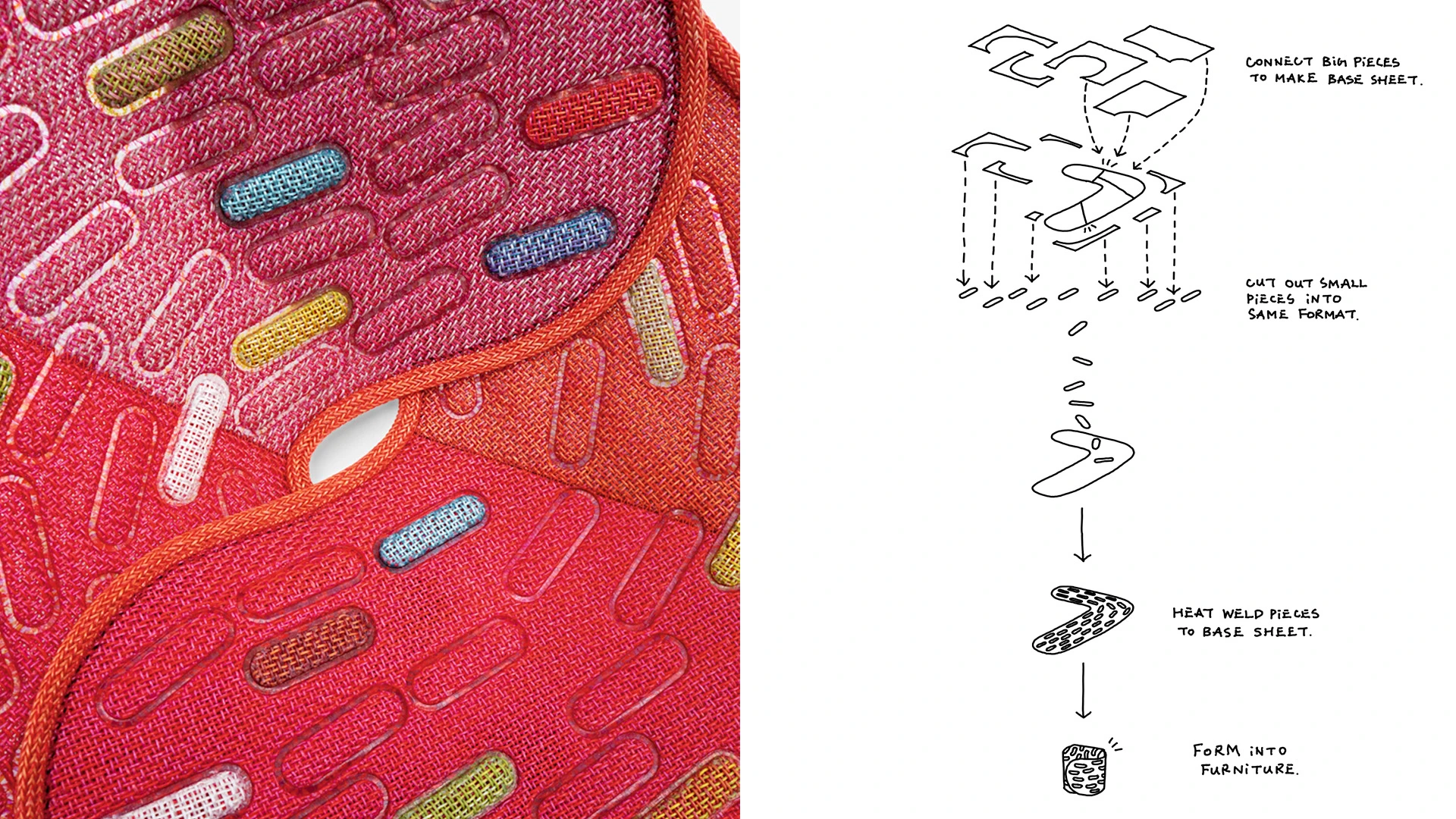
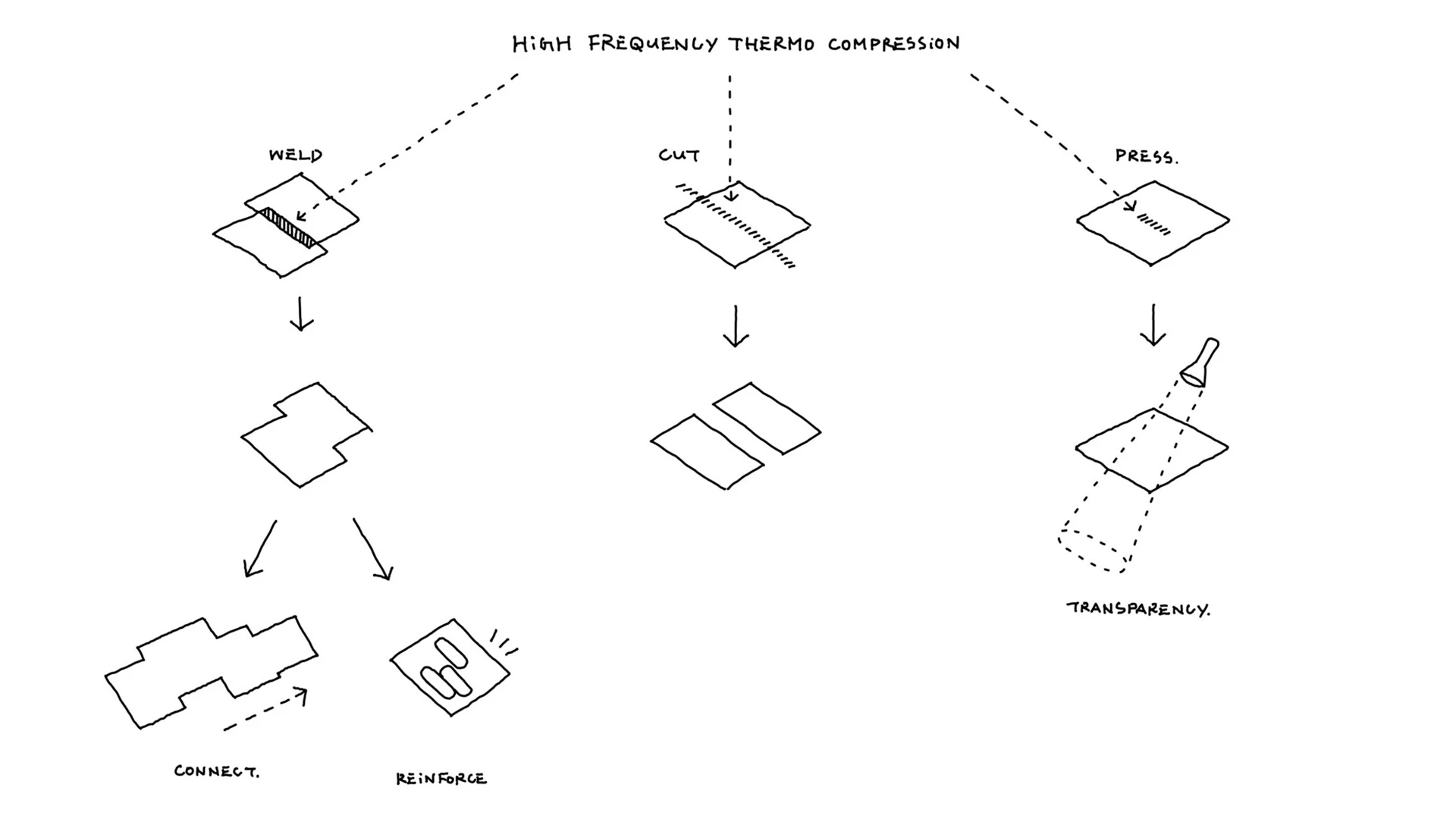
Oki Sato’s sketch of the Hana-arashi furniture collection in development.
At the heart of the project is a 100% polypropylene mesh, a recyclable mono-material - a single, uniform plastic type, developed by Paola Lenti. This mesh is available in 180 colors, designed to be durable, water-resistant and long-lasting outdoors. Thanks to the low melting point of the fabric, fragments can be overlapped, welded and shaped without additional glues or threads, preserving both recyclability and structural strength over time.
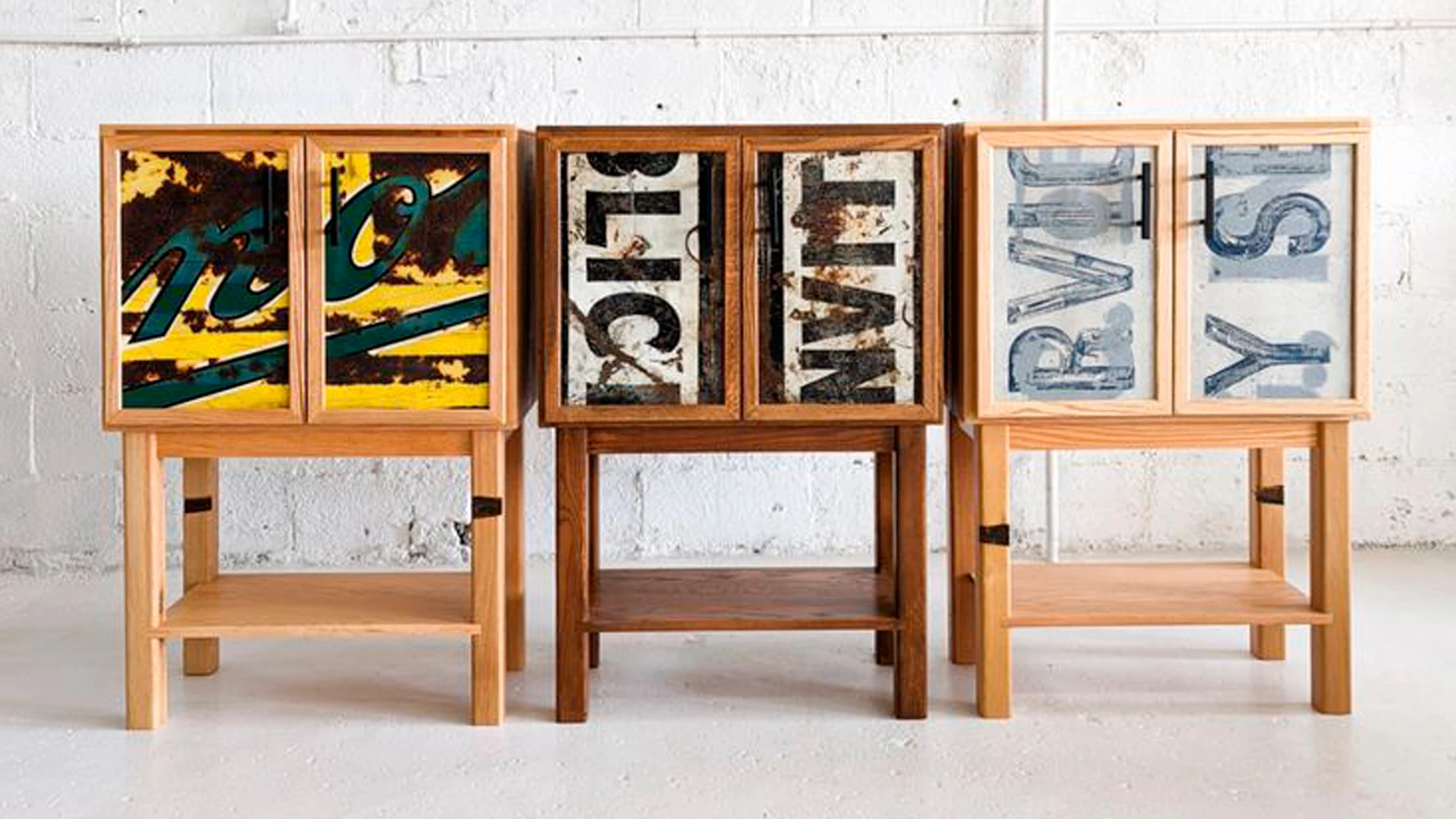
Woodward Throwbacks’ upcycled furniture is made from salvaged materials found throughout Detroit and surrounding areas.
In Detroit, Woodward Throwbacks' Bo Shepherd and Kyle Dubay reimagine salvaged wood, stone, metal, acrylic, glass, and even party signs. "The most sustainable design reimagines what's already around us," they say. Learn more about Woodward Throwbacks in our Changemaker interview.
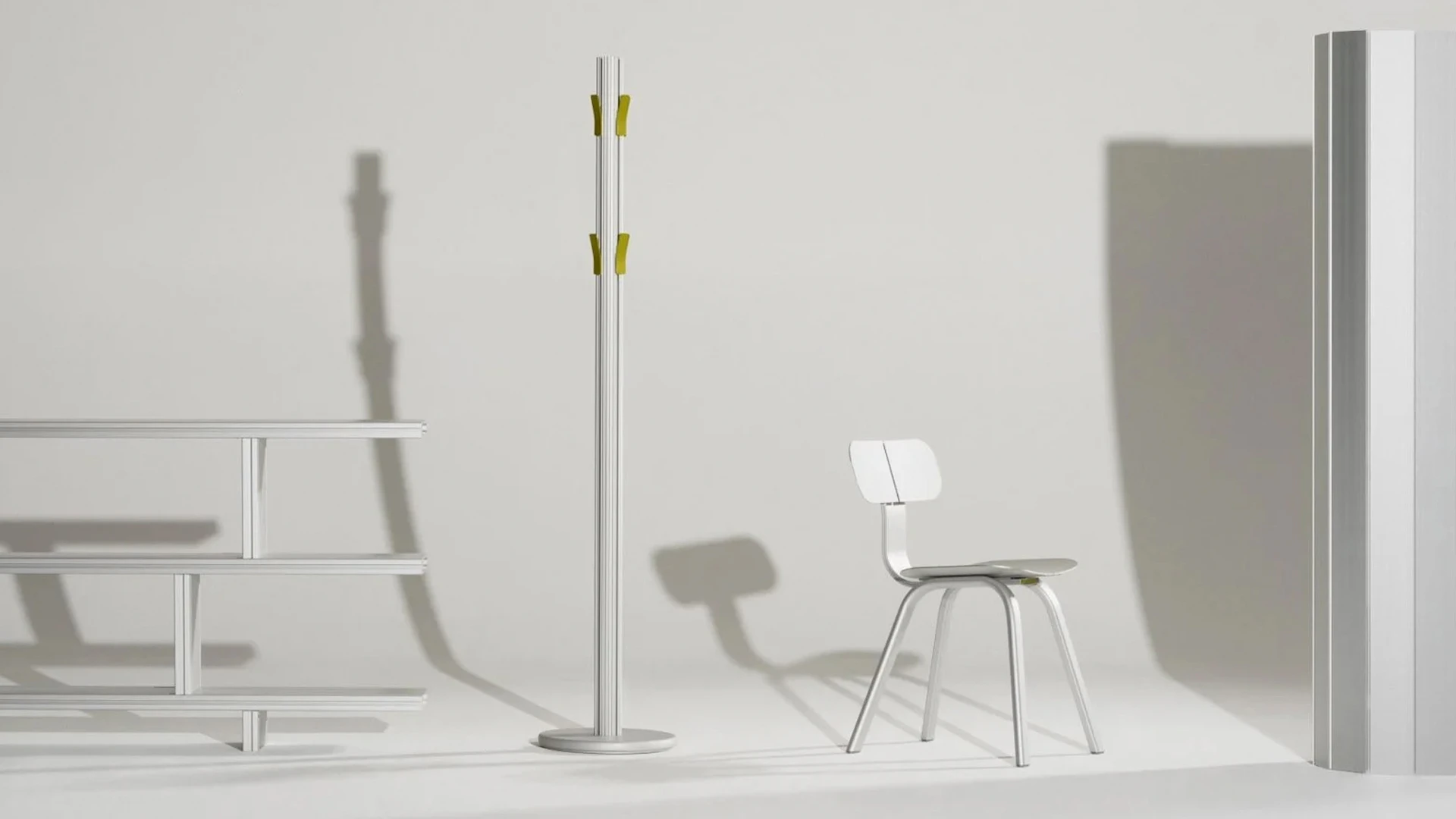
Furniture and furnishing collection built with Hydro CIRCAL 100R -- made entirely from 100% post-consumer scrap.
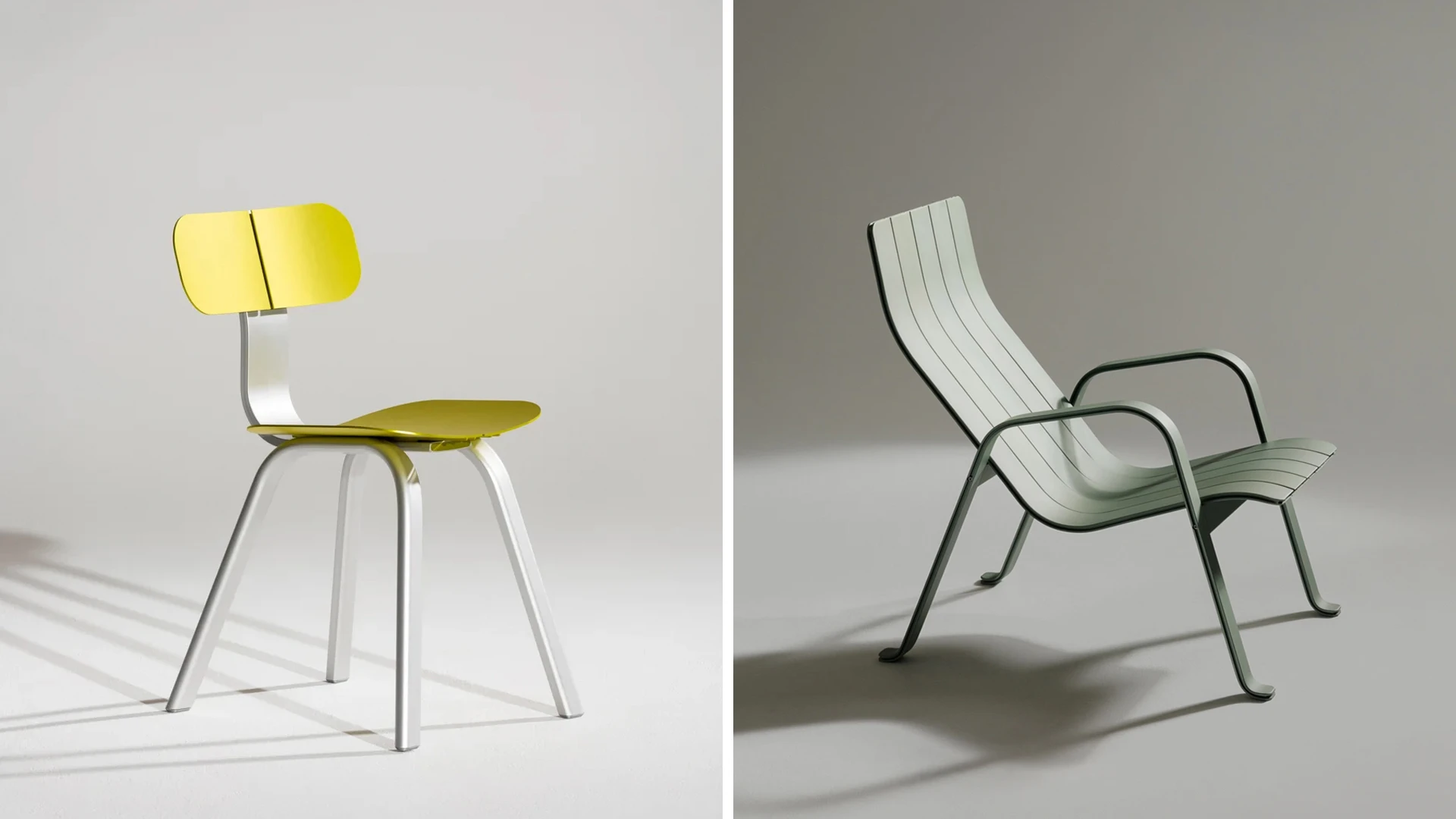
John Tree's Billet Chair (L) and Profil Seating by Keiji Takeuchi (R).
Hydro -- a Norwegian aluminium and renewable energy company -- is at the forefront of demonstrating the potential of highly circular metals in furniture production. They have developed the world’s first commercially available aluminum with a carbon footprint below 0.5 kg CO₂e per kg. This is 97% lower than the global average for primary aluminum. Hydro CIRCAL 100R is made entirely from 100% post-consumer scrap.
To rethink aluminum as a regenerative resource, the firm of Lars Beller Fjetland teamed up with seven acclaimed designers. Under Beller Fjetland’s art direction, the design team was tasked with creating objects exclusively from Hydro CIRCAL 100R.
They delivered a diverse array of designs, including furniture and furnishings. Overall, the project demonstrates how aluminum can be recycled endlessly without losing quality; remarkably, 75% of all aluminum ever produced is still in circulation.
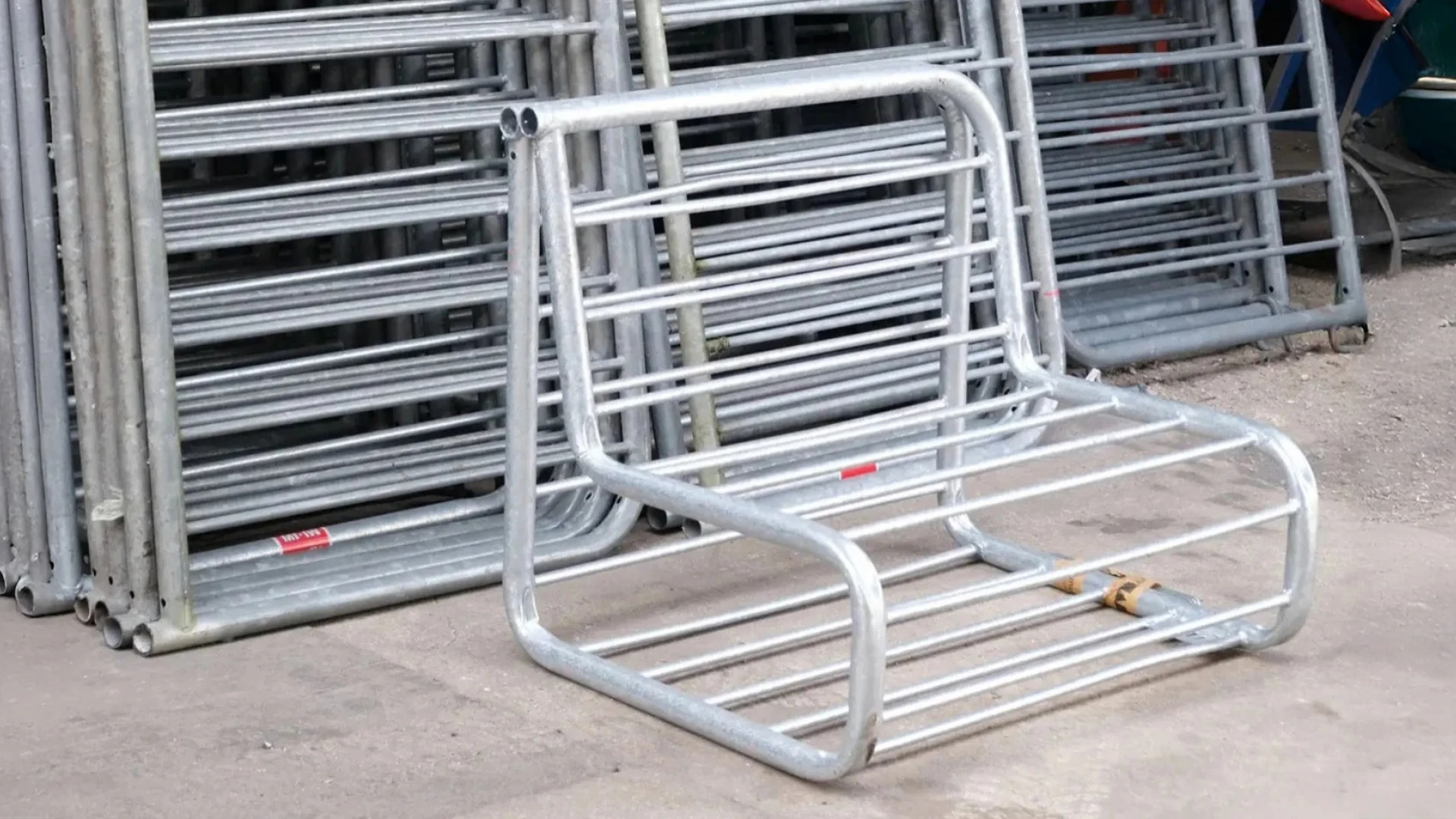
Discarded steel barricades transformed into the Bultan seating system by Studio Maximum.
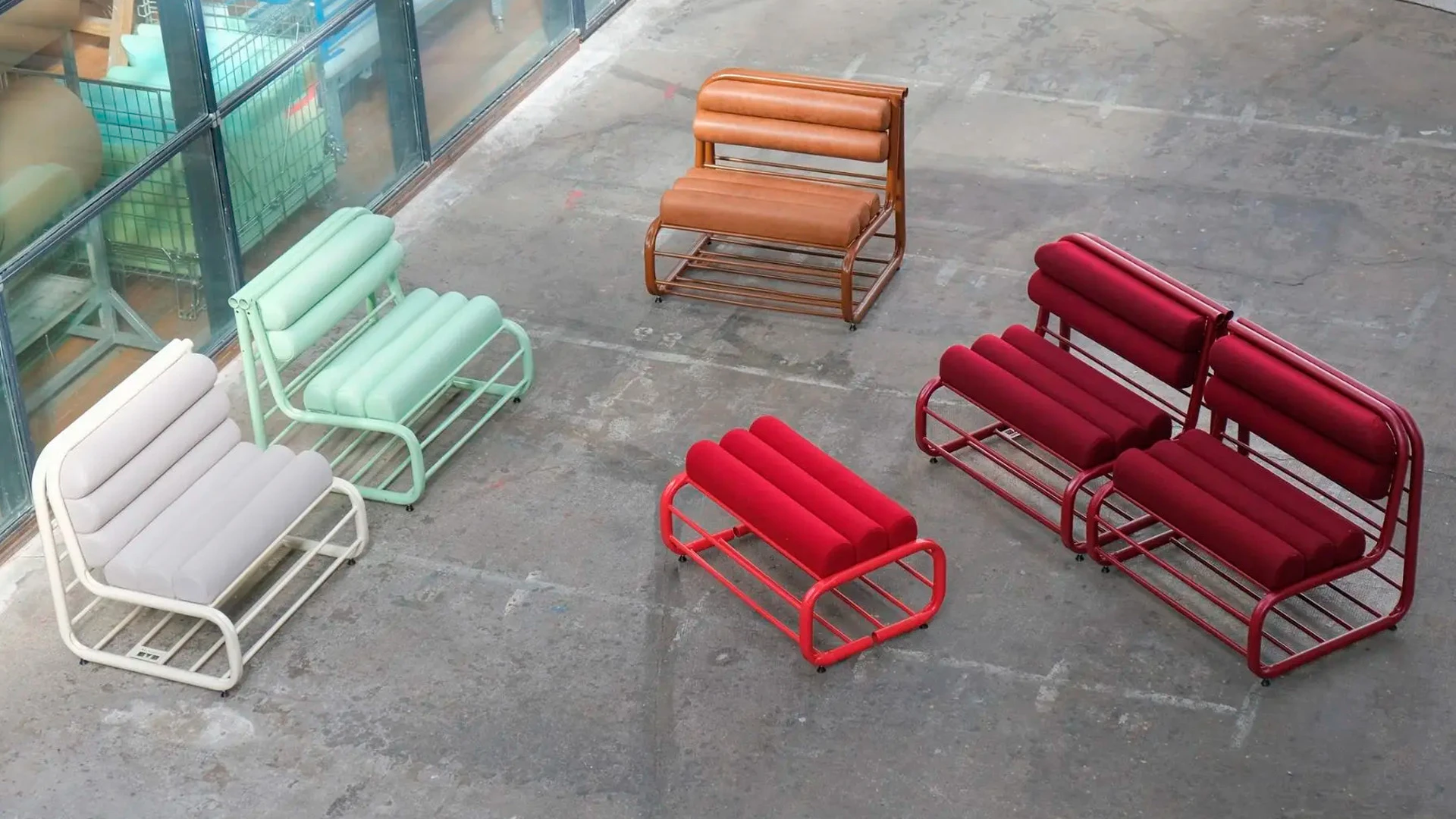
Studio Maximum transforms materials destined for the landfill into long-lasting urban furniture.
Maximum, a French design studio, transforms discarded steel barricades into furniture for public spaces. Metal barricades used for the project can no longer stand upright due to crushed or damaged bases. As a result, the entire frame often ends up in the landfill.
With a few bends, the studio transforms these busted barricades into the core structure of the Bultan seating system. By pairing the steel structure with knotted pine offcuts, undersized foam scraps, and automotive fabric samples, the studio transforms materials destined for the landfill into colorful furniture that can last a lifetime.
Craft-Based Reuse: Transformative Artistry
The power of imaginative craftsmanship can transform the most unexpected materials -- from car scraps to abandoned bricks -- into lasting functional and sculptural furniture.
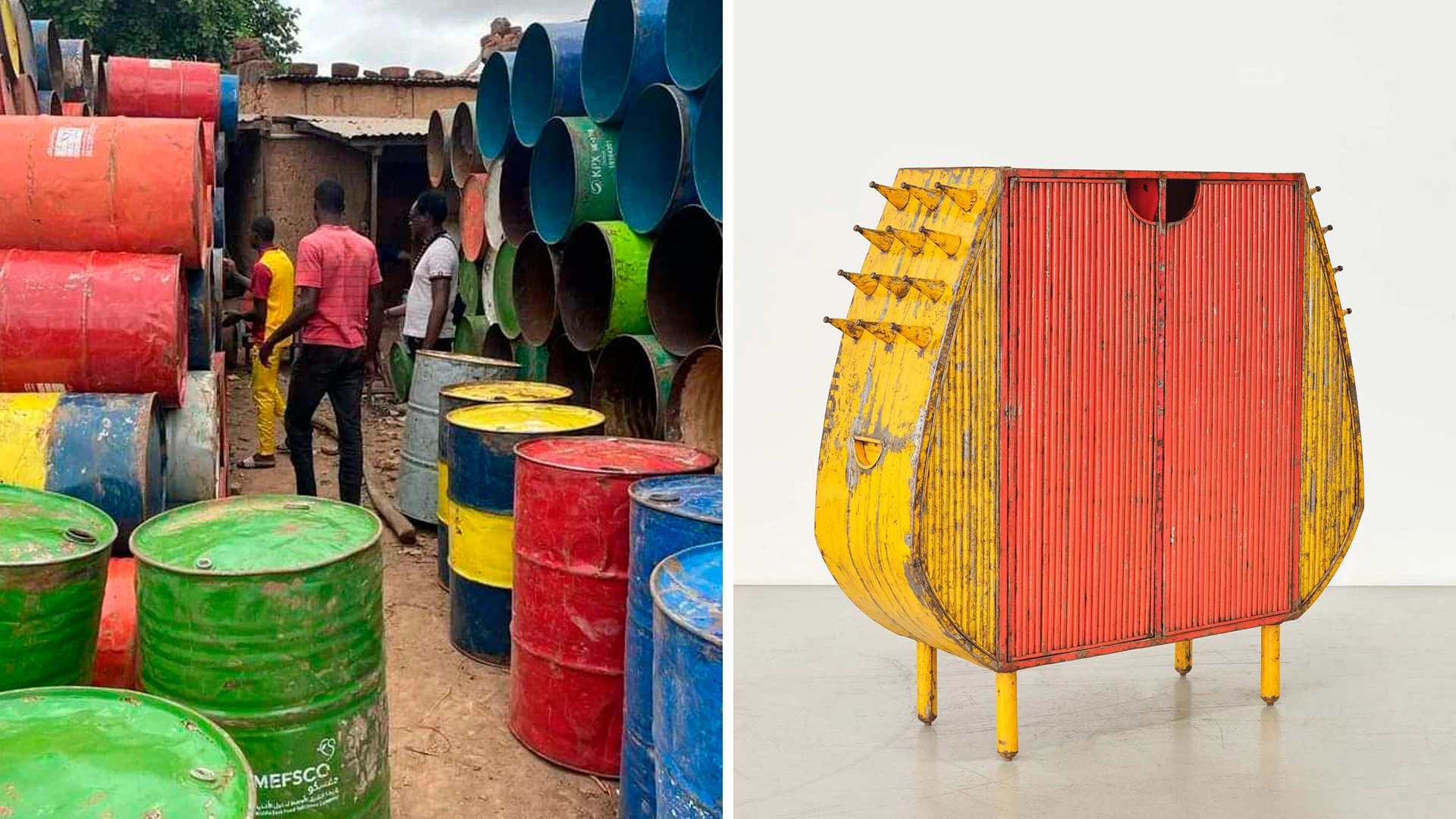
Discarded oil barrels in primary colors in Burkina Faso become handmade playful consoles and cabinets.
Artist and designer Hamed Ouattara upcycles used barrels and discarded containers into eclectic furniture. Each sculptural piece is handcrafted by local, highly skilled artisans in Ouagadougou, the capital of Burkina Fasano in West Africa. Ouattara shifts discarded oil drums and lubricant cans from being seen solely as ‘waste’ to serving as an abundant resource. These used drums and cans are not only abundant, but also, according to Ouattara, “offering qualities of robustness and durability.” Learn more about Hamed Ouattara in our Maker Portrait.
The Parts Exchange turns scrapped Alfa Romeo pieces into furniture -- inspired by an ex-Alfa Romeo owner’s story. In this way, they are reclaiming both materials and memories. The Exchange is the brainchild of London's Andu Masebo.

Alfa Romeo scraps collected by Andu Masebo for upcycled furniture.
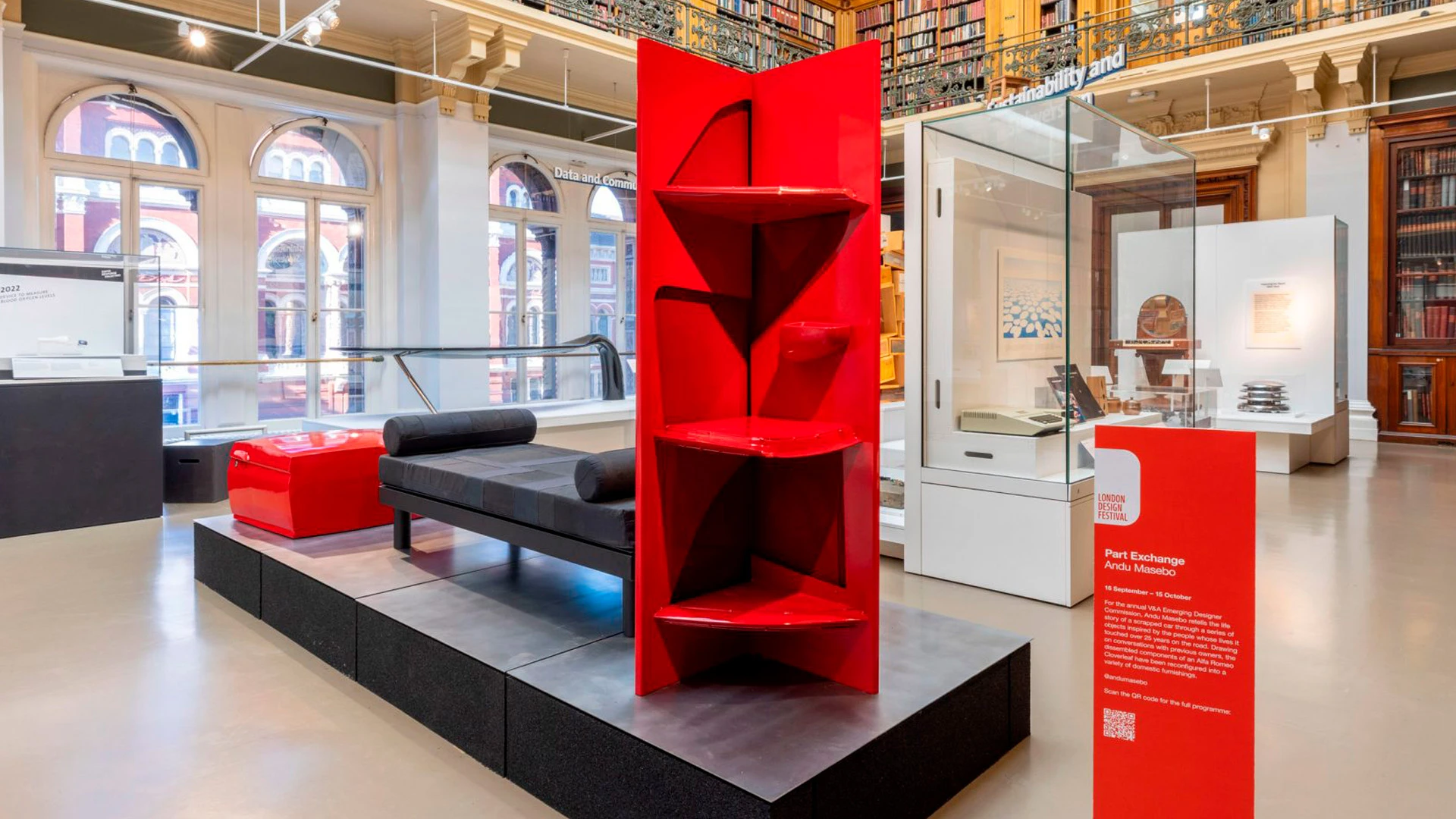
Part Exchange Project furniture exhibition at the London Design Week.
Joel Hester of Weld House, based in Arizona, holds a similar passion for old cars. His training as a welder converged with that passion to make unique furniture from junkyard metal. “I've literally pulled metal out of a car crusher,” he says.
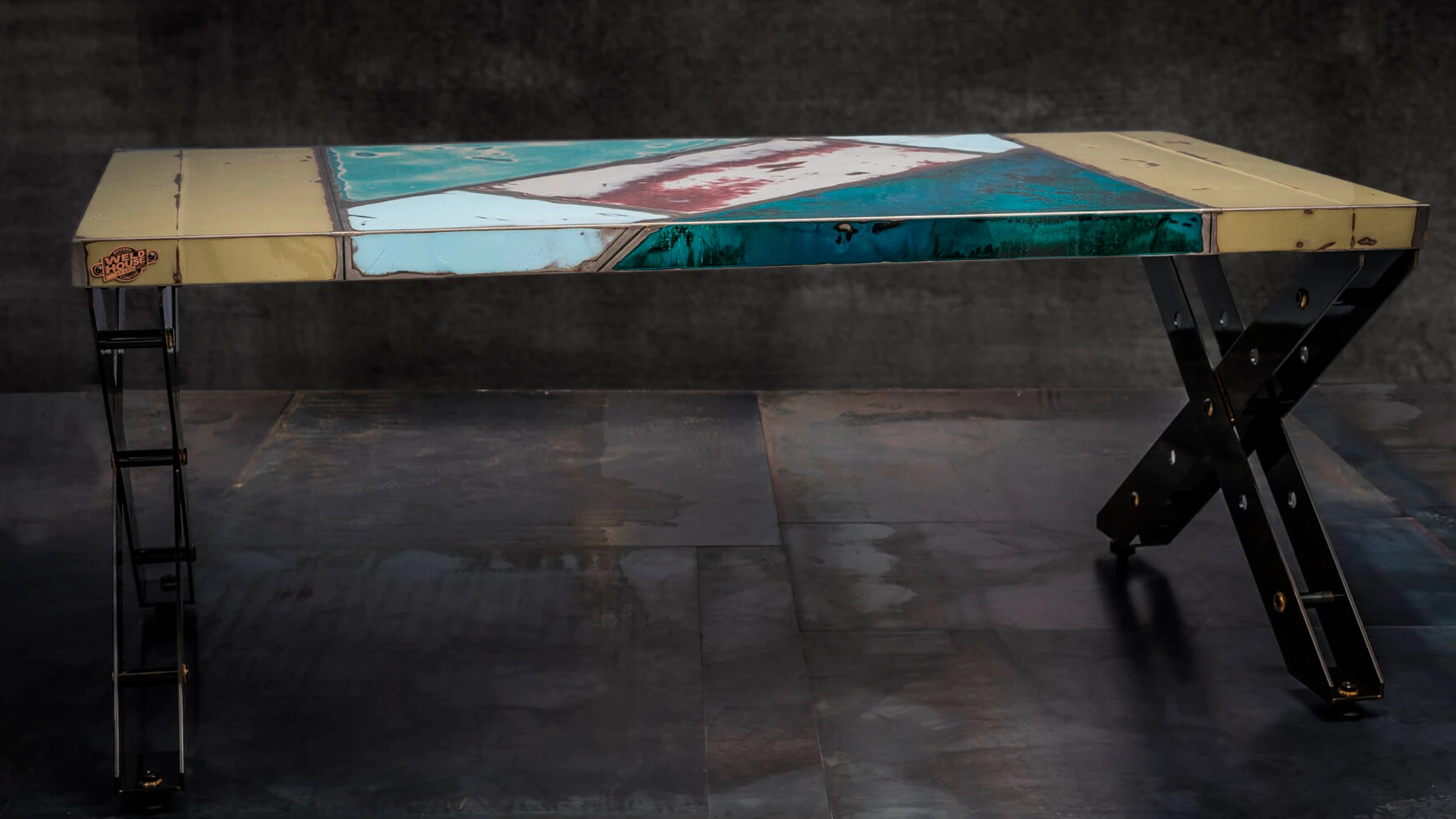
A custom table by Weld House.
In France, maker and designer Aurélien Veyrat crafts cabinets from second-hand wood sideboards, then meticulously coats them with a blend of discarded bricks and plaster. Veyrat collects forgotten bricks from gardens, washes them with rainwater, then lets the bricks dry in the spring sun before cutting and shaping them for new life.
Each brick has its own personality, texture, and hue, bearing traces of its origin and history -- from the original clay to its past uses. Veyrat ensures that no shard is wasted -- each piece becomes a new chapter in the story of transformation.
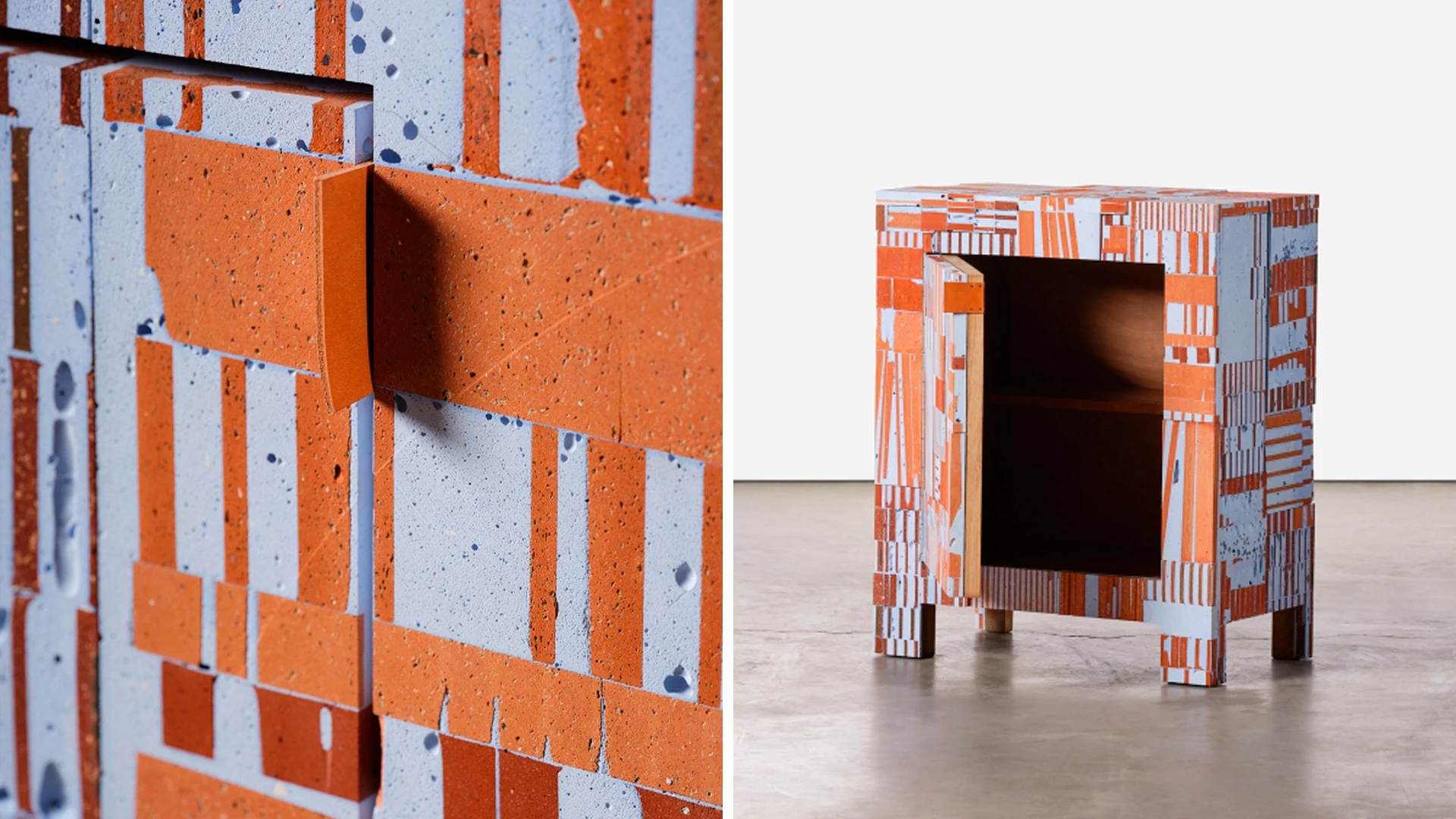
Cabinet crafted from second-hand wood sideboards coated with discarded bricks and plaster by Aurélien Veyrat.
Designer Yinka Ilori uses furniture itself as his material resource. He upcycles discarded and broken wooden chairs from the streets of London.
In his creative process, Ilori hauls broken chairs out of their old environments and into the studio. He then breaks down the chair in his mind, trying to project how it could look and what sort of narrative it could share. “Could its backrest,” for example, “be repurposed as a leg?” He then takes the chair apart and lays the parts out on the ground -- akin to the arrival of a piece of flatpack furniture -- and attempts to find a new use for every component.
Ilori sees his work as at the intersection of art and design, hoping these colorful new/old pieces of furniture will become heirlooms, passed down through generations, like pieces of fine jewelry.

Yinka Ilori gives new life to second hand and abandoned chairs -- adding new colorful fabrics, vibrant patterns, while raising the arms or shortening the legs.
Designing with existing materials reframes waste as a resource, unlocking fresh aesthetics and circular-design principles, while reclaiming local crafts and traditions.This kind of reuse sparks new income streams for communities, fostering resilience, creativity, and a deeper connection to place. After all, “the ideal house in the village” -- which we can understand as our ideal planet -- “should be built using materials found within a five-mile radius,” as Mahatma Gandhi once wisely advised.
We’d love to hear about your innovations in designing furniture with what already exists, or other reflections sparked by this article. Email us at [email protected]. We promise to respond!
>>> Read the other articles in the 'Long Live Furniture!' series HERE.
SOURCES
UNEP International Resource Panel - Global Resources Outlook
Circular design: turning ambition into action - Ellen MacArthur Foundation
Circular Design Glossary: Furniture & Furnishing - mebl | transforming furniture
Light and Dwell - Urban Fallen Tree Collection
PineSkin Material - Official Site
Purton Chair by Tamasine Osher
Paola Lenti - Hana-arashi Collection
Woodward Throwbacks - Official Site
Studio Maximum - Bultan System
Andu Masebo - Part Exchange Project
Yinka Ilori - If Chairs Could Talk