
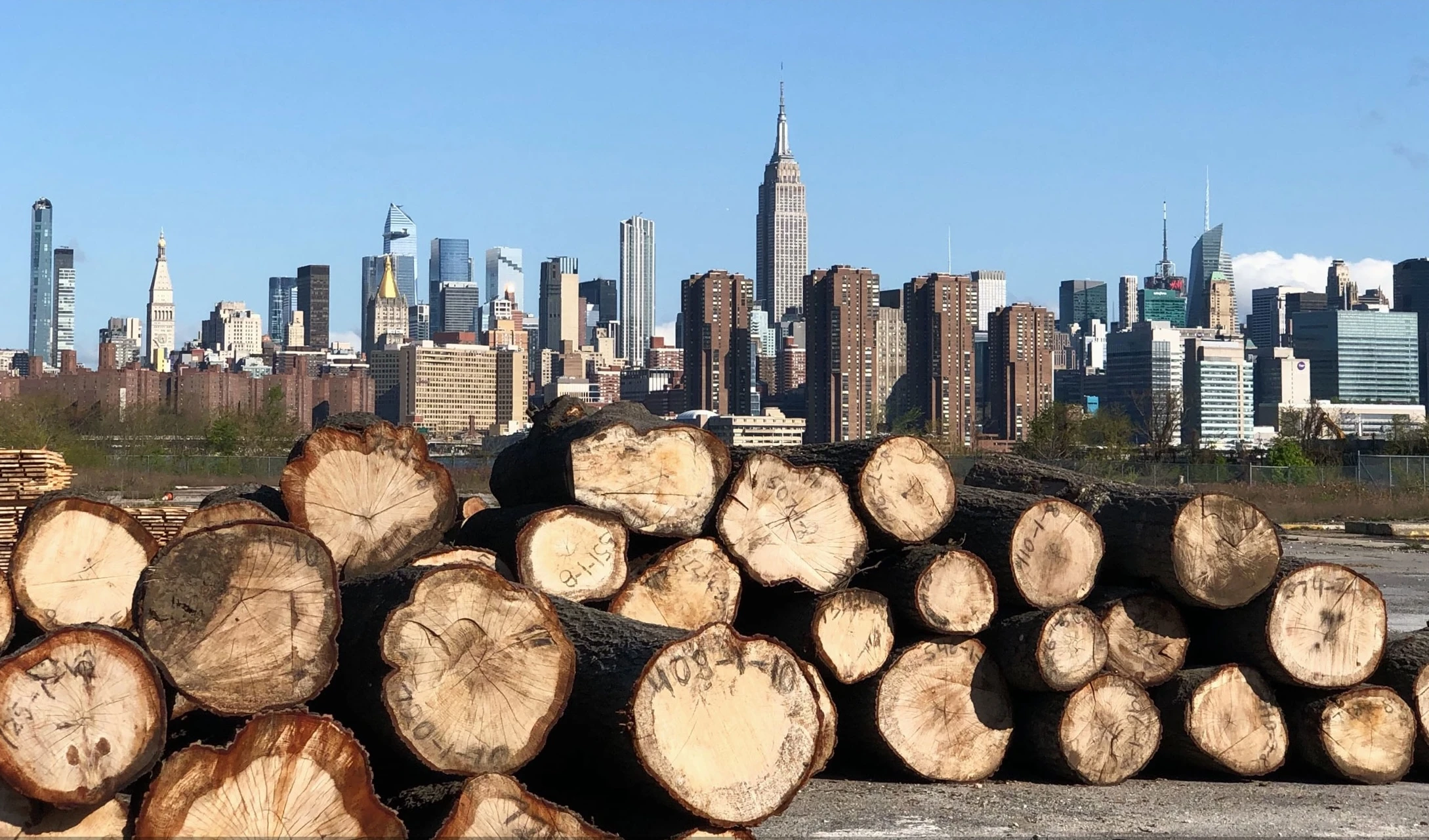
Changemakers: Tri-Lox
13-Aug-2026
By transforming New York City's discarded urban wood into architectural landmarks, furniture, and playscapes — Tri-Lox founder Alexander Bender is giving the city's most overlooked material a second life. "Reclaimed wood machines and finishes better," Bender notes. "It's denser than new wood. And overall, it brings higher quality, both visually and performance-wise."
Interview #16 in the Changemakers series
In this interview, we spoke with Alexander about how NYC’s woodwaste became a scalable supply chain, ways to source wood through sustainable forest management, and what systemic changes are needed to make urban and reclaimed wood a no-brainer in future projects.
This is the 16th in our Changemakers series – interviews with leaders in sustainable, circular and regenerative approaches in the furniture industry. Our aim is to uncover the nuts and bolts of how each leader is driving change, the potential it holds, and why it matters to the industry.
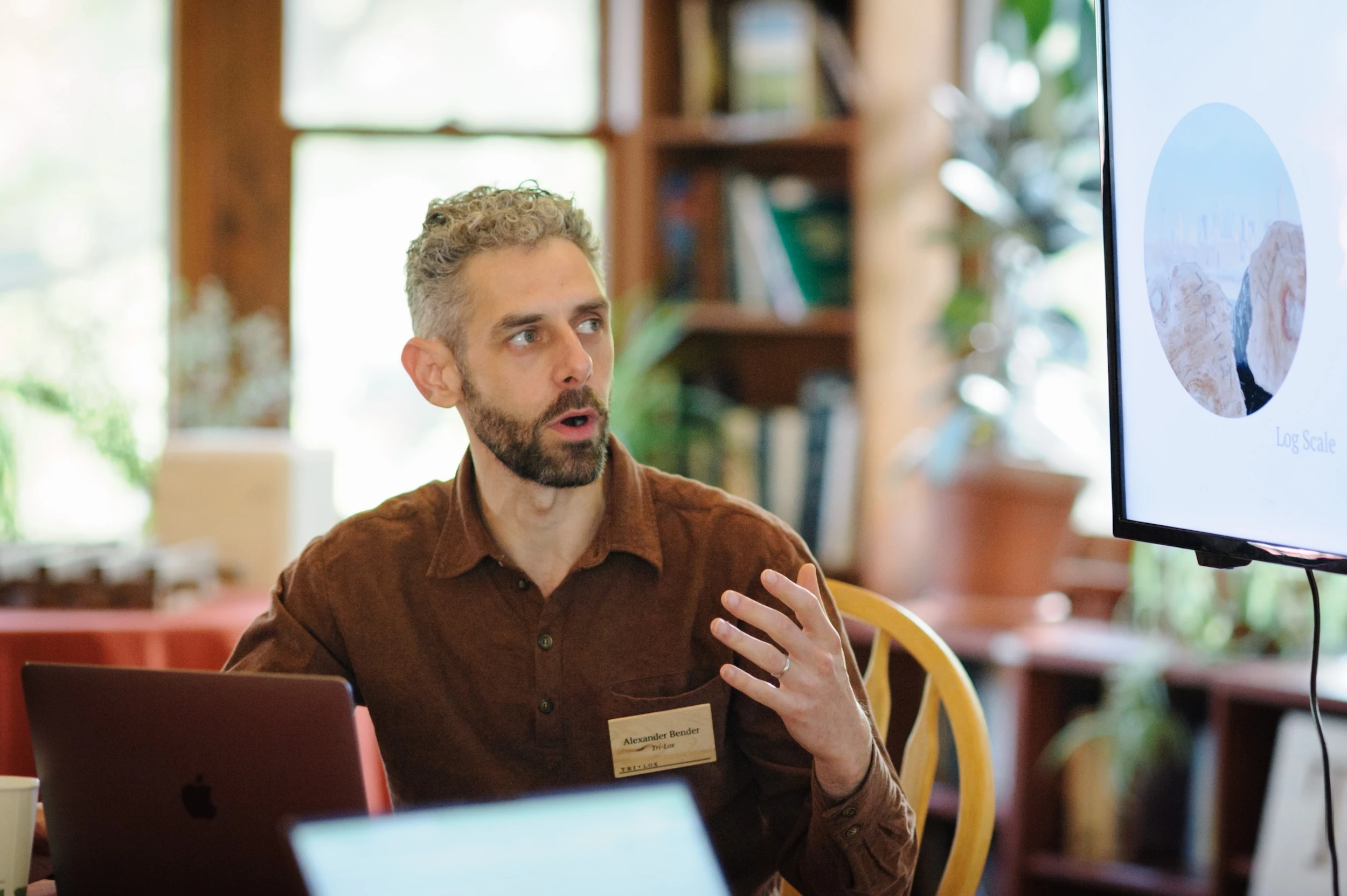
Alexander Bender, Co-Founder + Managing Partner of Tri-Lox
mebl: Hi Alexander! What is Tri-Lox?
Alexander Bender: Tri-Lox is a design, fabrication, and manufacturing company based in Brooklyn. Early on, my co-founders – Ellis Isenberg, and Tim Knight – and I concentrated on making furniture and other products from salvaged wood. Now, more than ten years later, we are pioneering sourcing from wood reclamation and regenerative forestry practices throughout the Northeast. Tri-Lox sources and processes wood for products ranging from park benches, facades, decking, to furniture elements, interior flooring, light fixtures and seating for performance venues.
mebl: So, what key problem would you say Tri-Lox is trying to solve?
Alexander: We want to greatly increase awareness that wood can be used in ways that bring a meaningful positive impact for our environment and future. Tri-Lox is a resource to the design and construction community – to activate sustainable practices when they decide to bring wood into the built environment. We are researchers, advocates and members of the local community.
mebl: What initially prompted your passion for wood?
Alexander: I fell in love with woodworking once I moved to New York City after college. But I never really thought that my career would be based on it!
Tri-Lox got its start building custom furniture out of reclaimed wood. We soon realized its superior qualities – reclaimed wood machines and finishes beautifully. It's denser than new wood. And, overall, reclaimed brings higher quality both visually and performance-wise. And it has a story… We were making wood tables out of material with a certain story and history.
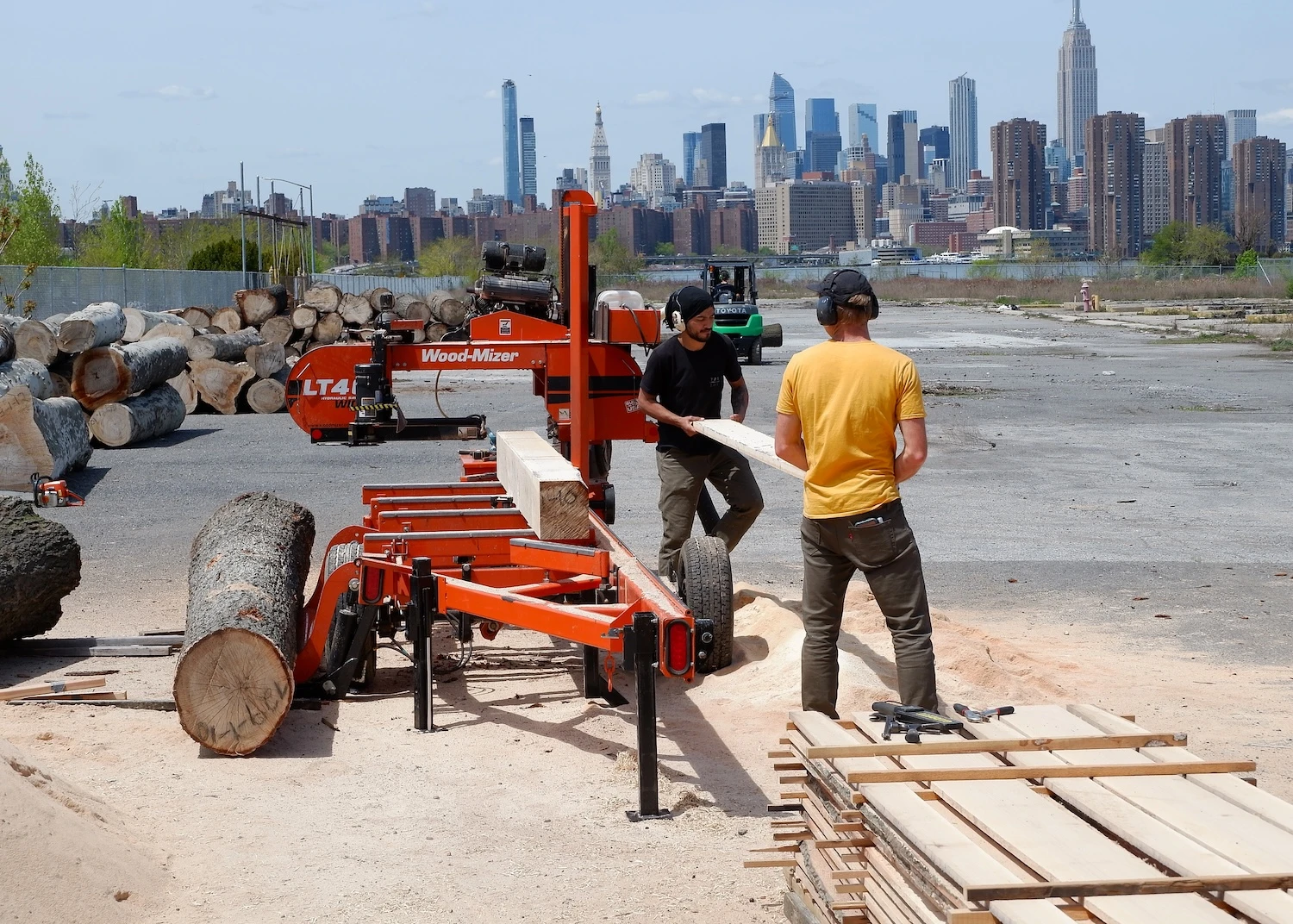
A plank of reclaimed wood being processed in Tri-Lox’s facility.
mebl: What influenced Tri-Lox’s decision to expand from furniture pieces into architectural applications?
Alexander: We realized that we could further our mission and run a more stable business if we also offered our wood on the larger scale of architectural and furniture applications. We've since developed an array of products for interior and exterior applications that are sourced through reclamation, urban tree salvage and sustainable forest management. Recently, we also began offering circularity consulting services – to explore how wood can be salvaged on a single project site or divert that material to other local reuse opportunities.
mebl: What’s an example of how you source and work with reclaimed wood?
Alexander: A great example is our Skyline collection – which uses wood from old New York City water towers. Around 20,000 water towers dot the skyline of New York City. And they're constantly being replaced!
Older water towers are all old-growth, beautiful California Redwood, while the new towers are built of Alaskan Yellow Cedar. Both are extremely rot resistant, durable materials that can outlive their use as a water tower. We have built a remanufacturing process that gives this material a second life as building products.
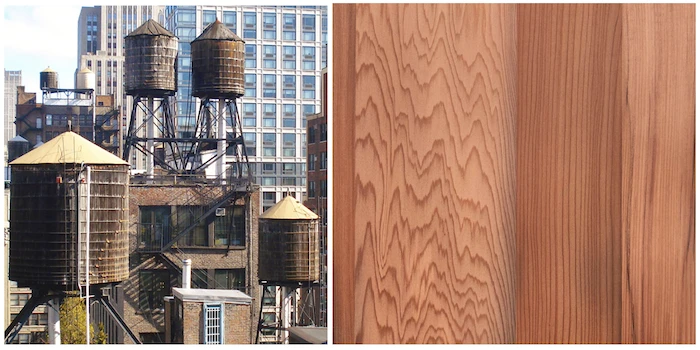
Tri-Lox gives New York City’s retired wooden water towers a new life.
mebl: Is there a water-tower project that illustrates Tri-Lox’s core ideas really well?
Alexander: We proudly supplied the wood for the extensive facade of the newly renovated Delacorte Theater – it's iconic for offering Shakespeare, outdoors, for free, in the middle of NYC’s Central Park. This project ‘activated’ reclaimed wood really well. It was exciting to take historic water towers and apply them so prominently to this landmark theater.
While it required wood from dozens of unique water towers, there is a lot of continuity and shared typology that allowed us to aggregate the wood and bring uniformity across that huge exterior facade. We were proud to facilitate bringing such a really powerful story and a positive environmental impact to a pretty prominent, significant-sized surface.
mebl: How many deconstructed water towers made up that huge facade?
Alexander: Approximately 25!
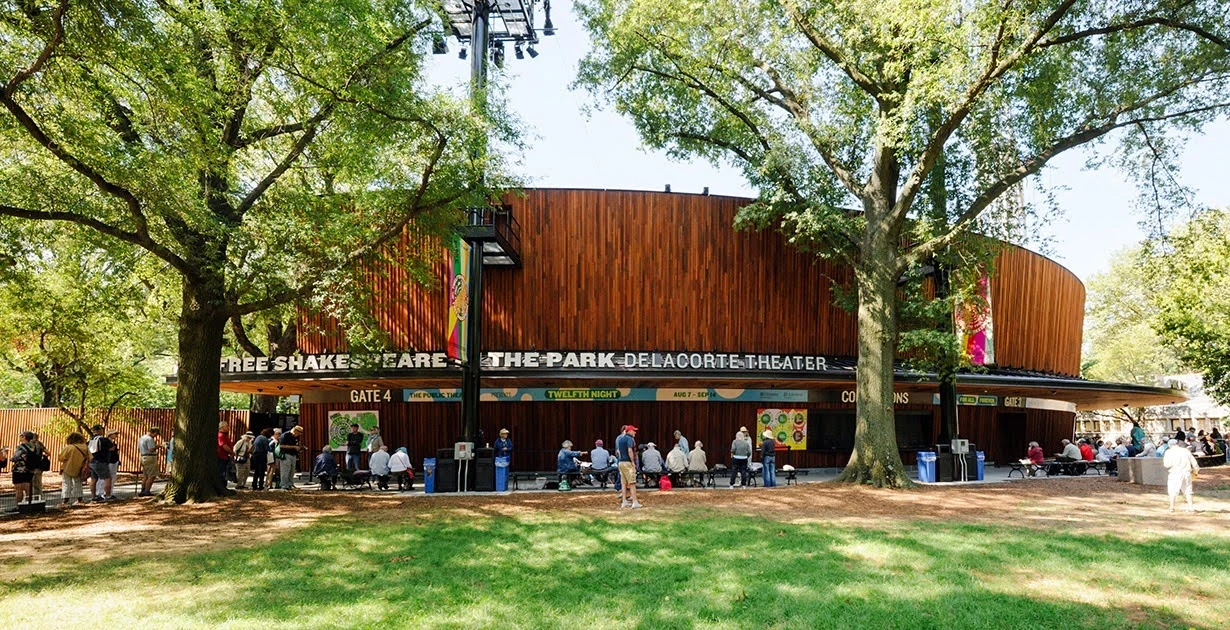
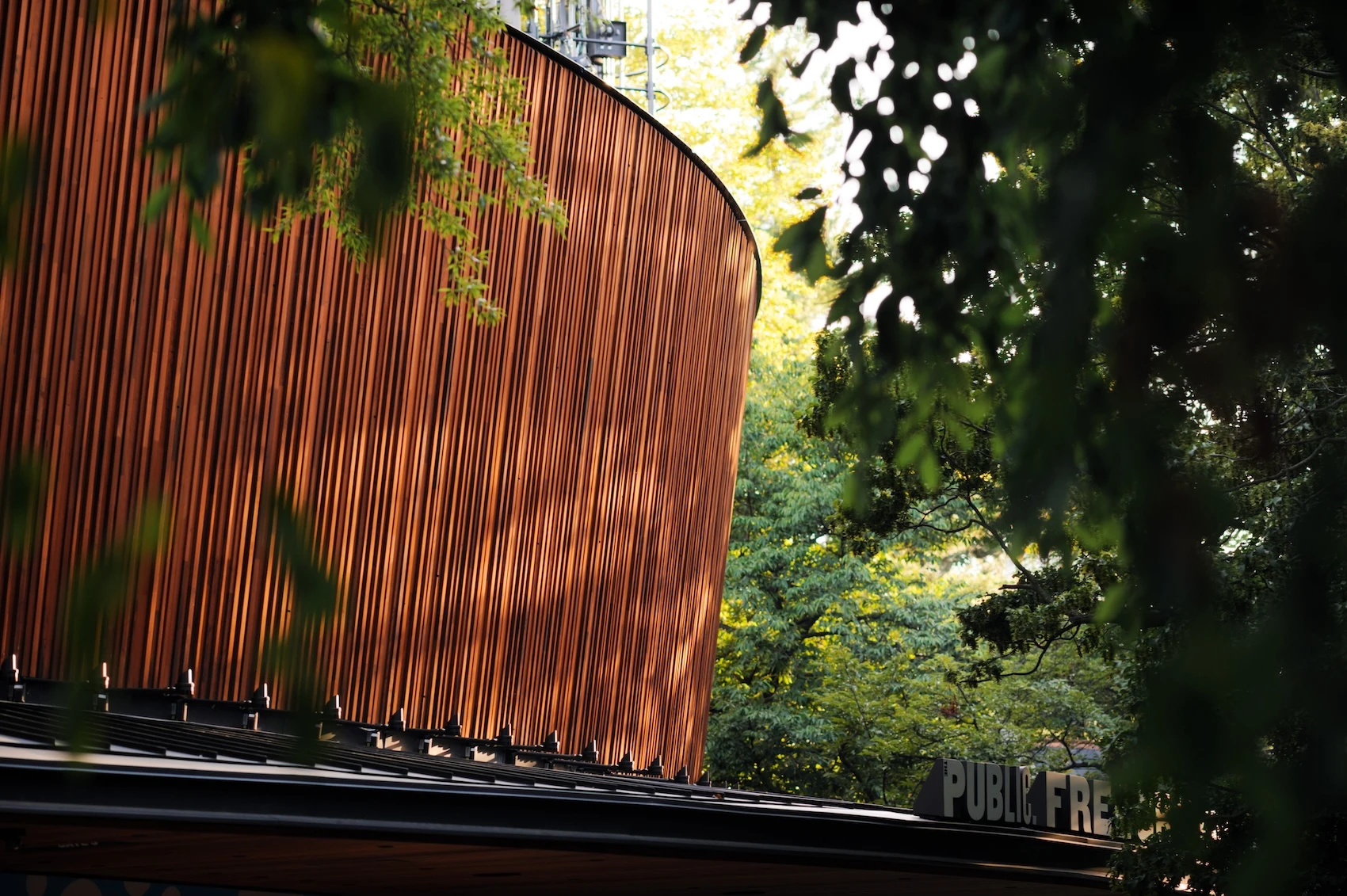
Skyline Redwood sourced from deconstructed NYC water towers and transformed into a textured facade for the Delacorte Theater.
mebl: What distinguishes sustainably managed fresh-cut wood, urban tree salvage, and reclaimed wood?
Alexander: When we source wood through sustainable forest management, we are talking about fresh cut trees that are harvested to support long-term forest health and biodiversity. That’s based in a natural forest with a diversity of tree species and a forest management plan to maintain land use, biodiversity and overall vibrancy.
When we expanded from reclamation to local forest sourcing, we asked ourselves – What does it mean to sustainably source in a way that leaves a forest in a better place? And that quickly leads to the next question: How do our forests work and who are the stakeholders involved in this process?
With forests, we work with academics and practitioners to understand the context. In some forests, for example, trees are cut in order to maintain specific ecosystem services like erosion control and watershed health. In other forests, trees are being selected to maintain habitats for critical animals. Understanding this guides how we source trees from each forest.
mebl: And what about urban forests?
Alexander: It’s a totally different process when you're sourcing wood from the urban forest. New York City's urban forest is a really critical resource that has been overlooked. Here, individual trees are removed due to construction or safety and risk considerations as well as storm events that damage and down many trees. Tri-Lox and others are trying to fundamentally change the urban forest system. Historically, all of this wood has been considered waste with a priority for quick disposal. Tri-Lox has explored a different approach based on circularity and developed a system of salvage and reuse to redefine trees removed from the urban forest as a resource.
mebl: What constitutes an ‘urban forest’ and how did it become one of your supply chains?
Alexander: An urban forest consists of all of the green areas in a city, both public and privately owned, from street trees to parks to small yards and large natural areas. New York City’s urban forest has over 7 million trees!
In 2012, we saw so many downed trees across New York City from Superstorm Sandy. That disaster led to another — how the City managed all of the thousands of trees that came down. The City had no system for capturing that material or disposing of it in a way that was efficient or brought any value. Thousands of downed trees were getting chipped or burned. Very quickly, we saw that we could salvage downed trees in much the same approach as we deconstruct the built environment for reclaimed wood.
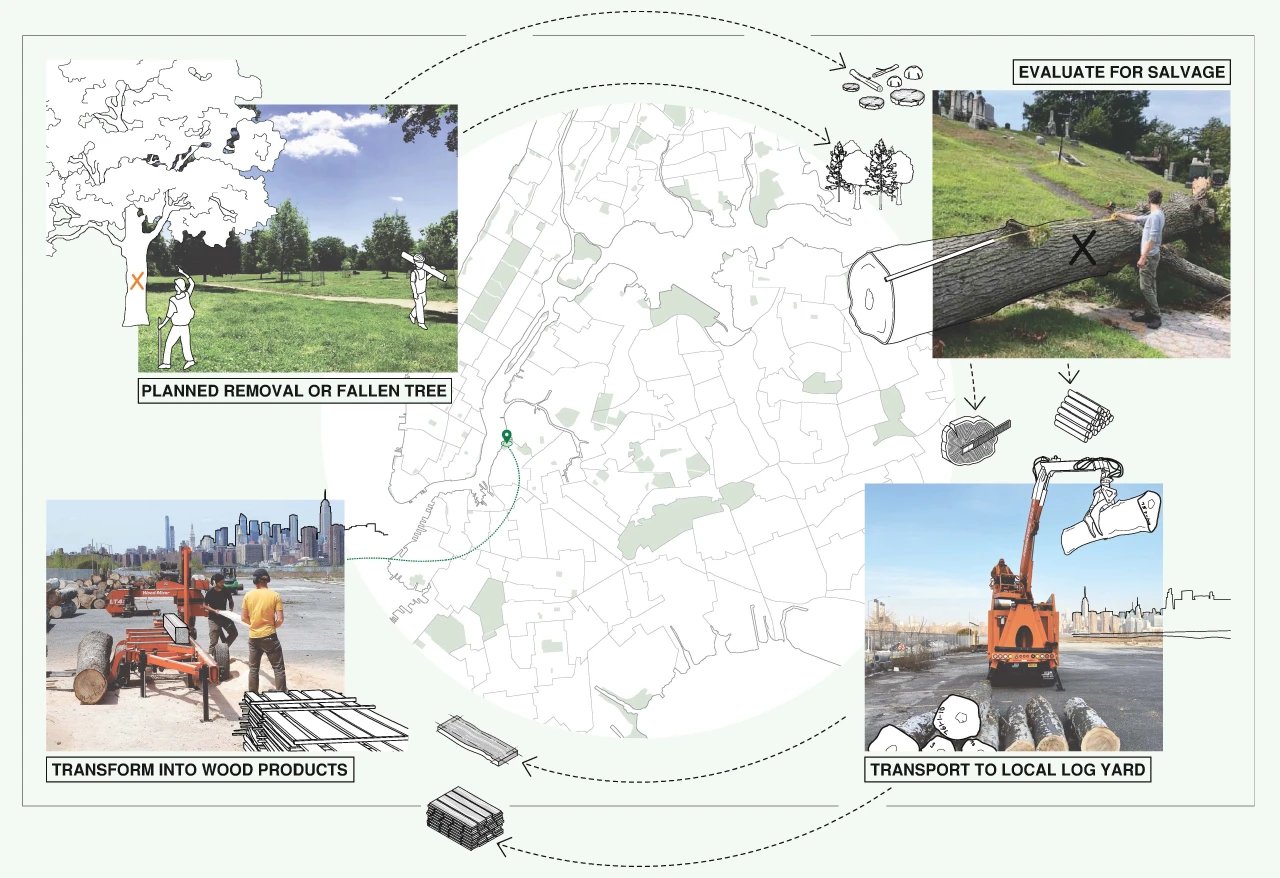
While most wood ends up in landfill, Tri-Lox maps a route that places it back into the built environment.
mebl: Who controls the urban forest in a huge city like New York?
Alexander: Very early on we started working with the NYC Parks Department to explore a new forest management system. The Parks Dept manages the majority of urban trees. But we also came to understand that close to half of trees in NYC are on privately owned and managed land.
We’re also founding members of Forest For All, another coalition which produced the NYC Urban Forest Agenda. The Agenda advocates for more equitable distribution of these benefits to all New Yorkers, while also expanding the canopy to maximize them.
Through Forest For All we partnered with Green-Wood Cemetery which was central in producing the first comprehensive vision for managing New York City's urban forest. The report assesses the current procurement of wood in NYC agencies, and makes recommendations on the potential for using salvaged wood in public projects.
Trees across the city provide critical benefits and resources to all New Yorkers. While the City’s forests are for recreation and animal habitats, they also provide really important ecosystem services such as carbon savings, water management, mitigating the heat island effect, and providing shade.
mebl: Was there a project or direction that surprised Tri-Lox?
Alexander: Playscapes, definitely! Tri-Lox started with furniture because we were enthralled with exploring how the human body interacts with the built environment. Designing for kids turns out to be a really exciting extension of that. It presents a unique challenge: building areas that are engaging, fun, and challenging, but also safe, non-prescriptive, and supportive of different types of play across different age groups and abilities.
We've installed our NEST project at the Brooklyn Children's Museum and another in Long Island City. Nest uses a custom design language and modular system that lets us create sculptural installations for creative, non-prescriptive play, using material that's 100% reclaimed or reclaimed and recyclable — meeting our sustainability standards while also scaling to size.
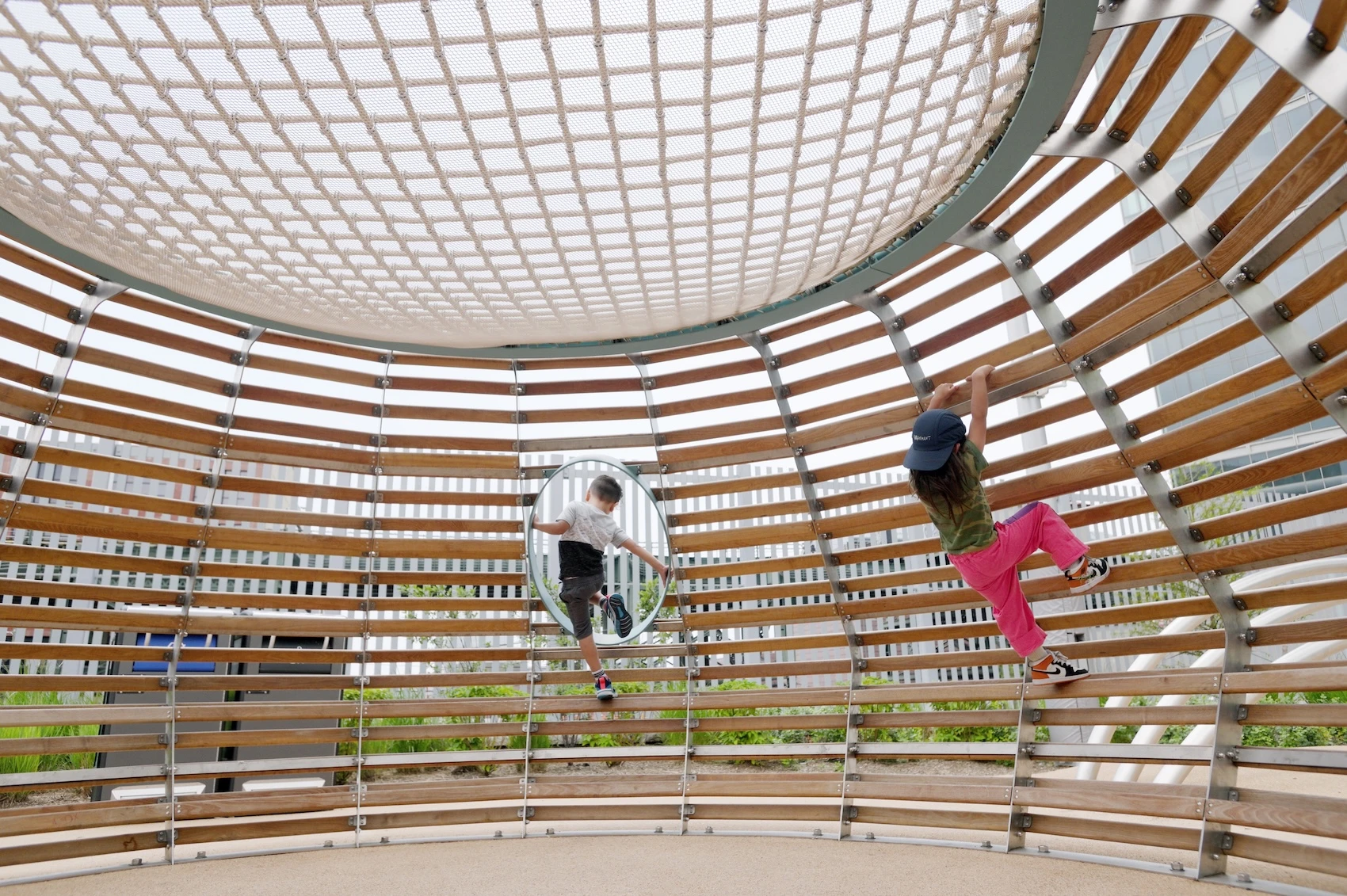
NEST is built exclusively with recycled or recyclable components and natural materials.
mebl: What would be game changing in realizing your core vision?
Alexander: A game changer would be some type of incentive or subsidy making sustainably sourced wood more cost-competitive and a no-brainer to bring on to projects in different ways.
With industrialized wood, there are efficiencies that make it hard for circular practices to compete with. What Tri-Lox believes in takes more labor, operates at a smaller scale, and you’re working in urban areas where land is expensive and wages and costs are generally higher. Where the rubber meets the road – on pricing – you need to be able to make it an accessible option financially for architects, specification writers and builders to bring a strong case to their clients for sustainability that pencils out. That’s where government could play a huge role – through incentives or subsidies.
mebl: We’ve heard you refer to a pyramid!?
Alexander: There is a pyramid of best and highest use of material – at the top are architectural applications. Next level down is use of materials for less long-lasting applications, such as tree guards or as part of the infrastructure of a dock, a pier, or bench. Further down, you get to urban agriculture, where smaller wood elements (bolts) to inoculate and grow mushrooms in community gardens or create biochar to augment the quality of the soil. Wood works across this pyramid in ways that maximize its use and reduce its waste.
In the big picture, we believe change will come through piloting different ideas, showing viability, building awareness – and working to help decision-makers across the public and private sectors make the right decisions on managing our natural and built environments.
It's important that our work inspires people to think critically and differently about the things that we make and the materials and environment that surrounds us.
--> READ more Changemaker Interviews here.