
What if LESS is the Innovation?
20-Nov-2026
Photo courtesy of Studio Booboon
What if Less is the Innovation?
Low-tech thinking for a future-oriented furniture industry
In our society, we reflexively turn to technology as an answer to almost every problem. When something is difficult, expensive, polluting or inefficient, our instinct is often to add a new system, material, sensor, machine or digital layer. Yet much technological progress is devoted to … solving problems created by earlier technologies.
Low-tech invites a different question. Instead of asking ‘What more can we add?’ it asks ‘What is actually needed?’ In this sense, low-tech is not simply “old” or “basic.” It is, rather, a critical approach to innovation that wonders aloud -- ‘Is X new technology genuinely better than what it replaced?’ And, as importantly, ‘By what criteria do we judge something to be better?
In the book The Age of Low Tech: Towards a Technologically Sustainable Civilization, writer and engineer Philippe Bihouix argues that resource-intensive technologies -- which rely on increasingly exotic and scarce materials -- are unlikely to solve the environmental crises they depend on. Wind turbines produce clean energy, for instance, but building them requires steel, concrete, and rare-earth metal, all of which have environmental costs. In his book, Bihouix proposes simpler, more resource-efficient and locally controllable technologies as the foundation of a more resilient society.
Designer and researcher Julia Watson makes a related argument in “Lo–TEK: Design by Radical Indigenism.” Her work challenges the idea that indigenous and vernacular knowledge is primitive, showing instead how TEK - Traditional Ecological Knowledge - can guide design that works with, rather than against, living systems.
When it comes to furniture, this perspective is especially relevant. We often measure innovation in furniture by what is added: new materials, advanced manufacturing, embedded technology, sophisticated finishes. But in a world of finite resources, perhaps progress should be measured by what a product does not need -- excess material, energy, components and/or complexity.
This fourth article in our LONG LIVE FURNITURE! series explores low-tech as a high-impact approach to furniture: one that prioritizes purpose, longevity, repair and local context, while using technology purposefully rather than as the first and most imperative solution.

Lo–TEK: Design by Radical Indigenism | Book by Julia Watson

Khasi hill community / Photograph: Amos Chapple
Low-Tech, High-Impact: purposeful furniture
Low-tech begins with a simple but demanding idea: a product should fulfil its purpose with the fewest possible unnecessary inputs. That does not mean cutting back on good design; rather, it means that making with less can often deliver more.
Through this lens, the key becomes understanding the real function of furniture -- the materials and skills available in its context, alongside the consequences of every additional component, process and technology.
Low-tech, as an approach, has deep roots in indigenous wisdom, vernacular building traditions, and local craft practices, all of which have long developed solutions shaped by local materials, climates, skills and practical needs. In this paradigm, knowledge is often cumulative and intergenerational: decisions are made not only for immediate use, but with future generations in mind.
“Traditional Ecological Knowledge is dedicated to the next seven generations, which means 150 years,” argues Julia Watson. “That is typically how indigenous communities think, with deep knowledge and planning to make decisions within consideration of our children, of our children’s children and so on.” The key question is -- How can we sustain the relationships between people and ecosystems?
Applied to furniture, a low-tech approach asks: Can a chair, table, storage system or workspace be made with fewer materials, simpler joinery, less energy and/or greater potential for repair? Can a piece of furniture be produced closer to where it will be used, with materials and skills already available in that place? Can it remain useful for decades rather than becoming obsolete as soon as a component fails or a trend changes?
Low-tech architecture offers a useful parallel. Rather than using energy-intensive systems to correct a poorly designed building, a low-tech paradigm emphasizes reducing demand at the source through orientation, shading, ventilation, thermal mass and durable local materials. Furniture can follow the same logic: thoughtful design, material selection, construction and reparability can reduce resource use before the need to introduce additional technology.
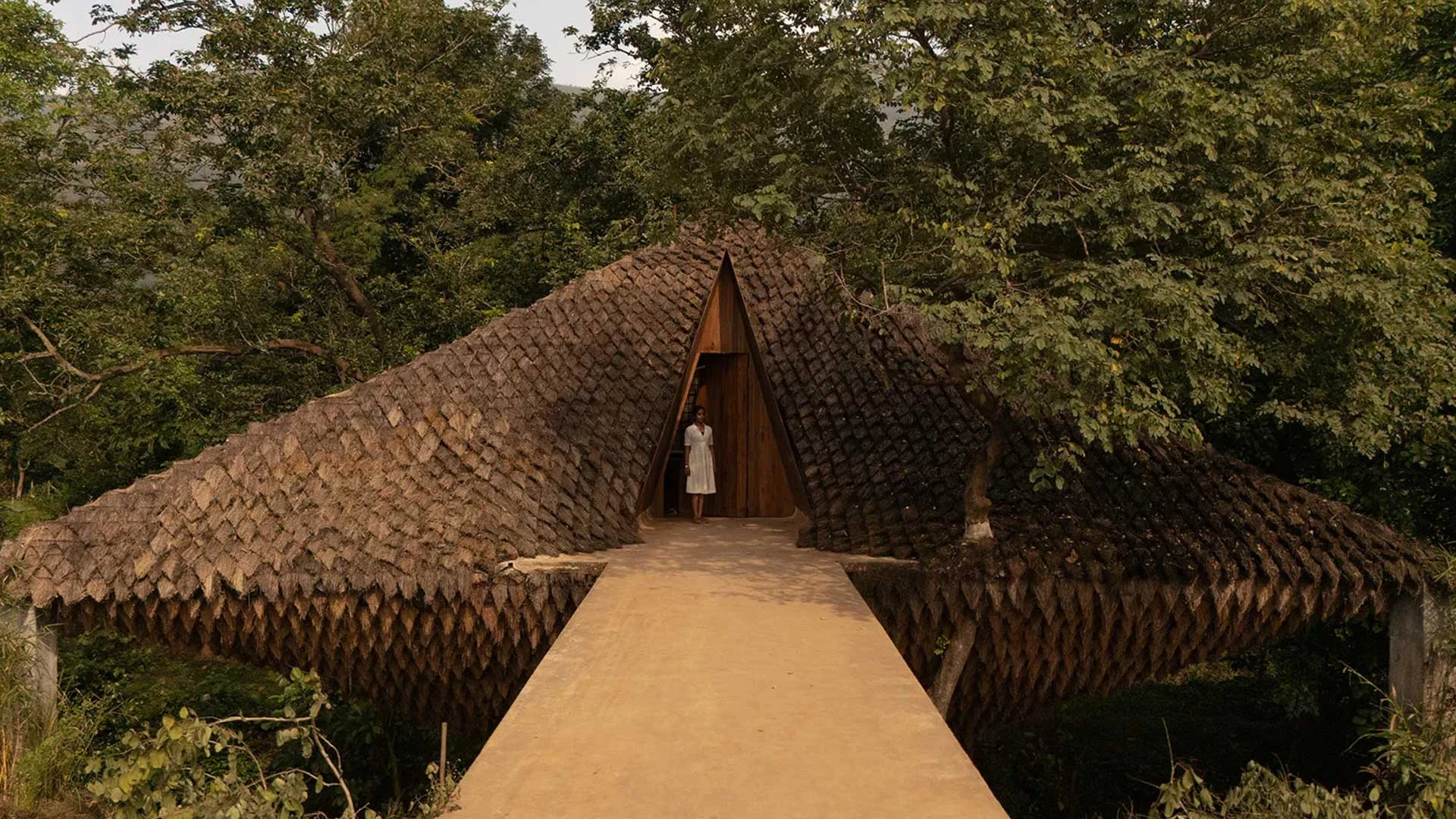
Half bridge, half home by Wallmakers
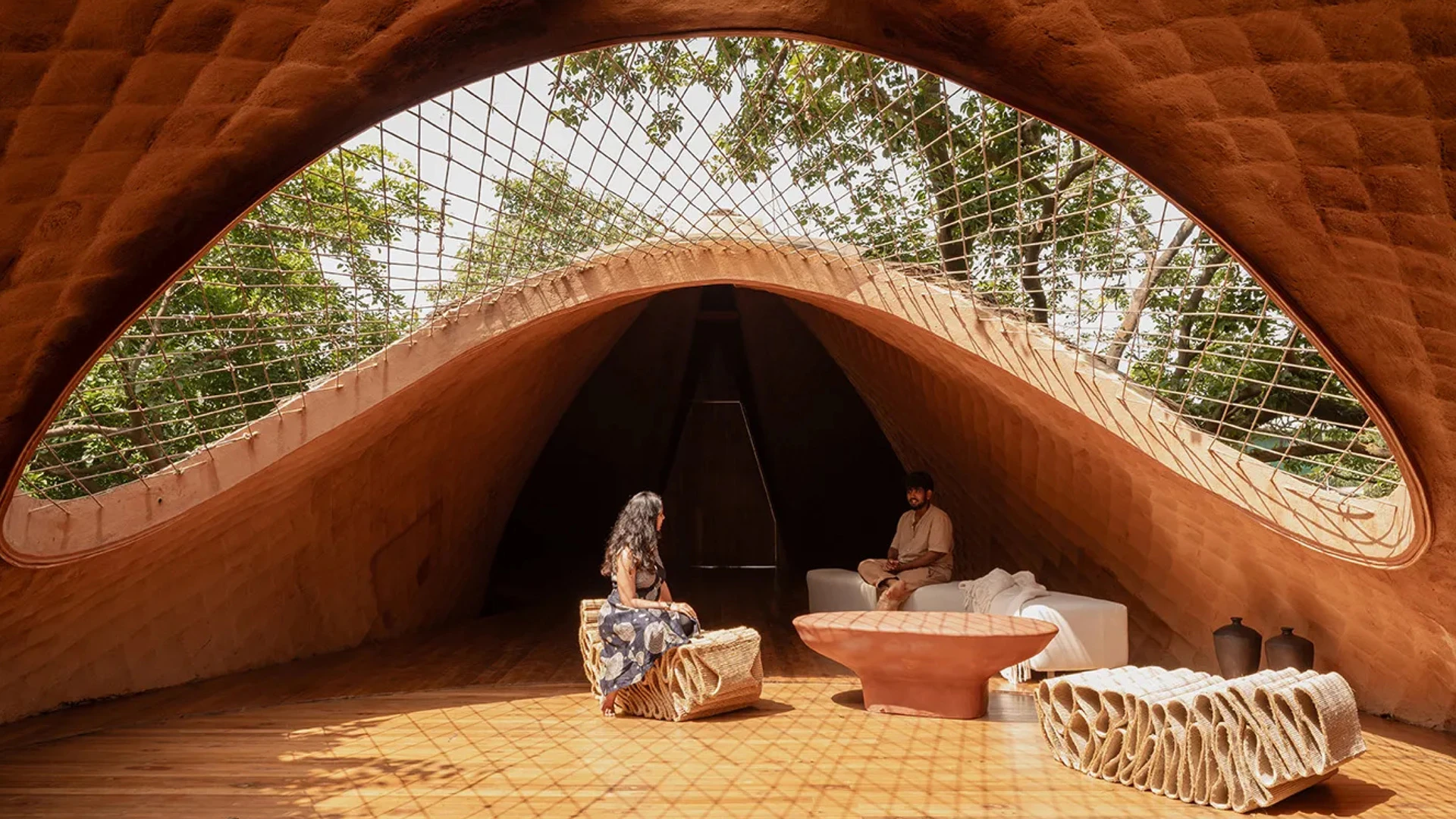
Half bridge, half home by Wallmakers
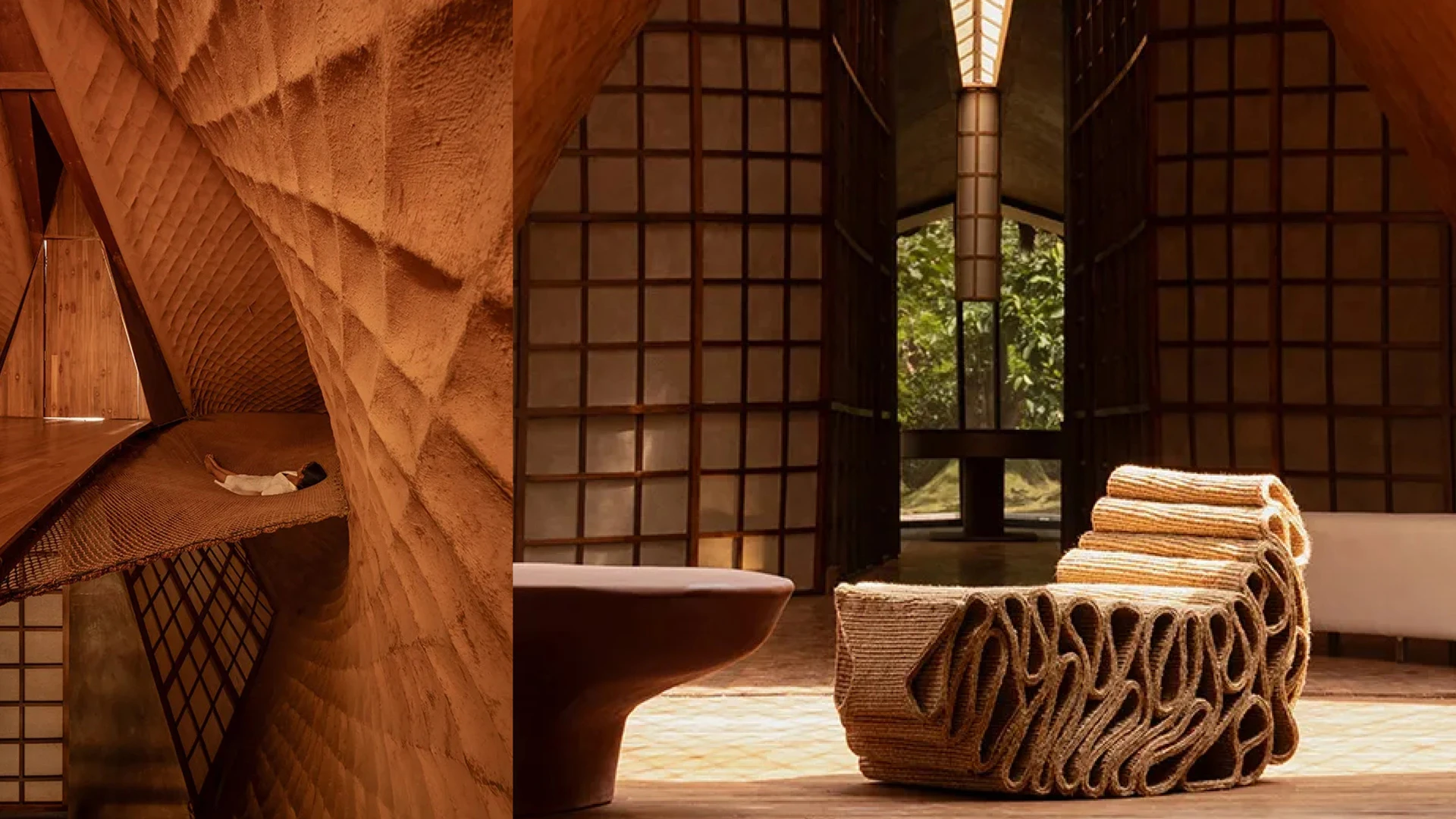
Half bridge, half home by Wallmakers
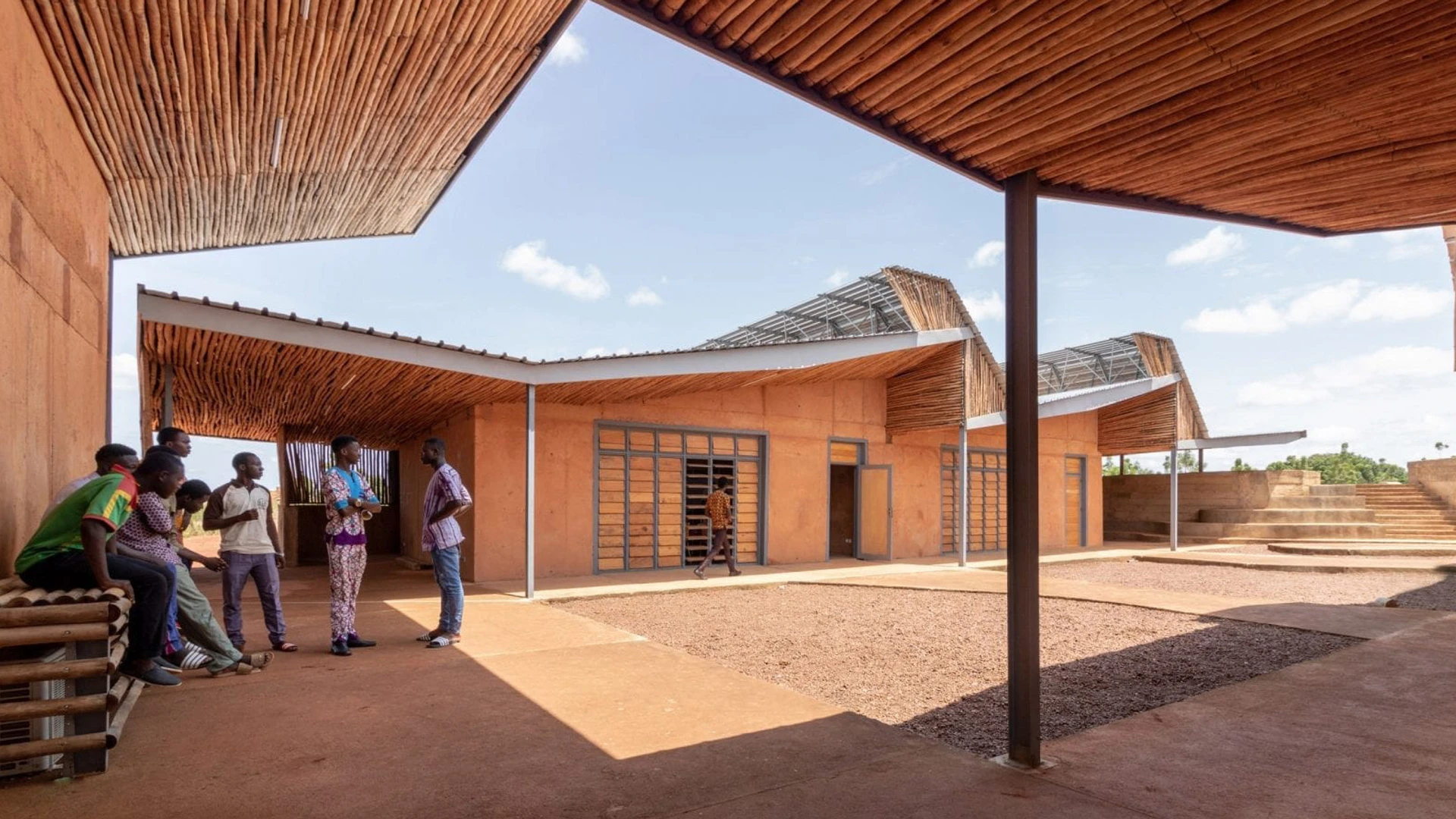
Gando Primary School, by Kéré Architecture
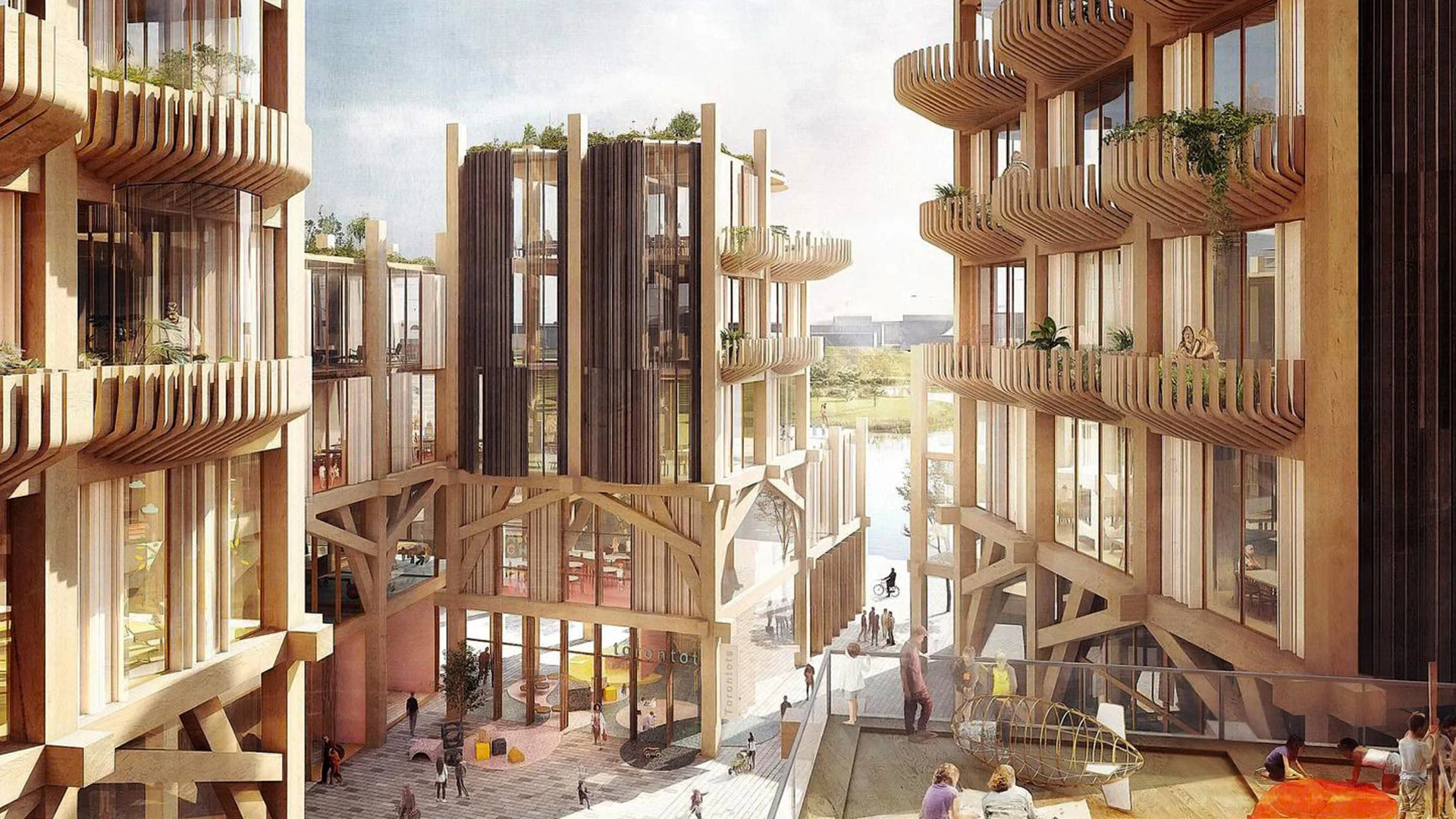
An architectural rendering produced by Sidewalk Lab
Low-tech, as a principle, does not mean anti-technology. Digital tools, advanced manufacturing and new materials can play an important role when they genuinely improve efficiency, performance, safety or circularity. The question is not whether to avoid technology, but rather whether each technology earns its place.
Sustainable furniture innovation should be measured by how effectively it fulfils its purpose with fewer resources and less unnecessary complexity. This aligns with UN Sustainable Development Goals 12 and 13, which call for decoupling wellbeing and production from resource depletion and emissions.
Five Approaches to Low-Tech Furniture
To make the picture of low-tech furniture more tangible, let’s look at five projects from around the world. Each takes a different route to the same question: How can furniture meet real needs with fewer resources, simpler processes, and a stronger connection to its context?
Together, these projects show that low-tech is not a retreat from design. It is a way of making innovation more accountable -- to materials, makers, users, and place.
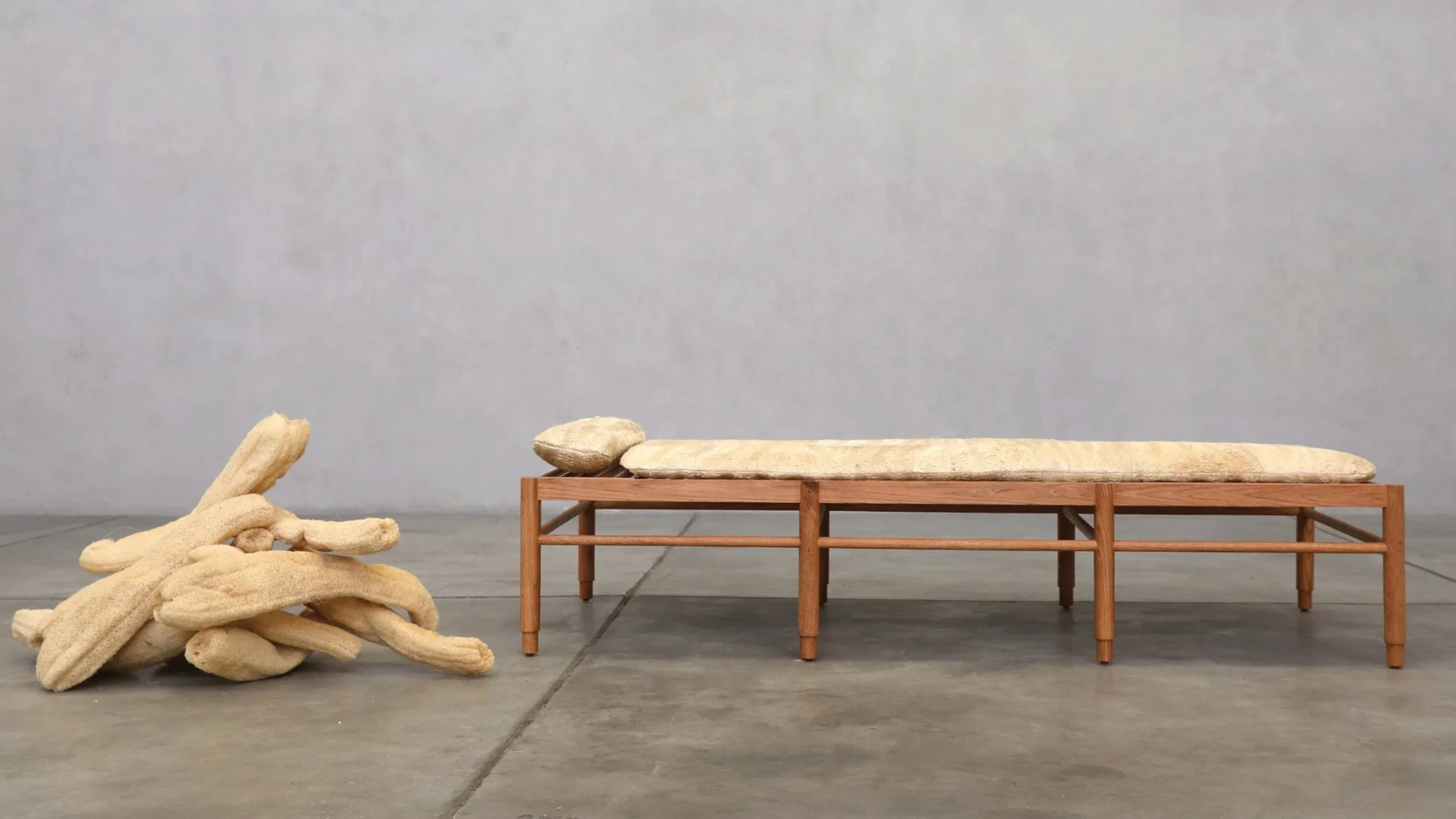
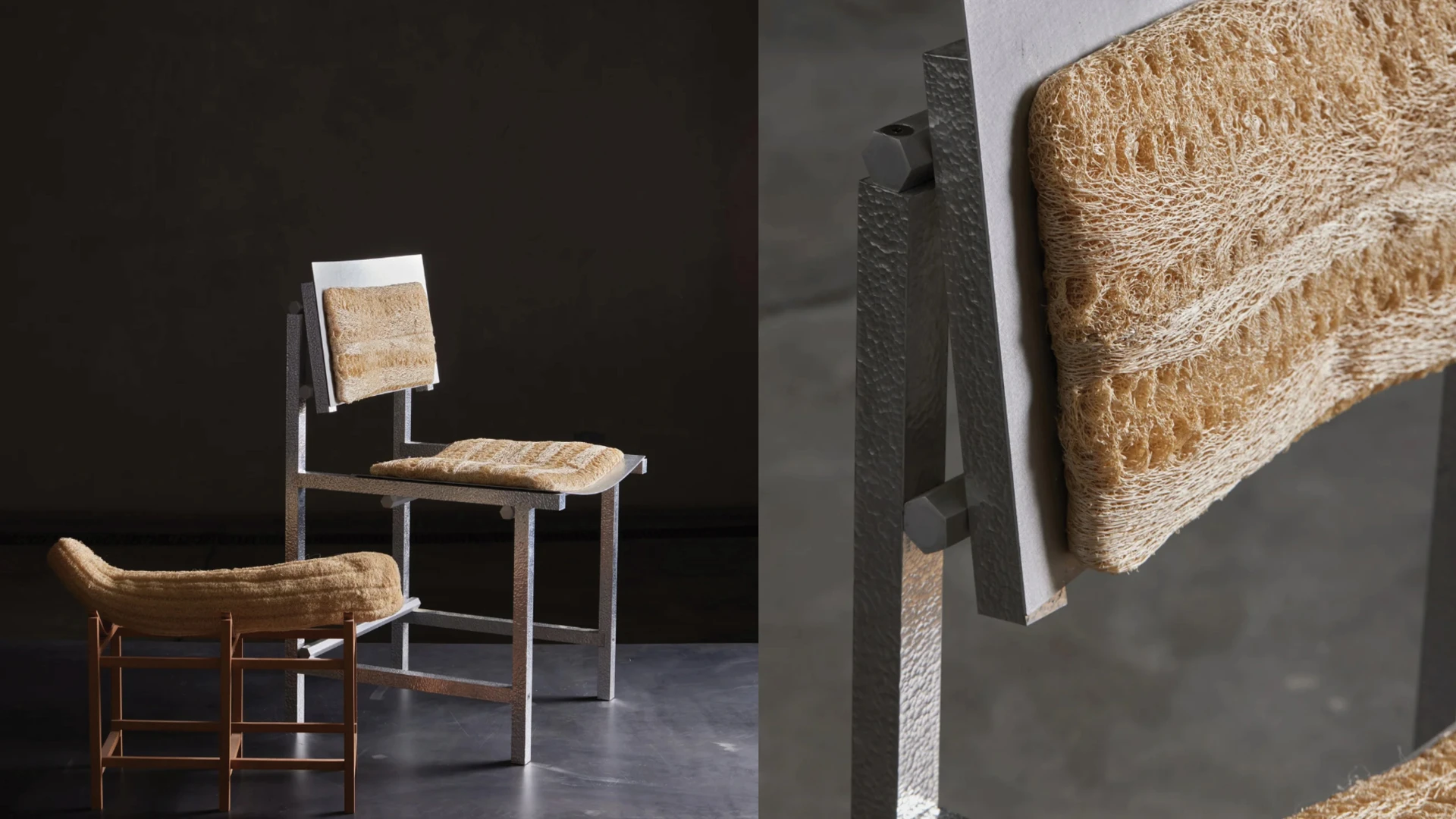
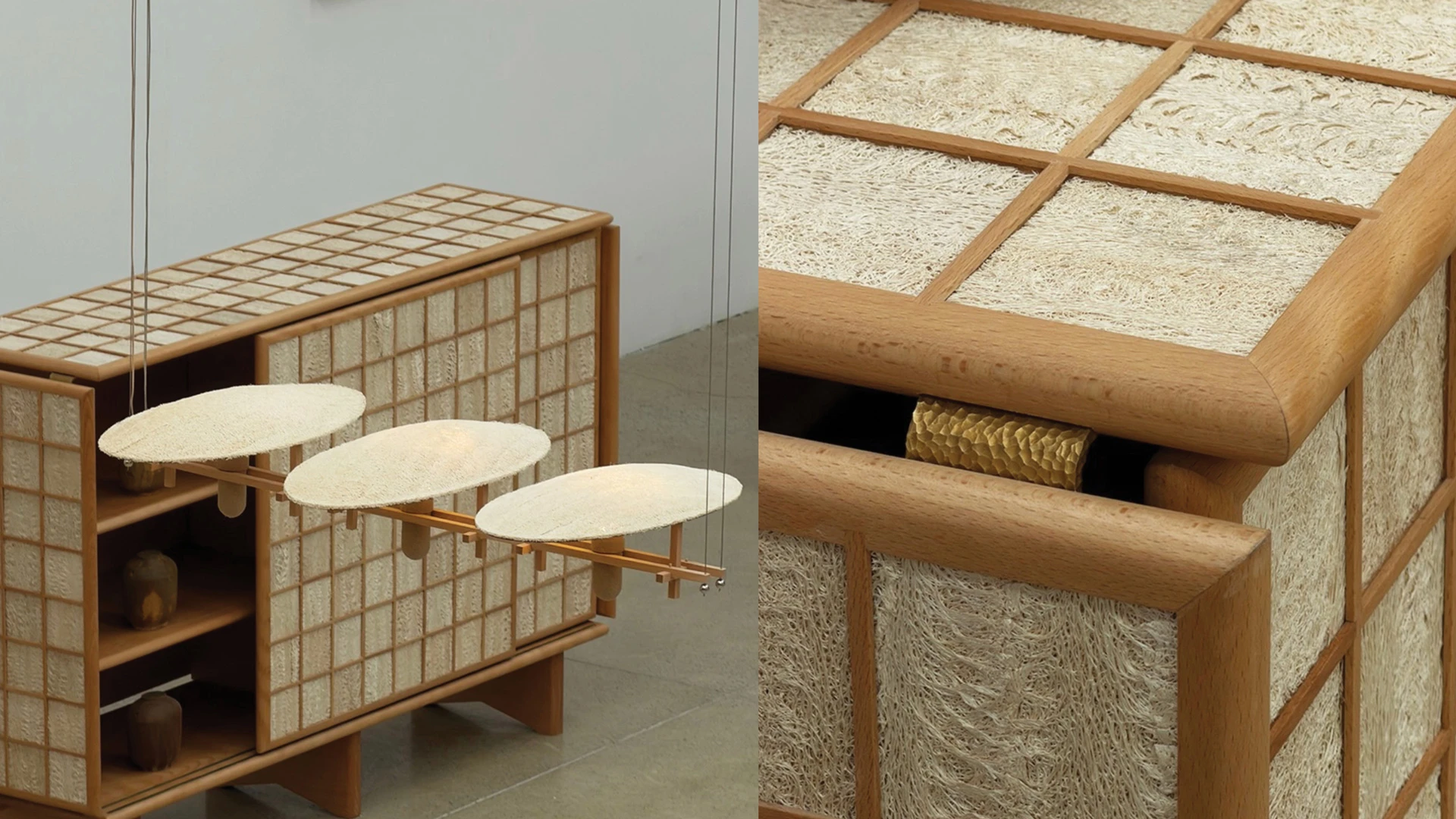
Lufa furniture collection by Fernando Laposse | Bench, chair, cabinet and lamp made with loofah plant fiber from Mexico
Using overlooked materials: Lufa by Fernando Laposse
Mexican designer Fernando Laposse focuses on materials that are abundant locally but undervalued industrially. For his Lufa collection, he researched the loofah plant fiber and developed ways to turn it into functional furniture and objects.
“We all generally relate loofahs with scrubbing and bathing,” Laposse says. “However, we wanted to change this association, so that loofah could be seen as useful throughout the rest of the house.”
Loofah grows by attaching itself to trees. It can be harvested after drying for about six months. Loofah requires few soil nutrients and leaves no roots behind, making it a comparatively low-impact alternative to wood or cork.
Working with a carpenter in Mexico City, Laposse developed a room divider, lamp, coffee table, cabinet coverings, hot-chocolate set, and planters that use the plant’s natural sponge-like structure. Each design draws on particular qualities of the material: insulation, lightness, shock absorption, texture, and translucency.
With Lufa, Laposse demonstrates that low-tech innovation can begin by looking more closely at what grows nearby.
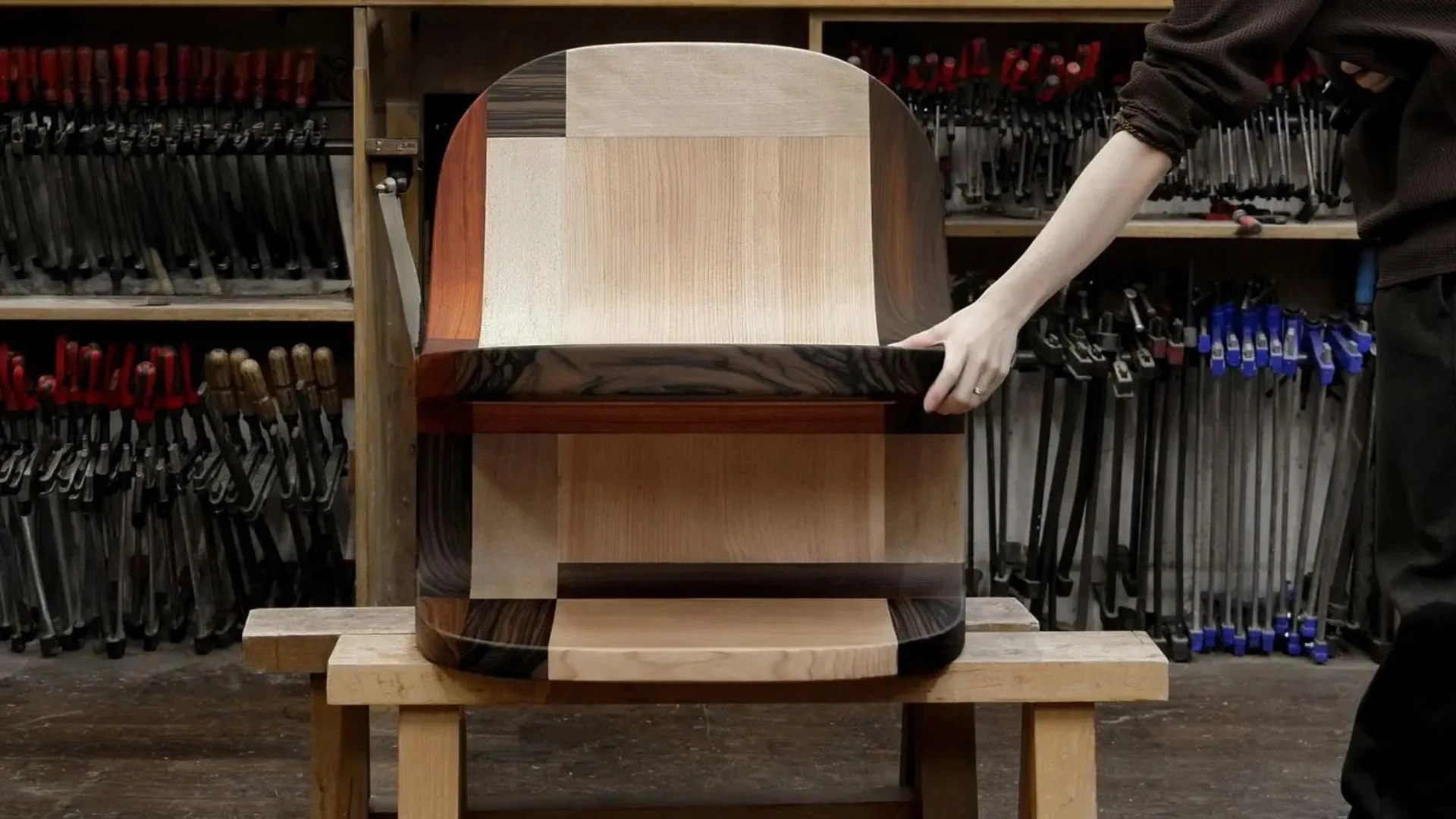
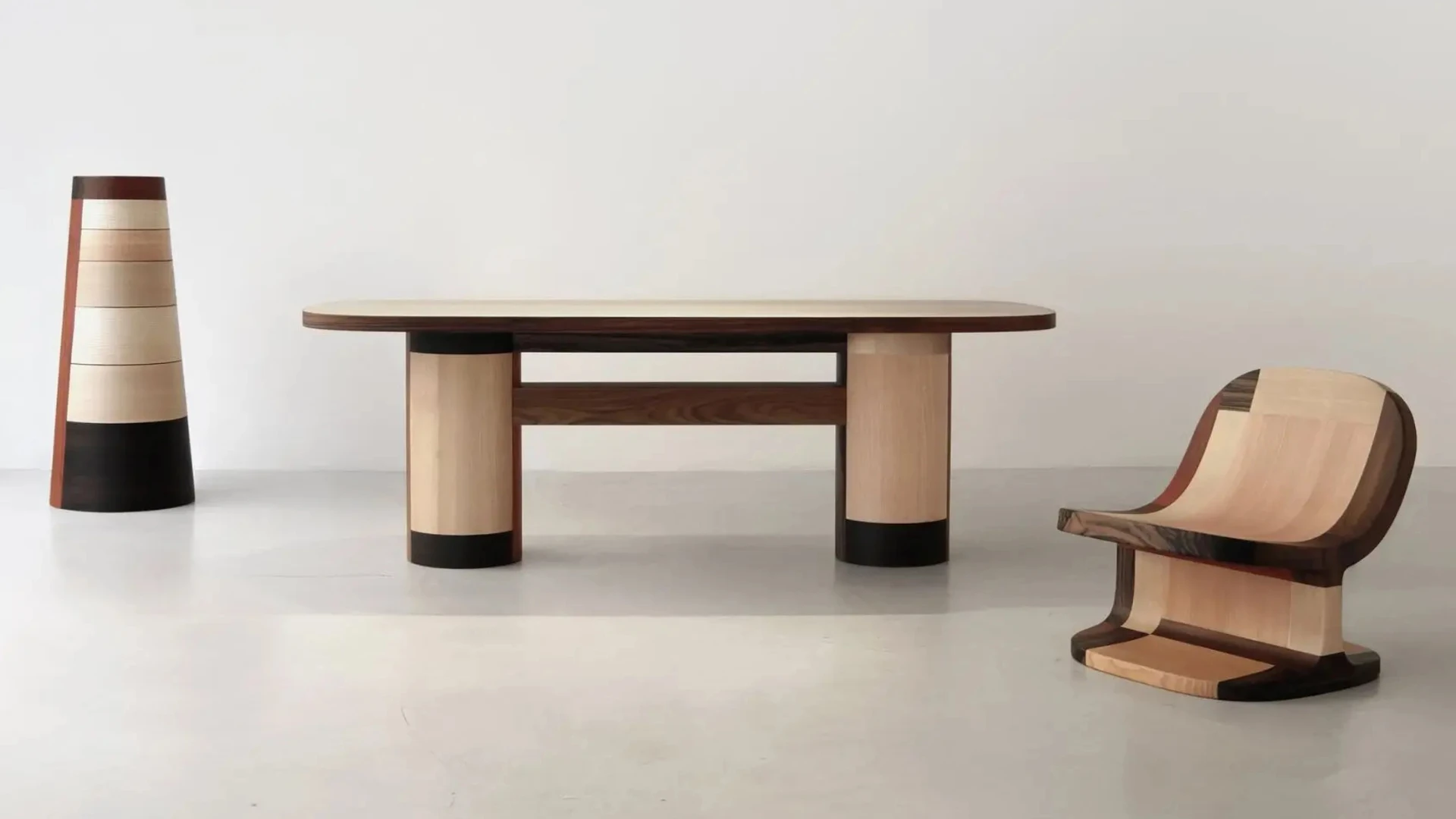
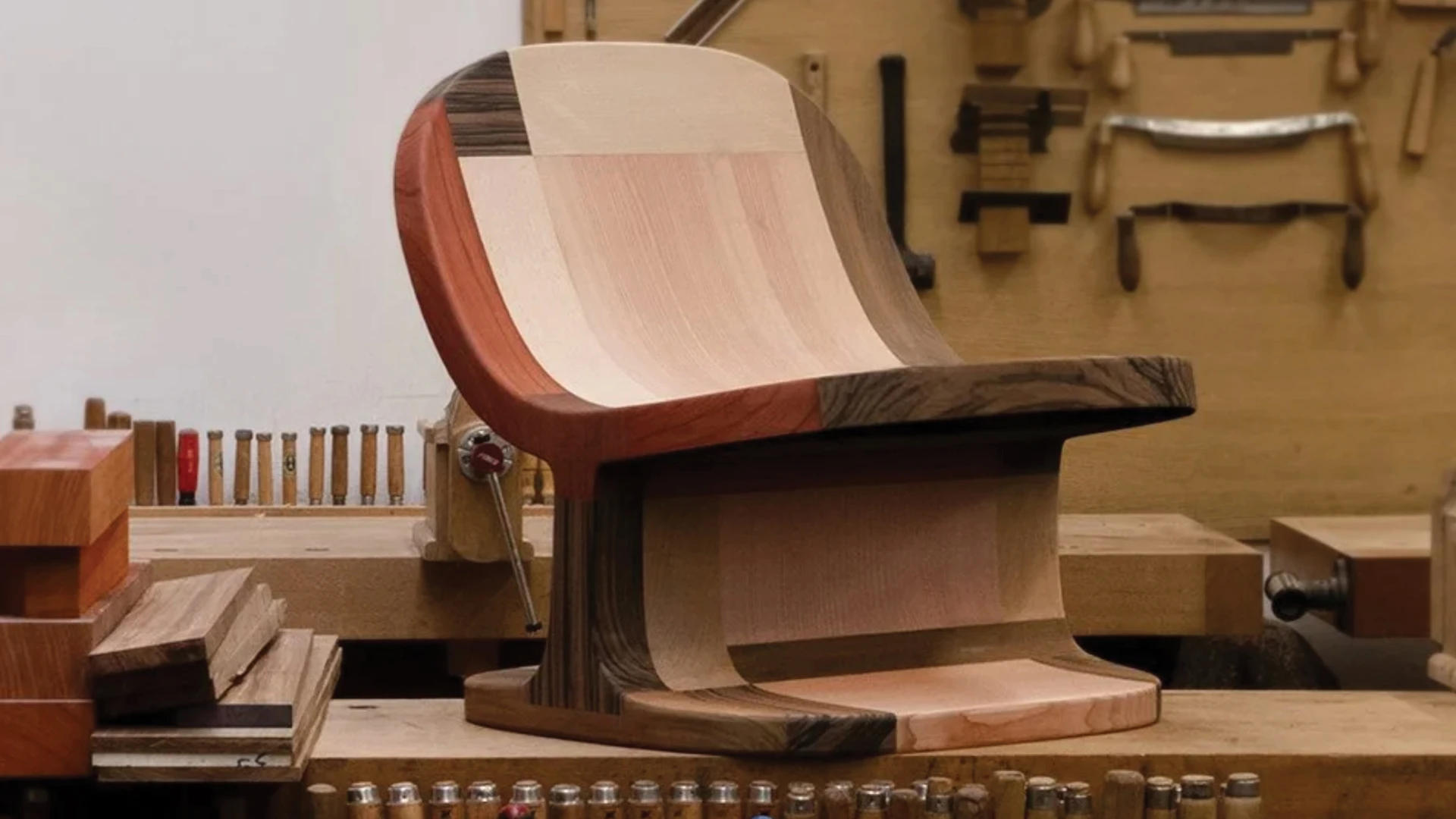
Fragments Becoming collection by Studio Booboon, made from timber offcuts and trim
Building from Waste: Fragments Becoming by Studio Booboon
Studio Booboon approaches low-tech through reuse. Its Fragments Becoming collection transforms timber offcuts and trim into the raw material for a cabinet, dining table, and lounge chair. These by-products are usually burned or sent to landfills, contributing to pollution and CO2 emissions.
Rather than treating the fragments as filler, the Copenhagen-based studio arranges them as structural components and calls this method “3D marquetry.” The studio does not apply a decorative pattern to a surface; rather, it builds the object itself from assembled pieces of wood.
The pieces are left unstained and uncolored, so every tonal shift, grain pattern, and contrast comes directly from the reclaimed timber. “Nothing is hidden,” says the studio.“The material’s variation becomes the design language.”
Fragments Becoming shows how a traditional craft technique can be reinterpreted to reduce waste and emissions.
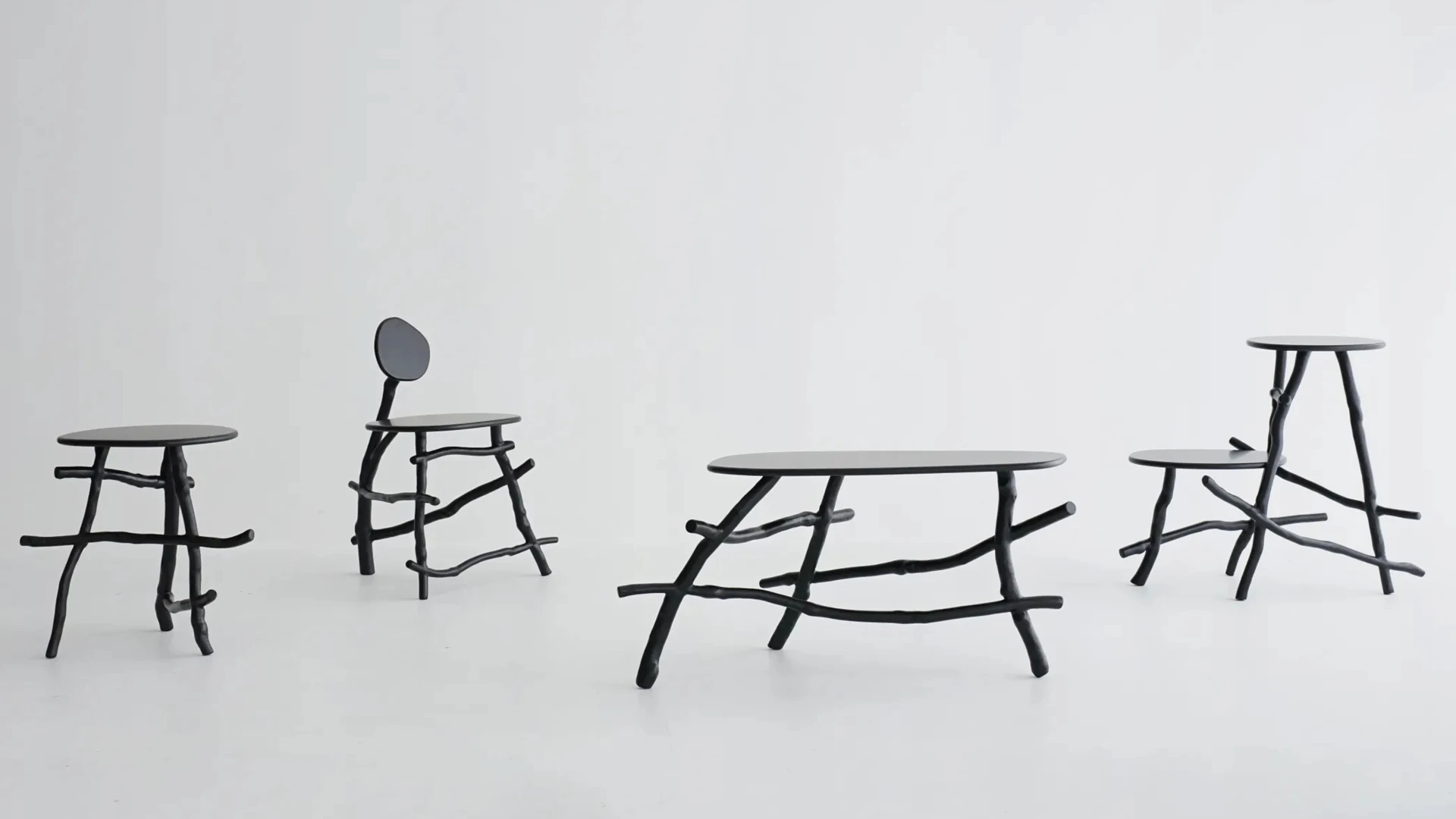

Uneri furniture collection by Sotanaka uses pruned urban branches and fallen wood
Designing with urban wood: Uneri by Sotanaka
In Tokyo, design studio Sotanaka turns attention to another overlooked resource: the branches removed from the city’s street trees and parks. Pruned branches and fallen wood routinely result from urban tree management, yet these materials are most often just discarded or chipped.
Sotanaka’s Uneri furniture collection includes side tables, stools, and chairs made from this locally available wood. Rather than standardizing the material, the designs preserve the irregular forms and visible history of each branch.
“The collection assembles varied branches to preserve the physical evidence of the living tree,” says founder Soichiro Tanaka.
By sourcing material from the immediate urban environment, the studio reduces emissions associated with transportation, avoids virgin-timber extraction, and gives value to a resource already abundant in the city.
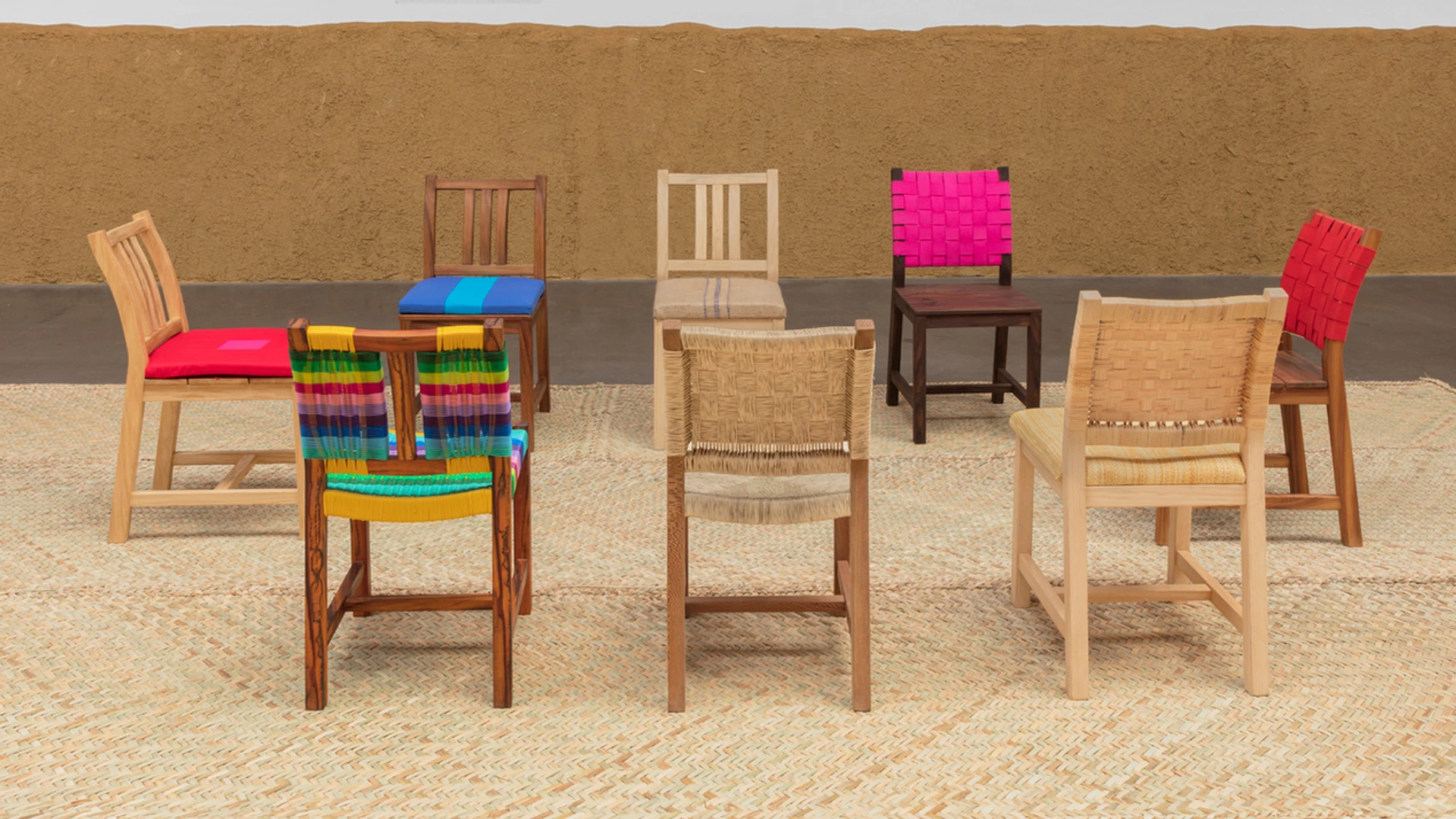
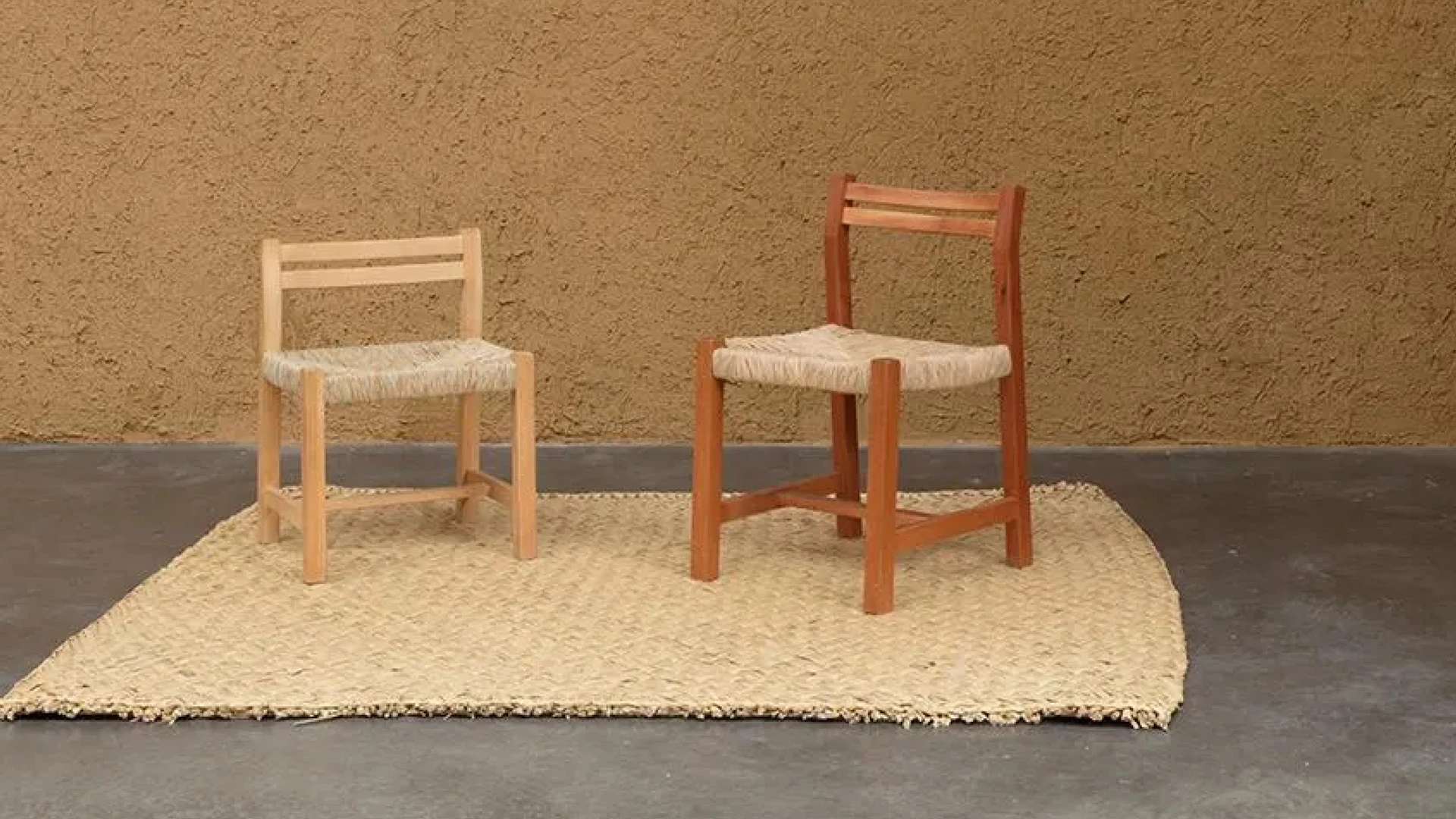
Arrullo chair: variations and interpretations
Enabling local production through accessible design: Arrullo by Óscar Hagerman
The Arrullo chair shows that low-tech can also mean designing for local production and livelihoods. It was designed in 1969 by Mexican-based architect and designer Óscar Hagerman.
Hagerman developed the chair with workers at Cooperativa Don Emiliano, a carpenters’ cooperative in Nezahualcóyotl, on the eastern edge of Mexico City. At the time, the cooperative was building coffins for very low pay. Hagerman saw an opportunity to share drawings and production knowledge so they could make and sell furniture under their own control.
In 1974, the chair won an award from the Instituto Mexicano de Comercio Exterior, but its wider significance lies in how widely it was reproduced. Inexpensive versions, including those with woven palm-leaf seats, brought the design into everyday Mexican life. He also works with certified endemic wood, which means timber from tree species native to Mexico, sourced from responsibly managed forest.
At a time when originality and authorship often dominate design discourse, Hagerman prioritized people and their fundamental needs. With his accessible drawings, makers are able to adapt and use the furniture, minimizing fabrication costs while supporting local skills.
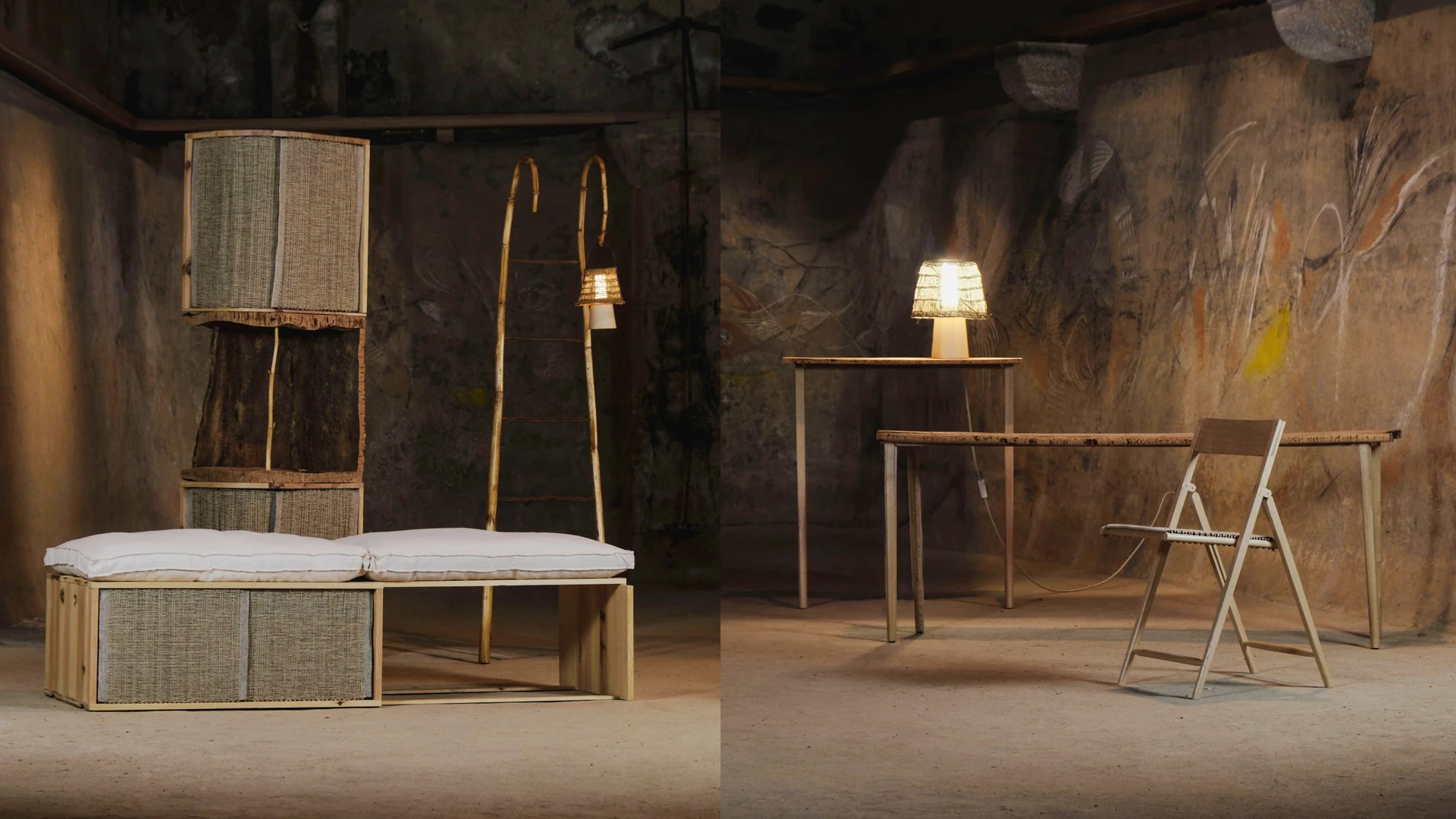
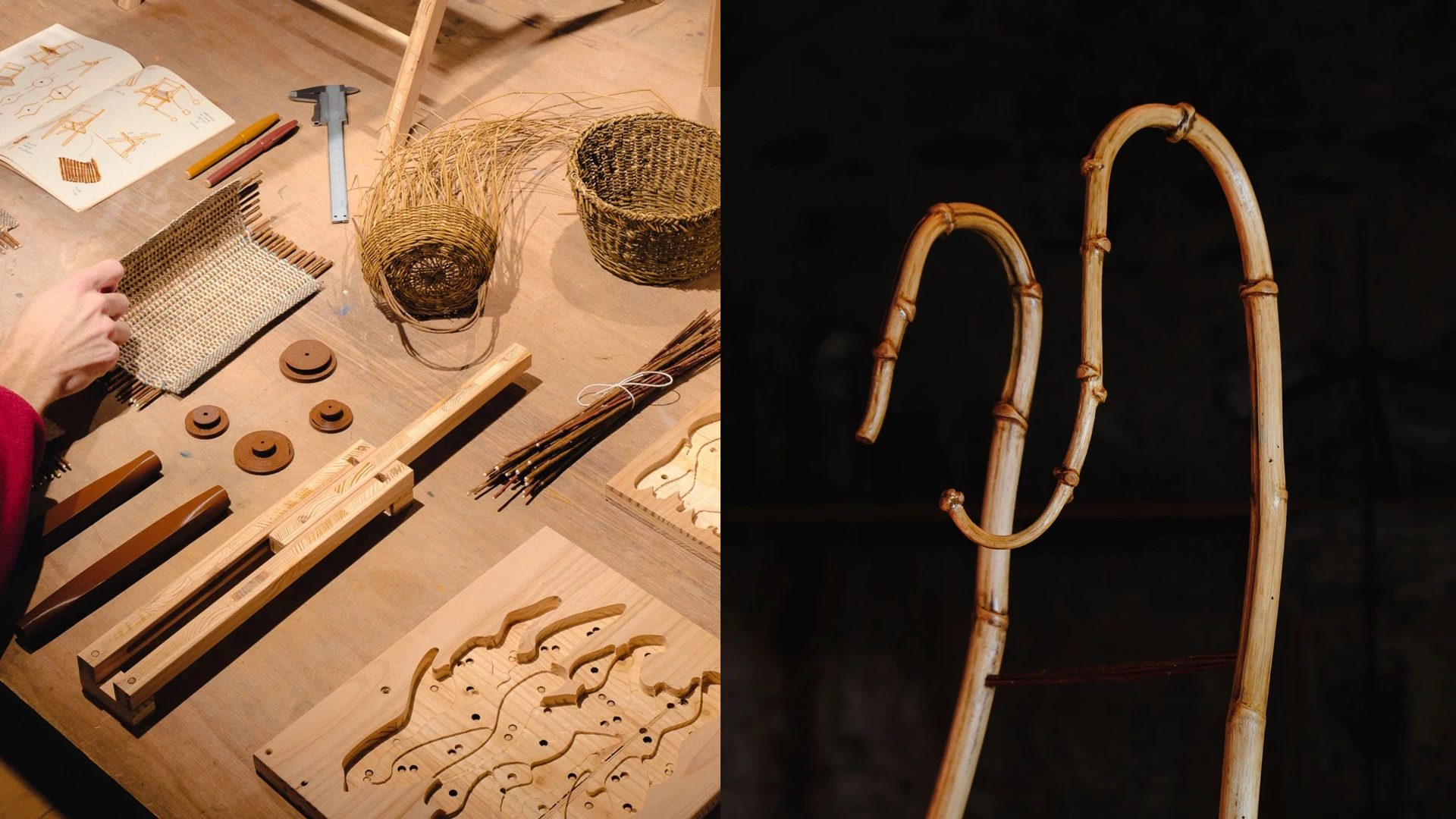
Collection Corte by Florian Meca draws inspiration from Corsican nature and local materials
Designing for place: Collection Corte by Florian Meca
In Corsica, French designer Florian Meca developed the Corte Collection, a modular furniture system for an emergency-housing project in the region. The collection is shaped by a simple premise: while maintaining comfort, furnish the cabins as frugally as possible and prioritize use of what a territory already offers.
“Drawing inspiration from Corsican nature, in the purity of its forms and the robustness of its elements,” Meca explains, “the Corte Collection embodies a certain vision of territorial design.”
The pieces combine regional materials -- including pine, cork, wool, and rush -- with lightweight construction. Rather than relying on imported industrial semi-finished products, the collection draws on the island’s historic natural materials and traditional skills.
Lightness is not only an aesthetic choice. It reduces material use, simplifies production, and limits the technological burden of the furniture.
Collection Corte shows how low-tech furniture can be designed specifically for its landscape, climate, materials, and users. Learn more about designing with place in mind in our previous article in the LONG LIVE FURNITURE! series.
Six Principles for Making ‘Less’ a Design Strategy
The projects we’ve highlighted above do not reject technology. Instead, they show that the most meaningful innovations often begin before a new technology is added. It also demonstrates how low-tech is not confined to small workshops or experimental projects.
At industry scale, low-tech becomes a design strategy rather than a stylistic preference. It asks companies to treat material constraints, local supply chains, and reparability, not as limitations, but as starting points for better products and more resilient business models. Here are 6 principles to help manufacturers and brands approaching low-tech:
1. Rethink material selection
Low-tech begins with a closer look at what is already available. Reclaimed timber, production offcuts, agricultural residues, and underused natural fibers can become viable inputs when designs are adapted to their actual properties.
This does not mean accepting lower quality. It means selecting materials for their fitness for purpose, availability, and end-of-life potential -- not simply for their familiarity or ease of processing. The environmental case should be considered across the full life cycle: sourcing, manufacturing, use, repair, and recovery.
2. Remove unnecessary production steps
Every coating, fastener, laminate, adhesive, and secondary process adds material, energy, cost, and potential barriers to repair. Low-tech design questions whether each of these additions earns its place.
Simpler cutting patterns, fewer components, and construction methods that use material efficiently can reduce waste before production even begins. At the same time, neither handcraft nor machinery is inherently more sustainable. The relevant question is which method delivers the required performance with the least avoidable impact.
3. Design for longevity and repair
Durability is one of low-tech’s most practical outcomes. Robust construction, accessible connections, and replaceable parts allow furniture to be maintained, adapted, and kept in use rather than discarded when one element fails.
Design for disassembly is especially important. When a chair, table, or storage system can be taken apart without destroying its components, repair becomes realistic and materials retain value beyond the first life of the product.
Simplification must not compromise safety, structural performance, or everyday usability. The goal is not minimalism for its own sake, but clarity about what the product truly needs.
4. Use knowledge and technology purposefully
Low-tech draws strength from established knowledge: craft techniques, vernacular building practices, and the accumulated experience of makers who understand materials through use. Designers, manufacturers, engineers, material specialists, and local makers each hold part of the knowledge needed to turn resource-efficient ideas into practical, scalable products.
These forms of knowledge should be engaged with respect for their cultural origins and the communities that sustain them.
Technology still has a role -- check out our article on AI and design here. Digital design tools, advanced manufacturing, and new materials can improve accuracy, reduce waste, or solve problems that would otherwise require more material or energy.
5. Enable wider adoption
Individual products matter, but systemic change requires the right conditions around them. Manufacturers can build stronger local networks by connecting with regional suppliers, repair services, reuse organizations, and municipalities.
Low-tech solutions also need to be adaptable. A system developed for a small workshop may need different tools, tolerances, or distribution models to work in industrial production. Flexibility makes sustainable practices easier to adopt across scales.
Finally, companies should measure what matters: material intensity, waste, energy demand, durability, reparability, and actual use over time. These indicators offer a more complete picture of progress than novelty alone.
6. The opportunity beyond the product
The greatest opportunity here lies not only in improving individual pieces of furniture. It lies in an invitation to rethink how materials are sourced, how production systems are organized, and how value is created and retained.
When “less” becomes a design strategy, it can reduce environmental impact while strengthening local supply chains, preserving skills, and creating products with longer, more useful lives.
Low-tech does not ask the furniture industry to abandon technology. It asks it to be more selective: to recognize when complexity adds genuine value, and when it simply consumes resources, increases cost, or shortens a product’s useful life.
The five projects in this article suggest a different starting point for innovation. Rather than beginning with what can be added, designers and manufacturers can begin with what is already available -- materials, skills, local knowledge, and existing products.
By treating constraints as creative opportunities and designing for longevity, repair, and adaptation, the industry can redefine progress around a more demanding question: What is the least resource-intensive way to make something that works well, lasts, and remains valuable?
Share your low-tech furniture projects, practices and ideas. How are you helping to reshape the future of furniture? Email us at [email protected]. We'd love to hear from you, and promise to respond.
>>> Read the other articles in the 'Long Live Furniture!' series.
SOURCES
- The Age of Low Tech: Towards a Technologically Sustainable Civilization
- Carbon Futures x Post-Carbon Cultures
- What is Low-tech Magazine?
- The case for making low-tech 'dumb' cities instead of 'smart' ones
- Half bridge, half home: Wallmakers’ latest project takes architecture to daring new heights
- Architectures of the Low-Tech Future
- The 17 Sustainable UN Goals
- The Lufa Collection
- Fragments Becoming: turning timber offcuts into a new kind of marquetry
- Uneri 2026
- Open source design: the chairs of oscar hagerman
- A new Mexico City show explores design imitation as the sincerest form of legacy