
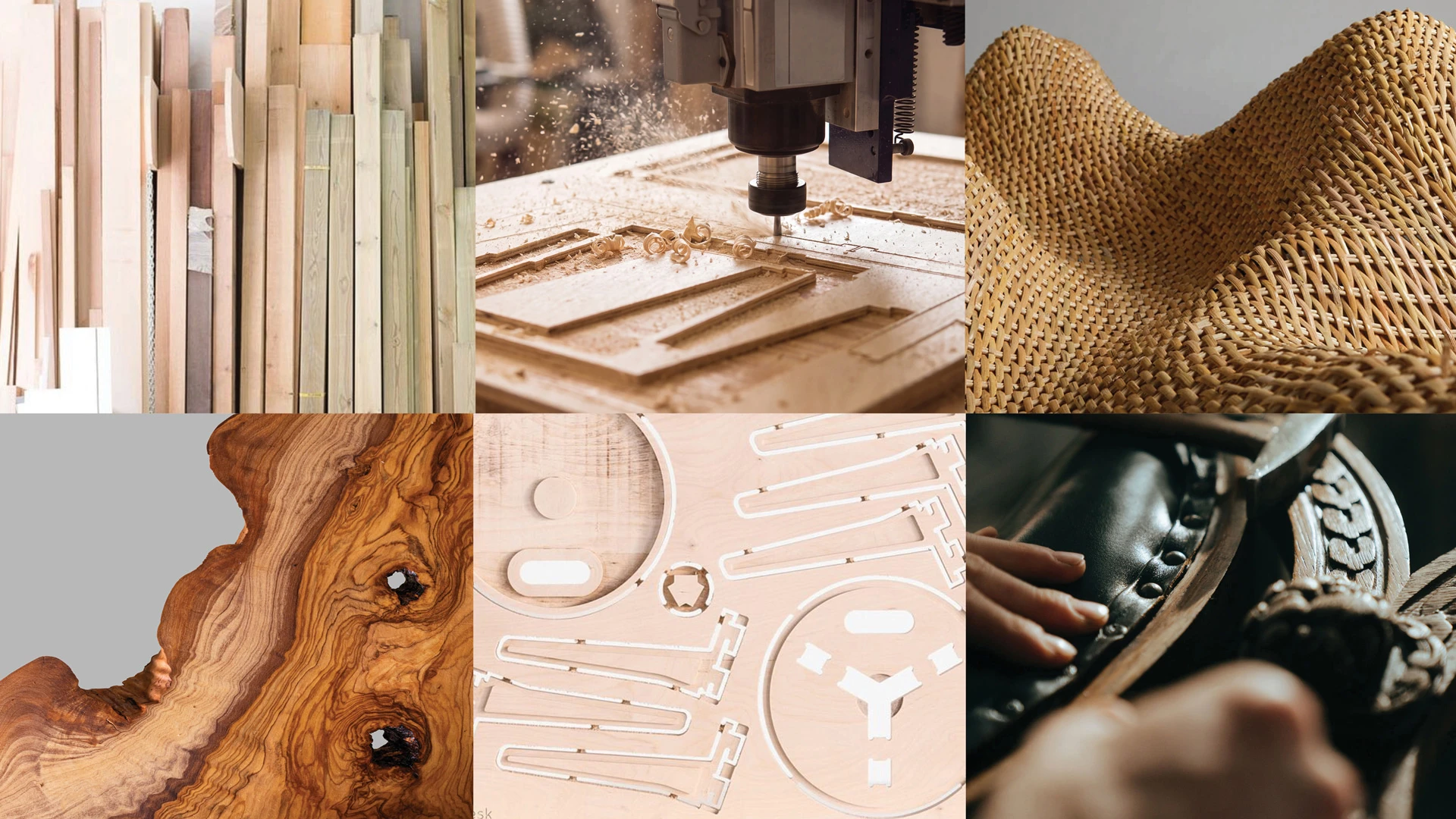
Local Futures: Reconnecting Furniture with Place
30-Sep-2026
Photo Courtesy of 1. Opendesk · 2. AI-generated (Firefly / Gemini) · 3. The Wicker Story · 4. Jorge Penadés · 5. Opendesk · 6. Cottonbro Studio
Local Futures: Reconnecting Furniture with Place
Furniture’s best future may be neither entirely local nor fully global
Furniture is deeply embedded in the global movement, each year, of upwards of 100 billion tons of materials. These materials often move across counties, countries and continents. Over time, furniture production has become increasingly internationalized, with raw materials, manufacturing and consumers often separated by thousands of miles.
While global supply chains have made it possible to access materials, manufacturing capabilities and products worldwide, they have also made the systems behind furniture more complex and less visible. As the chains of furniture-making lengthen and fragment, it becomes harder to trace the origins of materials, harder to monitor production and labor conditions, and harder to reduce transport-related emissions.
That led us to this third article in our LONG LIVE FURNITURE! series -- exploring not only the question ‘How can we make furniture locally?’ but also ‘What would 21st-century furniture systems look like if more deeply connected to place?’ And, importantly -- ‘Why does all this matter?’
Local futures matter
We often understand “locally produced” as something grown or manufactured close to consumers. Building more local and regional production systems, however, is not simply about reducing geographical distance. It can also mean rebuilding connections between furniture and the places it is part of -- the materials and ecosystems it depends on, the people and skills that shape it, and the communities in which it is made, used and repaired.
Recent disruptions -- from the COVID-19 pandemic and climate-related events to geopolitical conflicts -- have further exposed the fragility of global supply chains. They have also renewed interest in how furniture might be produced through more transparent and resilient networks that foster local skills and infrastructure and keep resources circulating within communities.
In this article, we’ll explore four interconnected themes: distributed manufacturing; regional materials; local knowledge and craftsmanship; and local networks for repair and reuse. We’ll share real-life case studies to reflect how designing with place can help reconnect furniture with the resources, skills and communities that sustain it.
1. Distributed manufacturing: designing globally, producing locally
Distributed manufacturing shows that local production does not necessarily mean working in isolation. It combines global knowledge networks with production that engages local makers, materials and infrastructure. Digital information travels across borders while the physical production of furniture takes place closer to where it will be used.
The AtFab furniture collection by Filson & Rohrbacher Studio, for instance, offers an open-source digital fabrication process. The studio makes digital files available for anyone to download and use, allowing makers around the world to fabricate furniture using locally sourced materials and a nearby CNC machine.
Since 2008, makers worldwide have downloaded AtFab's digital files and locally fabricated furniture, demonstrating, according to the New York-based studio, how “a more inclusive, less energy intensive way of making goods is possible.”
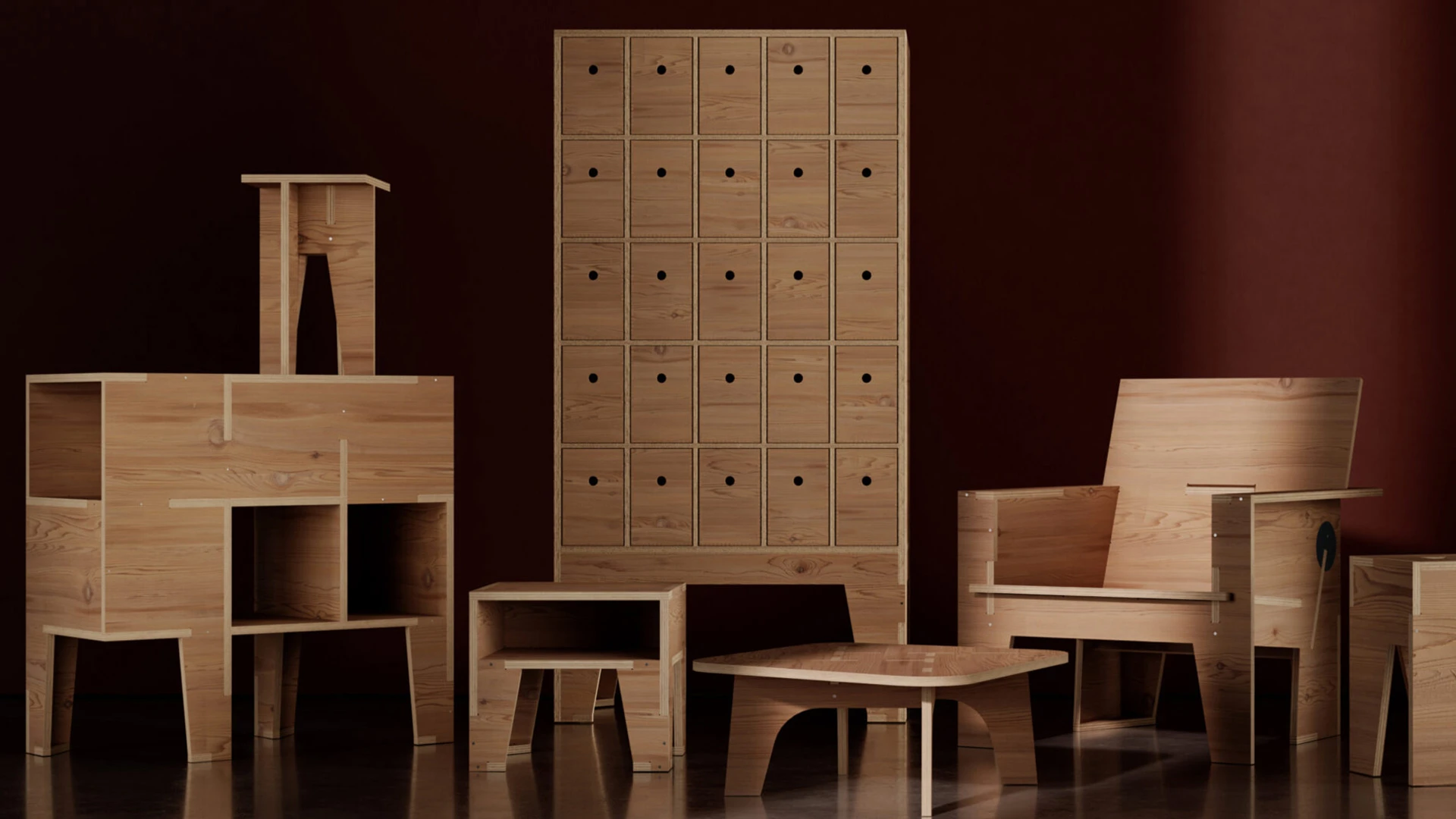
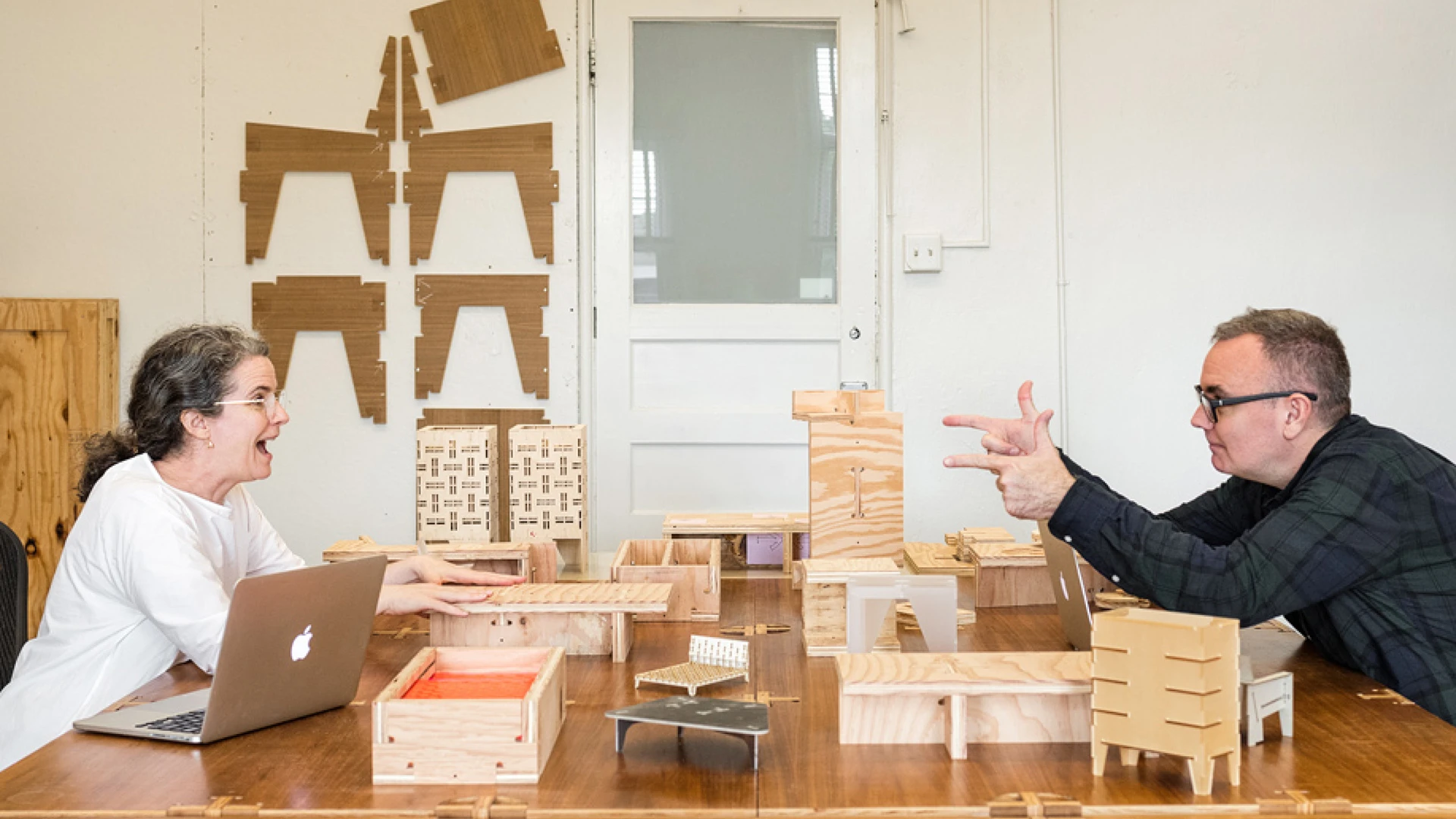
The AtFab furniture collection by Filson & Rohrbacher Studio.
Opendesk has a similar approach. This UK-based platform describes itself as “a global platform for local making.” Rather than mass manufacturing furniture and shipping it internationally, Opendesk creates furniture designs and connects its customers to local makers around the world. Furniture is produced on demand and only travels from a local workshop to the customer's workspace.
With a global community of more than one hundred makers, Opendesk’s digital platform connects geographically dispersed production without relying on a single centralized manufacturing system.
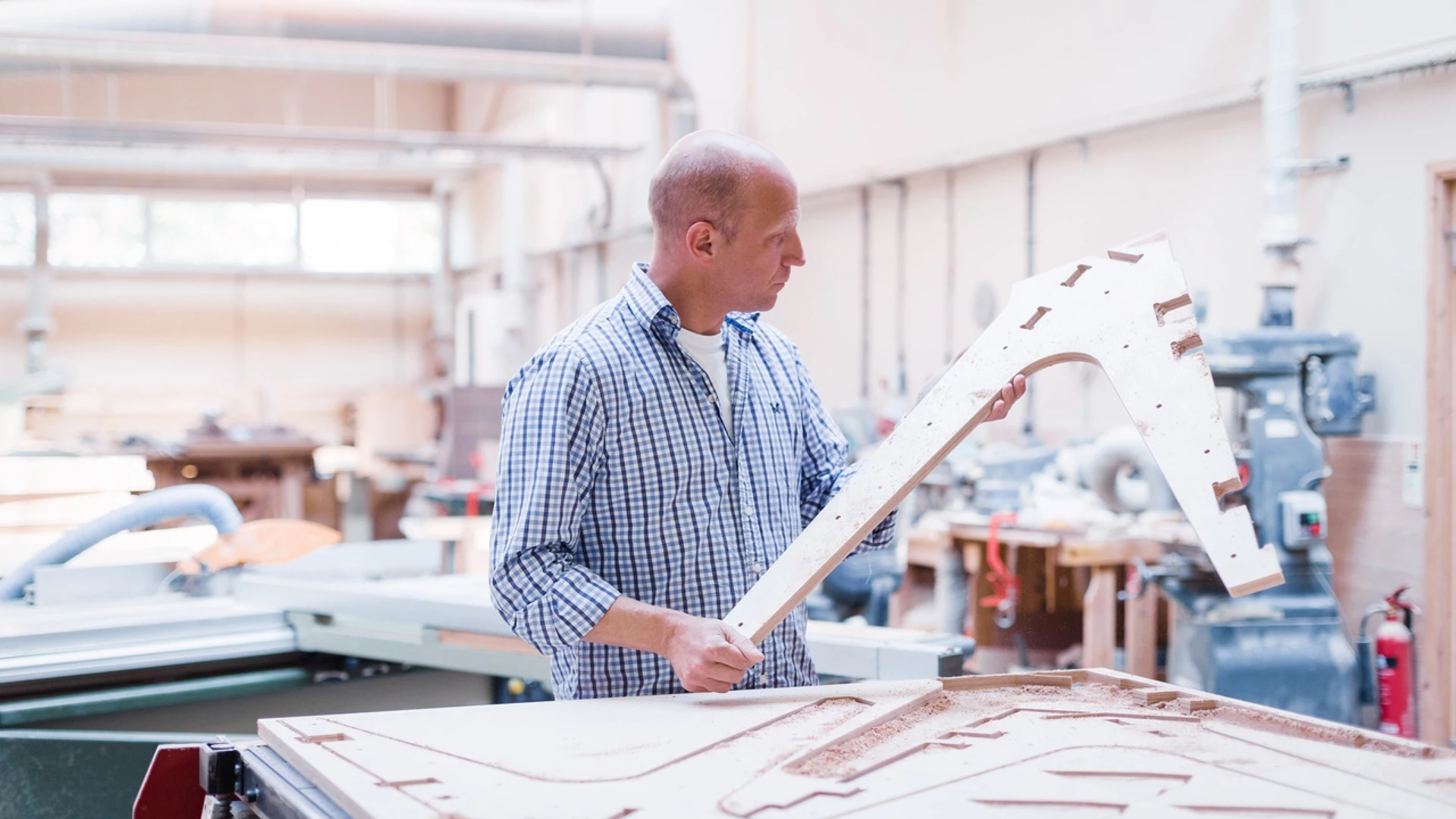
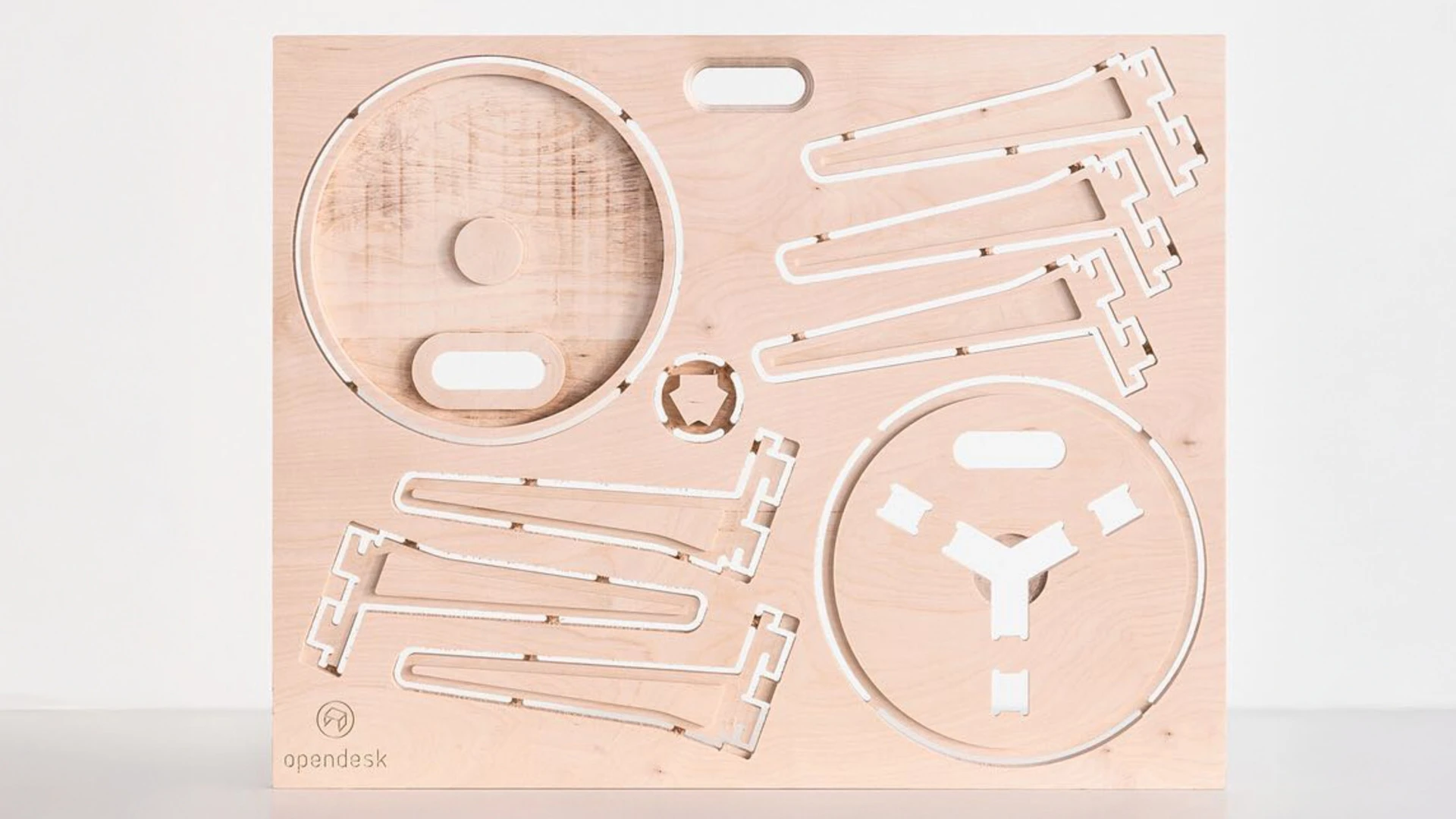
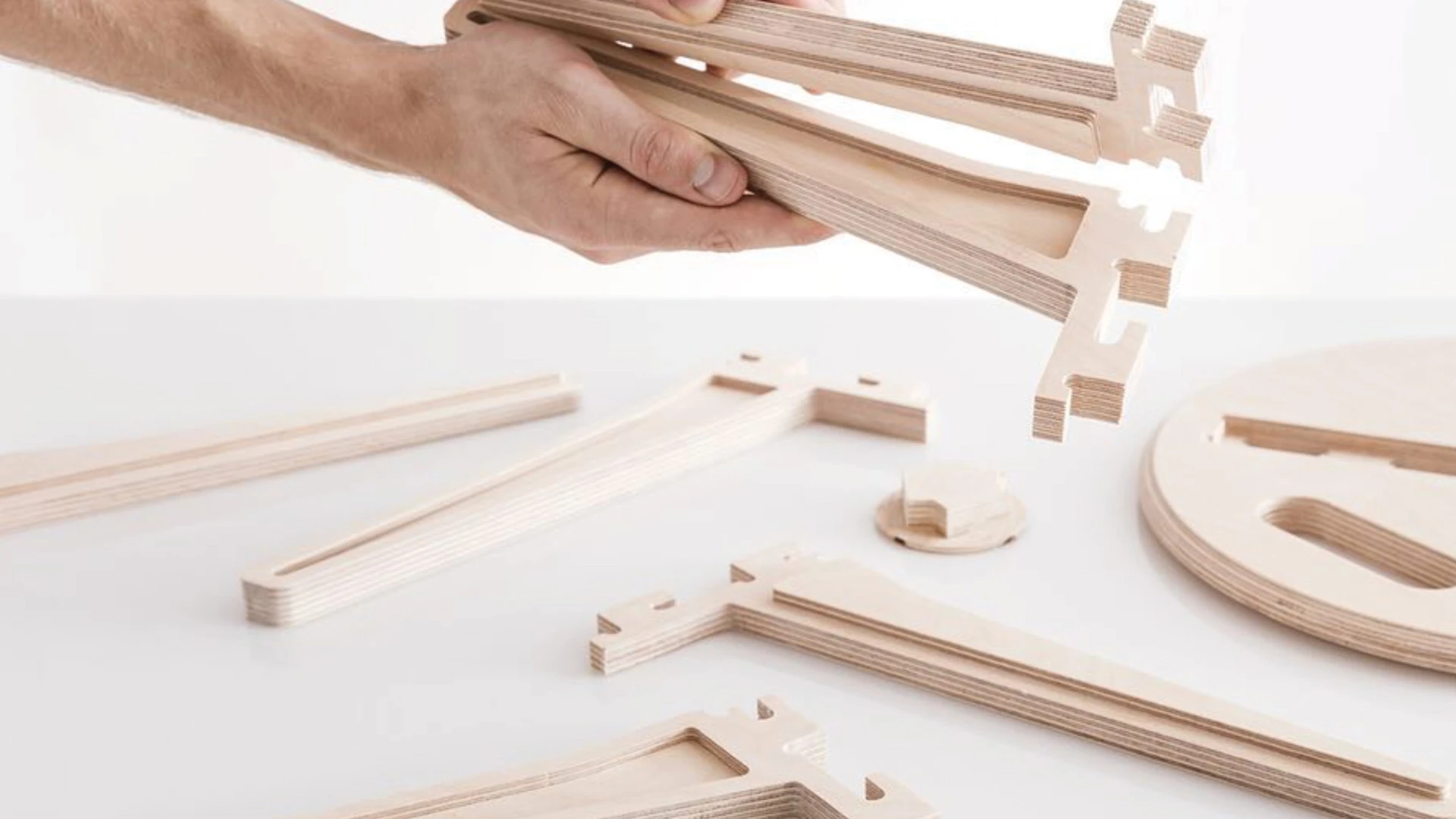
Opendesk modular furniture designs can be produced locally.

Customers choose the furniture -- and Opendesk connects them with local makers.
In the Netherlands, OpenStructures applies the idea of distributed production to the design system itself. Its open source design framework allows designers, makers and manufacturers to create, share and remix modular components using a common grid and interface.
“By making parts interchangeable by design,” the company explains, “objects can be repaired, adapted, and extended over time rather than discarded.” In this way, manufacturers, artisans and makers can interpret the same system according to their own context and available resources. Its latest evolution, V8.0, is available as a raw aluminum parts kit that can be combined with locally sourced offcuts and other materials.
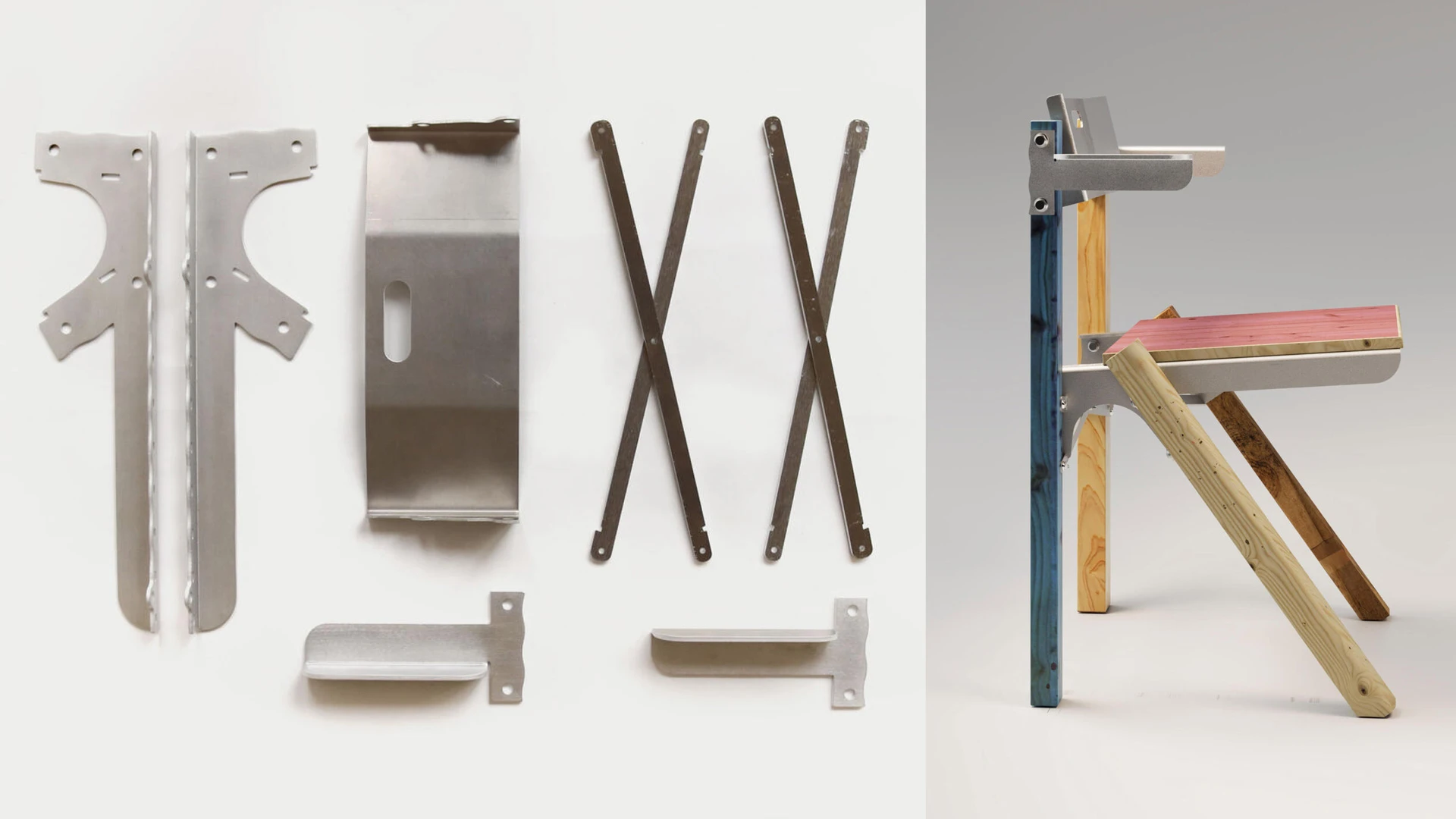
Left: V8.0 Chair modular kit. Right: Assembled chair.
All these examples separate the physical product from the knowledge needed to make it. Instead of shipping finished furniture across the world, the design can travel digitally while materials, labor and production remain closer to the place of use.
2. Regional materials: looking to the surrounding landscape
Connecting furniture to place also means looking at the material resources already present within a region. These may be natural resources, agricultural byproducts or urban waste streams.
Giving new life to existing materials is particularly important in the context of growing pressure on natural resources. As discussed in Part 01 of this series, Designing With What Already Exists, reusing discarded materials can reduce the need for virgin resource extraction. According to the International Resource Panel, extraction and processing of natural resources account for around half of global greenhouse gas emissions and more than 90% of biodiversity loss and water stress.
US-based Pfeifer Studio, for example, uses urban-reclaimed Siberian elm, a non-native species that has spread across the Rio Grande Valley, where it can displace native species and reduce biodiversity.
Rather than simply treating these trees as waste, Pfeifer works with local arborists to recover them and transform them into furniture. Trees that might otherwise be discarded or burned become the raw material for its Urban Wood collection, with each piece handmade to order by the studio and local artisans.
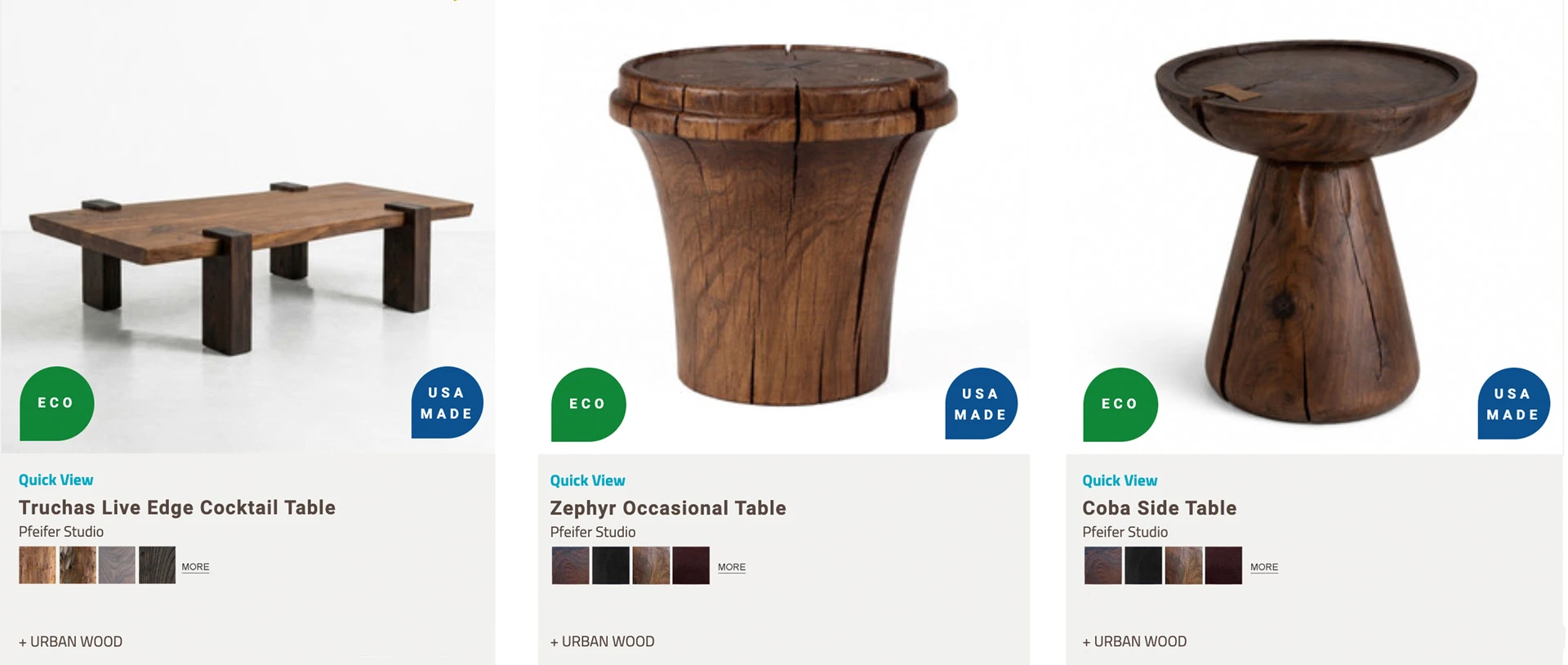
Pfeifer Studio’s urban reclaimed furniture.
Similarly, Spanish designer Jorge Penadés looks at an existing agricultural waste stream. His Uprooted V02 furniture collection is made from the roots of centuries-old olive trees discarded by Spain's olive oil industry.
In Andalucía, the shift towards intensive agricultural mechanization has led to the widespread replacement of traditional olive groves with high-density plantations designed for efficient harvesting. As a result, countless centuries-old olive trees are uprooted each year and typically sold as firewood.
Their irregular forms, knots, embedded stones and varying densities also make them difficult to process through conventional timber industries. By contrast, Penadés sees these characteristics as part of their value. His furniture preserves the intricate growth patterns of the roots, revealing a material history that would otherwise be lost.
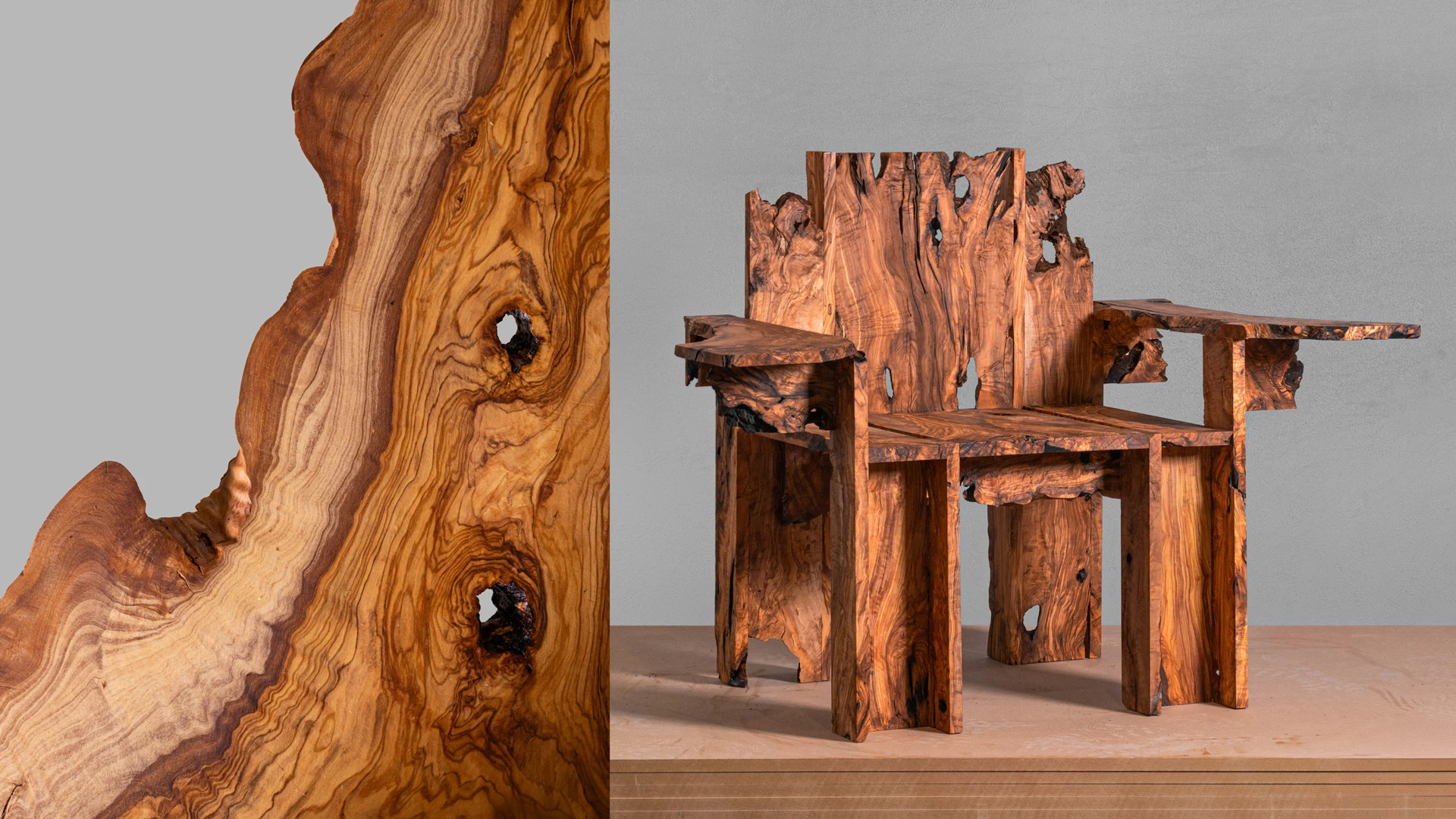
An armchair, part of the uprooted V02 furniture collection by Jorge Penadés.
Regional resources can also be overlooked because they do not fit existing industrial standards. In the UK, designer Mareen Baumeister is exploring this challenge through Flock, turning local wool waste into a structural material.
An estimated 90% of sheep's wool in Europe is currently burned, buried or discarded, largely because its coarser quality does not meet the standards of the fashion industry. As a result, this wool has little economic value for local shepherds, contributing to a significant waste stream.
Baumeister's Flock project combines traditional felt-making techniques with advanced digital fabrication. Using a robotic arm equipped with a custom felting needle, she transforms wool into three-dimensional structures while controlling the density and stiffness of the material.
The project also offers an alternative to the synthetic materials commonly used in additive manufacturing, showing how digital fabrication can work with natural materials such as wool. One application of the research is a mono-material upholstered furniture concept made entirely from wool -- a renewable and biodegradable material whose fibers can also be mechanically recovered and reused.
This opens up an alternative to conventional upholstered furniture, which typically combines wood-based panels, petroleum-based foam and textiles. Because multiple materials can be difficult to separate, designing with a single material can simplify repair, reuse and recycling at the end of a product's life.
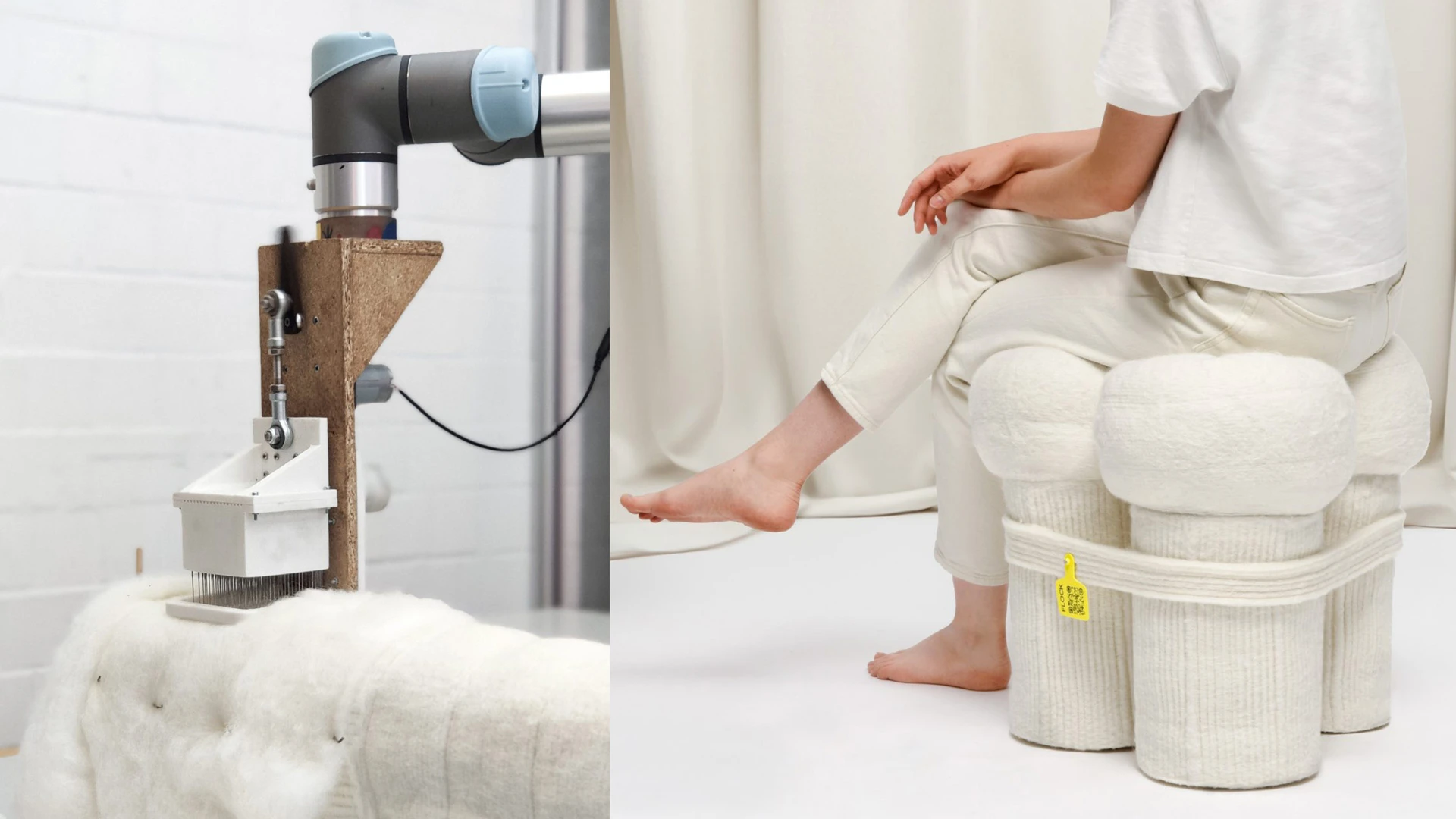
Left: Felt machine with a robotic arm developed for the Flock project. Right: Mono-material upholstered furniture.
But materials alone do not make a local system. Every material also requires accumulated knowledge as to how it can be harvested, processed, shaped and maintained. In many places, that knowledge lives within local craft traditions and communities. Read, for example, about Common Object Studio's approach to building regenerative, place-based furniture systems in our Changemakers interview.
3. Reclaiming local knowledge and craftsmanship
Long before sustainability and the circular economy became part of the design vocabulary, many craft traditions were already shaped by regional resource limits. Artisans worked with locally available materials, used relatively low-energy processes, repaired and adapted objects, and passed knowledge between generations.
Today, designers are increasingly looking to these practices -- not simply as nostalgic traditions, but as sources of knowledge for designing within ecological limits.
Mexican design studio Mestiz, for example, collaborates with local artisans across a range of traditional practices, from wood carving to carpentry to wickerwork. Founder Daniel Valero sees these not as short-term collaborations, but as long-term relationships with local craftspeople.
“We believe in crafting designs,” says Valero, “that engage in profound dialogue with the context and history of each community we work with.”
The studio's furniture and objects draw inspiration from what’s in nature surrounding the studio, including local colors, plants, animals and, most importantly, materials.
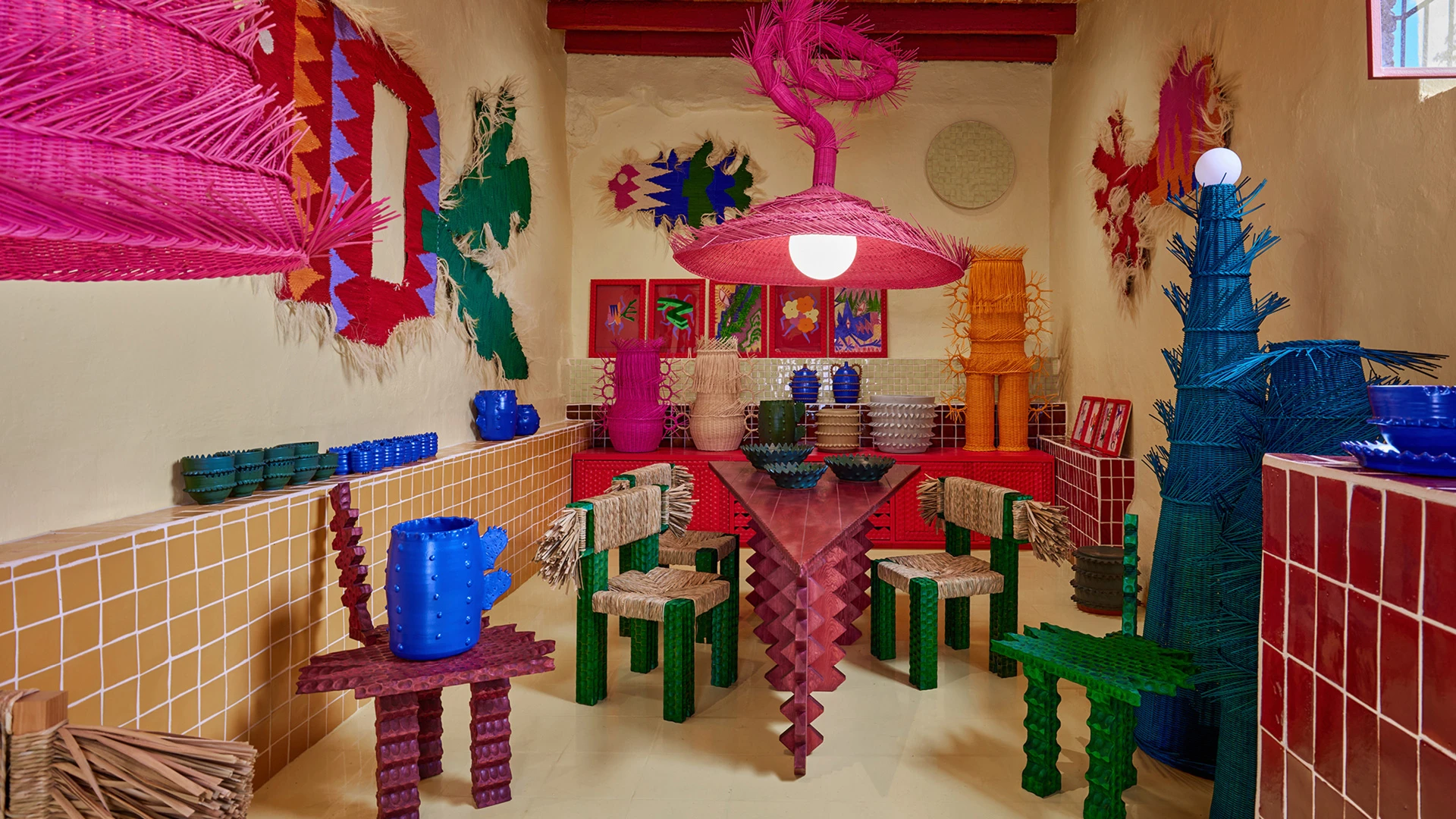
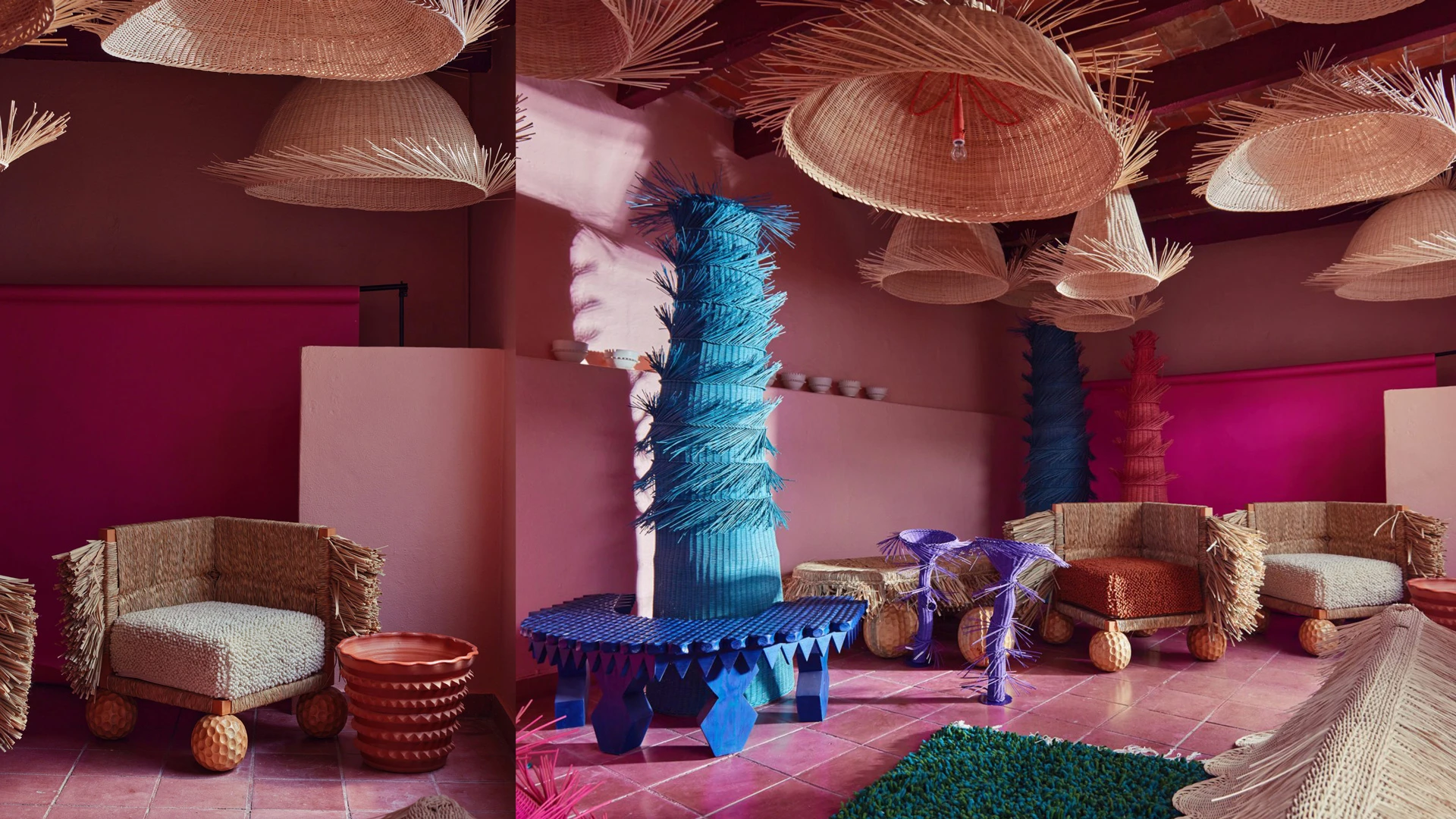
Mestiz artisanal design studio in San Miguel de Allende, Mexico displays handcrafted furniture, lighting and other objects.
Other designers are exploring how technology can strengthen rather than replace traditional skills. The Wicker Story, founded in India in 2019, is an example -- they work with traditional wicker crafts while experimenting with algorithmically complex wicker forms.
The Wicker Story emerged from a practical question: How can complex computational designs be realized without the industrial infrastructure that such processes typically demand?
Their answer lies in the flexibility of rattan, cane and other natural fibers. Instead of relying on industrial machinery to produce complex forms, skilled artisans translate them into handwoven structures. In this case, technology does not replace craft. It invites new possibilities for it.
The studio's Coral furniture series combines this approach with flat-packed construction, reducing the volume required for transport while maintaining a low-waste production model.
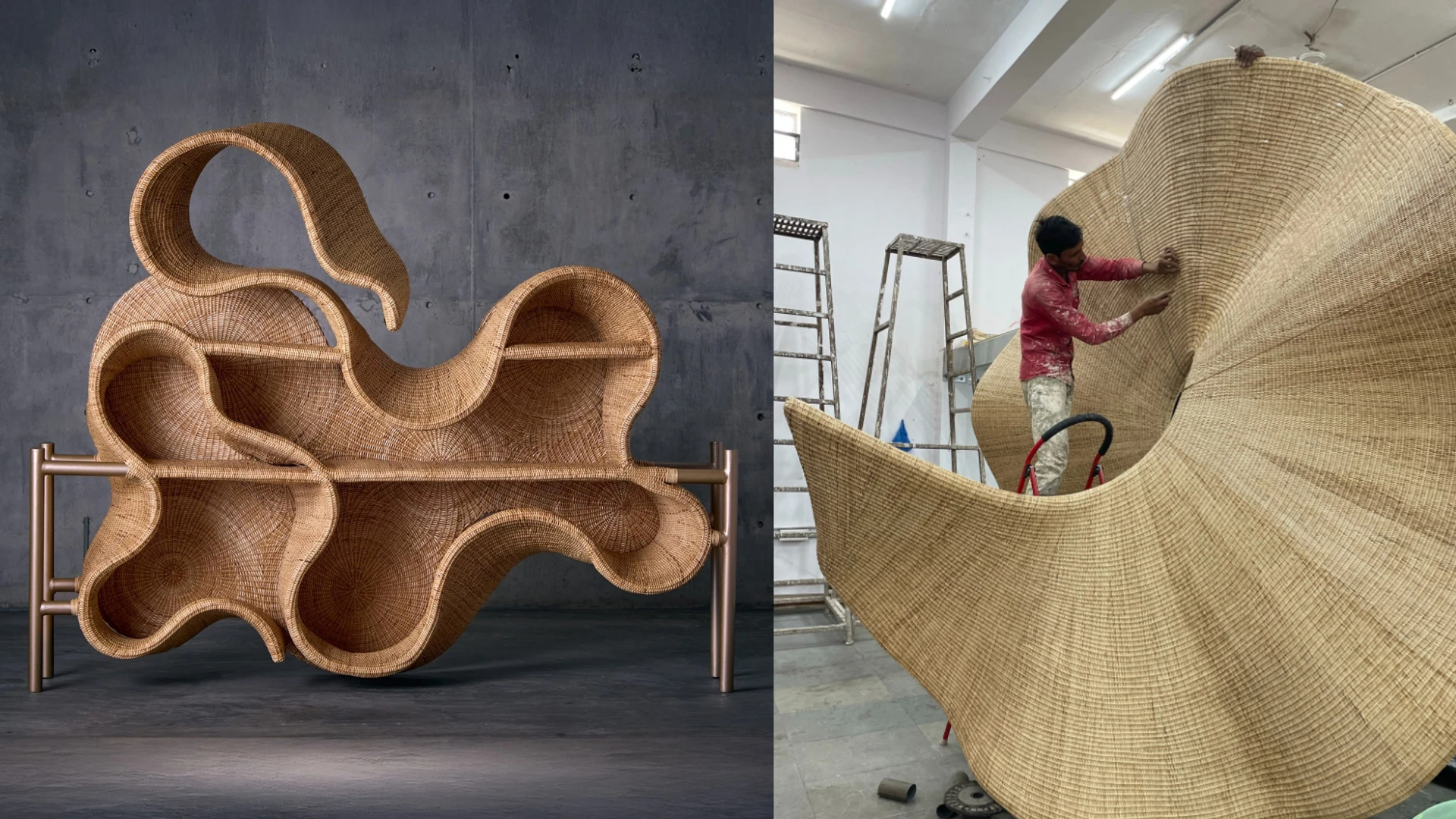
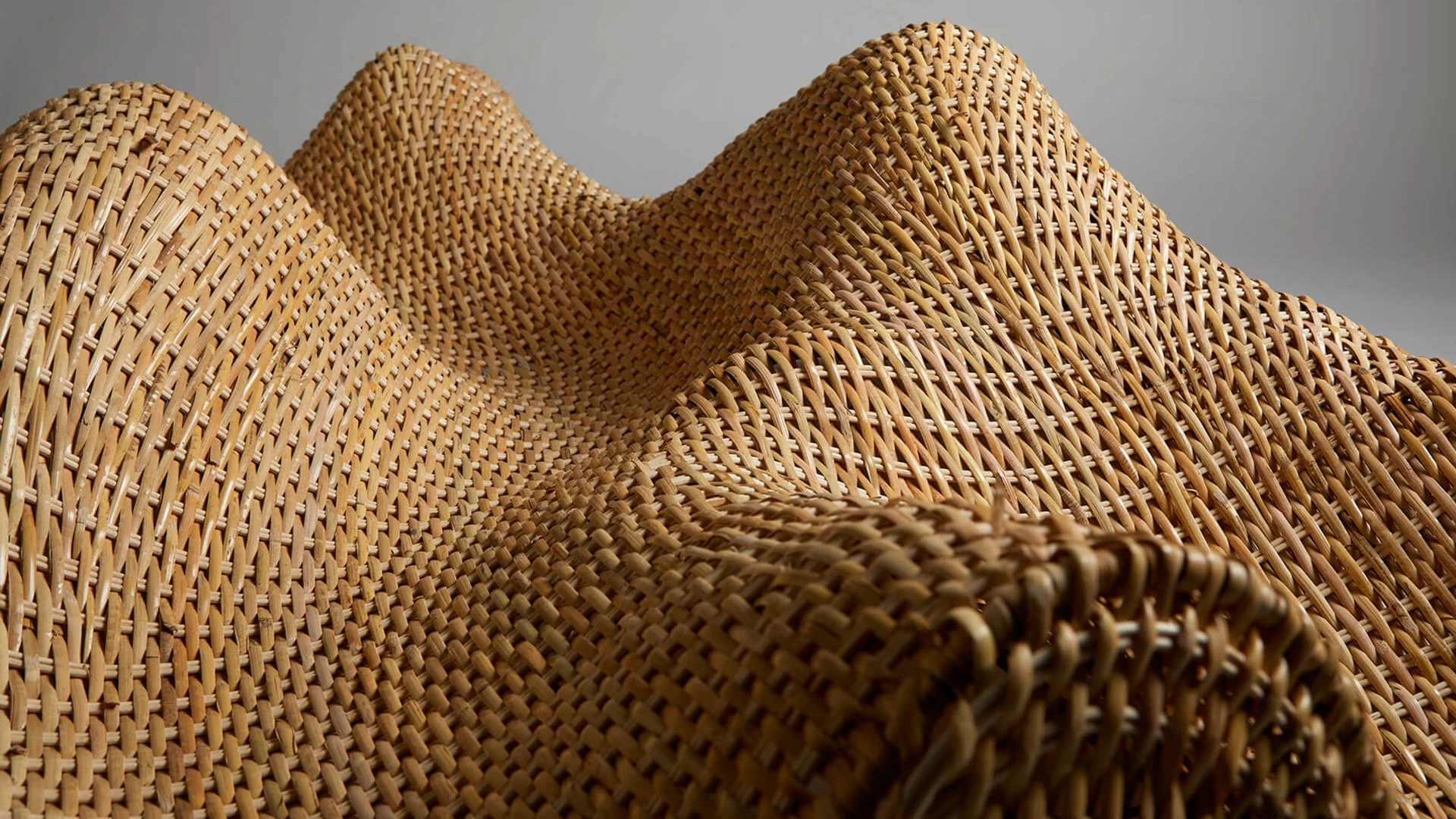
The Wicker Story’s Coral furniture series is handwoven by skilled artisans.
Mexican designer Fernando Laposse takes another approach. Rather than preserving existing techniques, he works with indigenous farmers and local communities to co-develop new craft practices.
Together, they transform agricultural byproducts such as corn husks, avocado skins and agave leaves into furniture and installations. His work connects material experimentation with employment, local agriculture and ecological regeneration.
Agave is deeply connected to Mexico's landscape and cultural identity, as well as to industries such as tequila and mezcal. Laposse has also worked with agave as part of wider reforestation efforts, planting it across eroded slopes where its roots help retain water and soil.
Instead of harvesting the whole plant, the fibers can be collected by pruning its leaves. “You prune the plant, but you do not kill it,” explains Laposse, “which actually helps it grow healthier and faster, and produce more leaves.”
Read more about Laposse and other innovative designers in our article Ancient Wisdom, Contemporary Furniture: Designing for Climate.
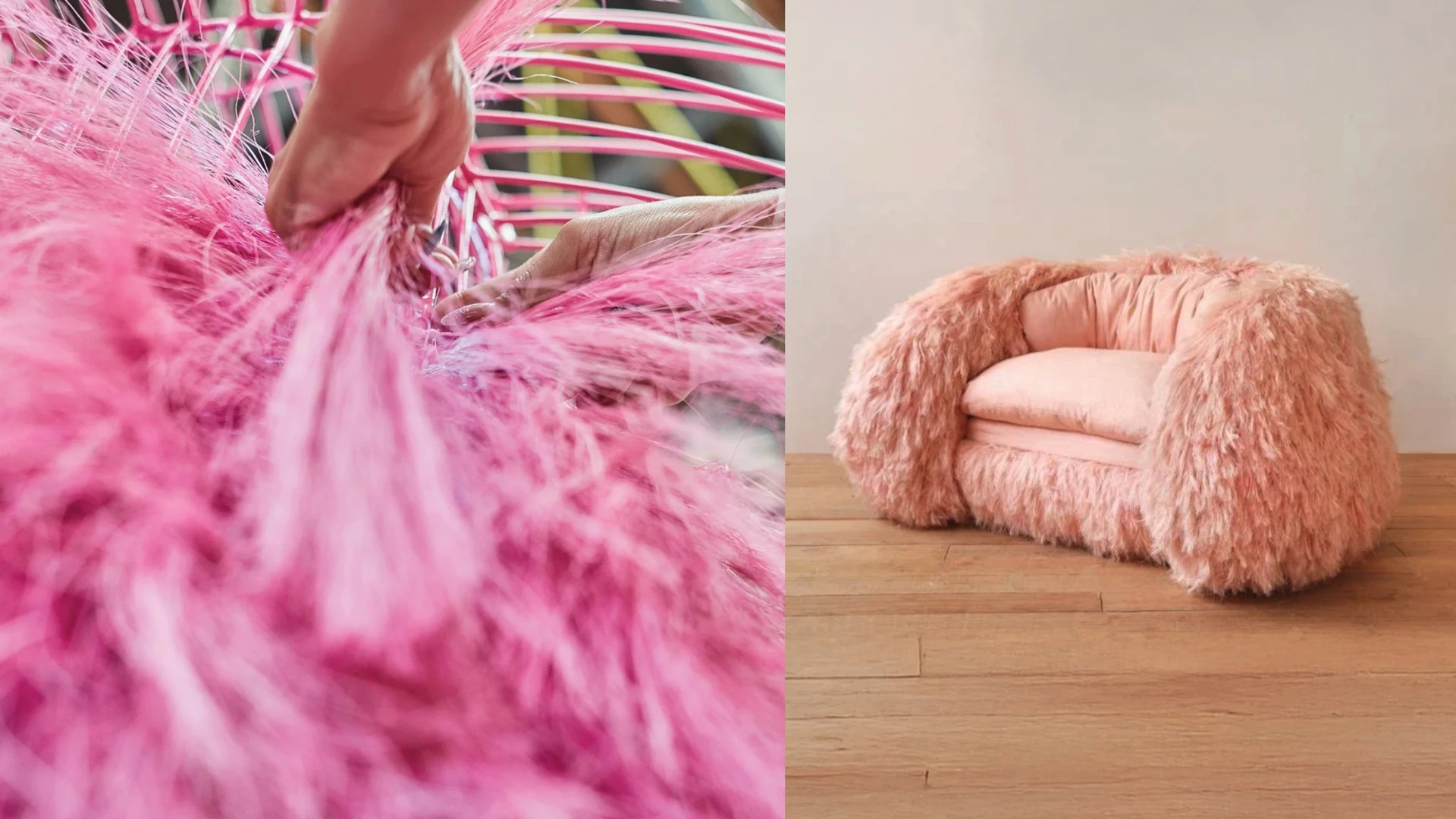
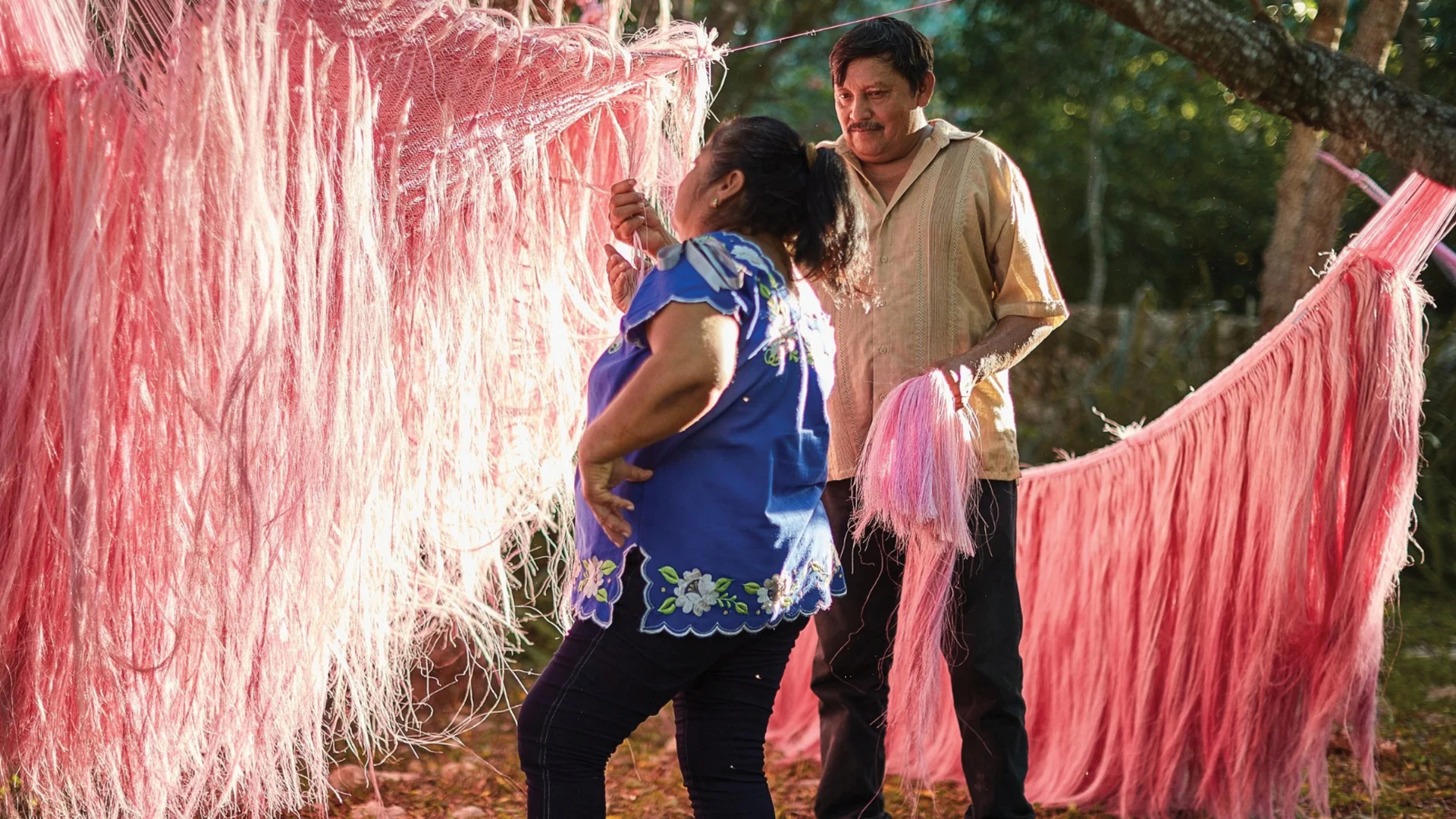
Agave dyed with cochineal by local artisans. Above right: The Pink Furry armchair.
Design can engage with local knowledge in multiple ways -- preserving existing traditions, combining craft with new technologies, and co-developing new practices with communities. Yet even when furniture is made locally, with local materials and knowledge, its story does not end when it leaves the workshop. Products still need to be maintained, repaired and adapted.
4. Local networks: keeping furniture in use
Connecting furniture more closely to place is also about what happens when furniture needs maintenance, repair, refurbishment or remanufacturing.
Local service networks can help keep products in use while creating new forms of value and employment within communities. They can also create stronger relationships between manufacturers, retailers, repair professionals and customers.
In the United States, for instance, Furniture Engineers operates as a national service network connecting manufacturers, retailers, warranty providers and customers. This company works with furniture brands to keep products in use when they require warranty repairs -- providing digital damage assessments and bringing repair services directly to customers' homes.
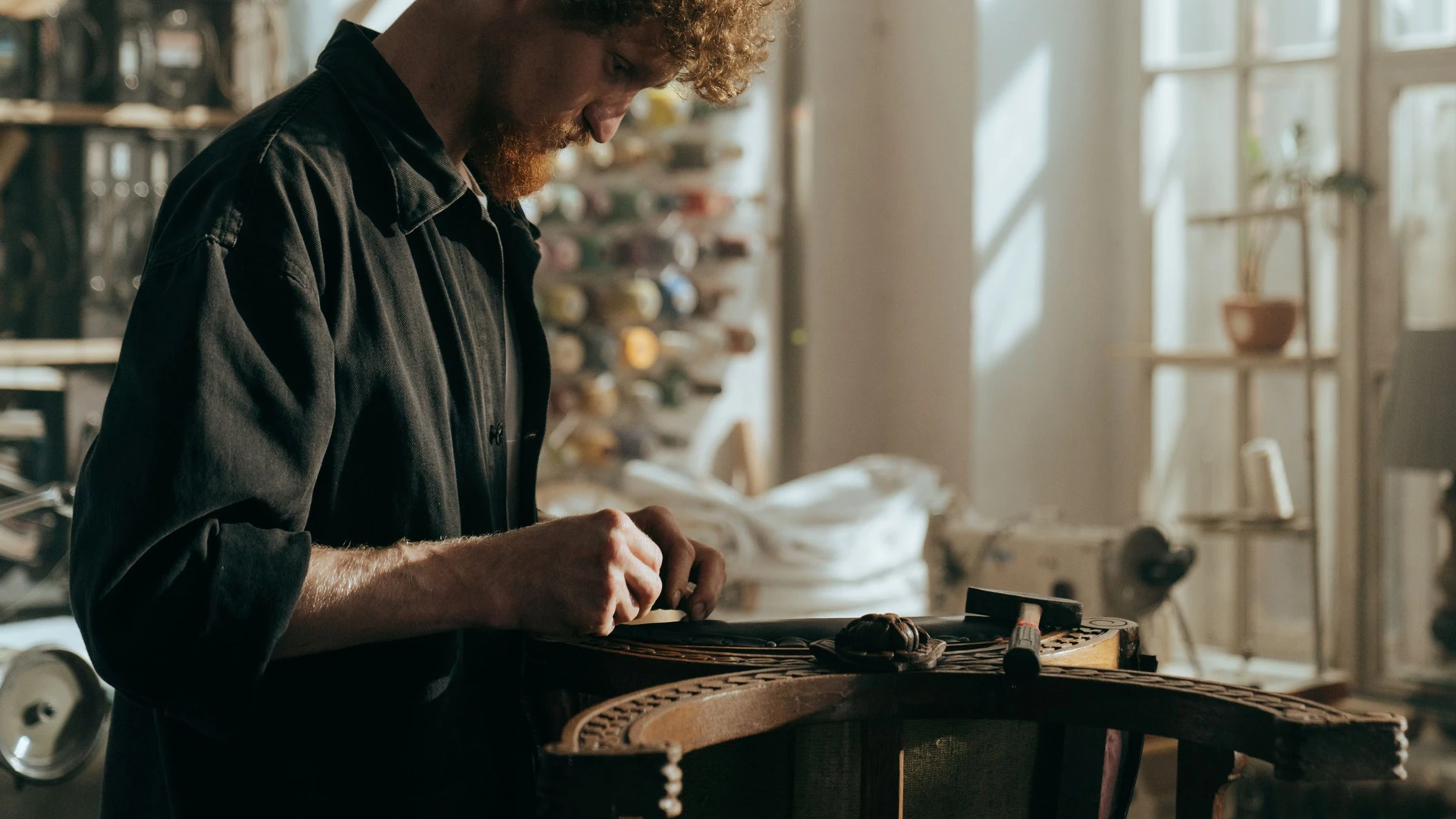
Furniture repair | Photography by cottonbro studio.
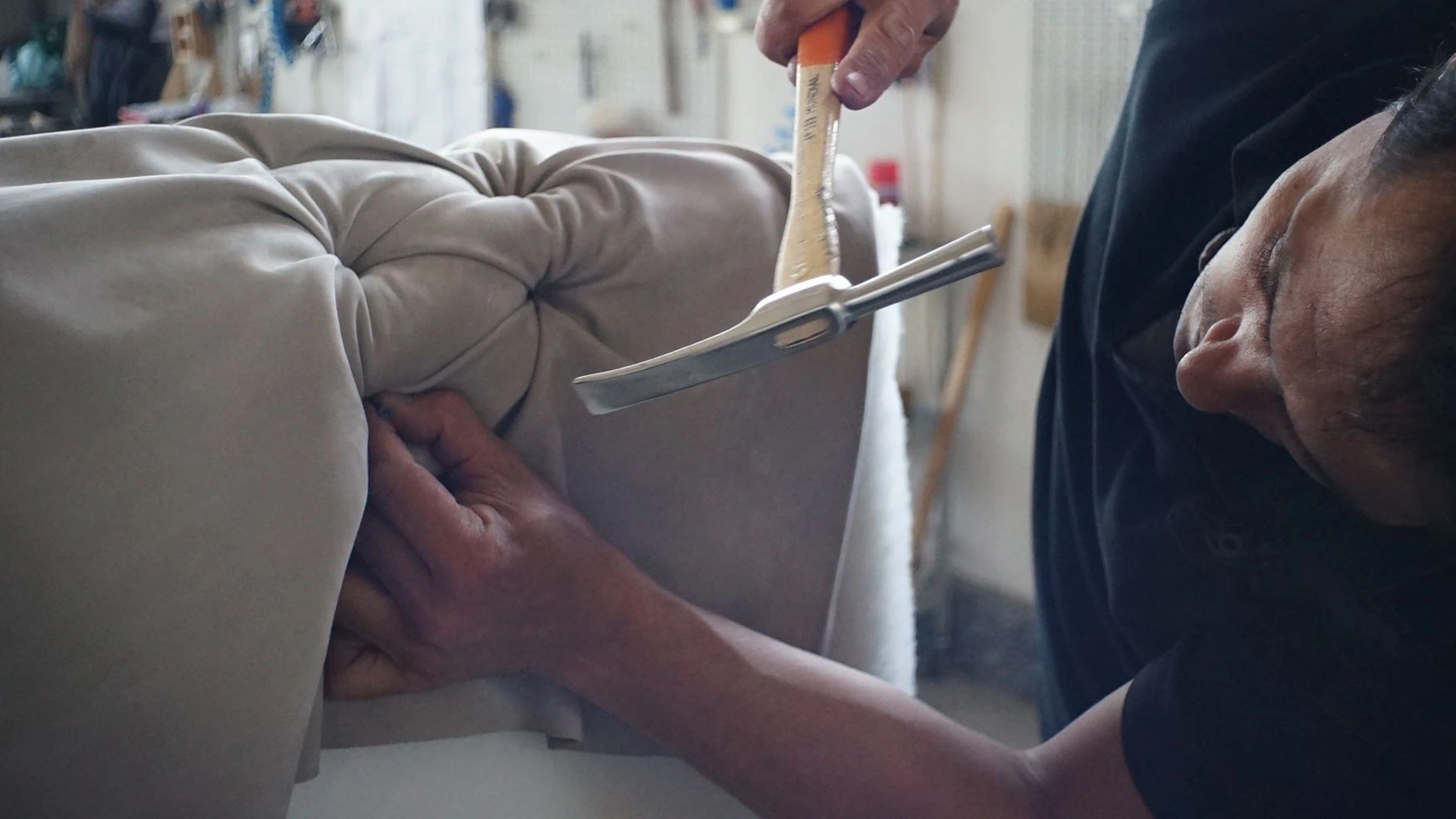
Furniture reupholster | Photography by Pixabay.
In the UK, Repair My Office Chair focuses on office chair repair, alterations and remanufacturing for commercial and residential customers in London and surrounding areas. The company extends the life of chairs from brands such as Humanscale, Fritz Hansen and Knoll.
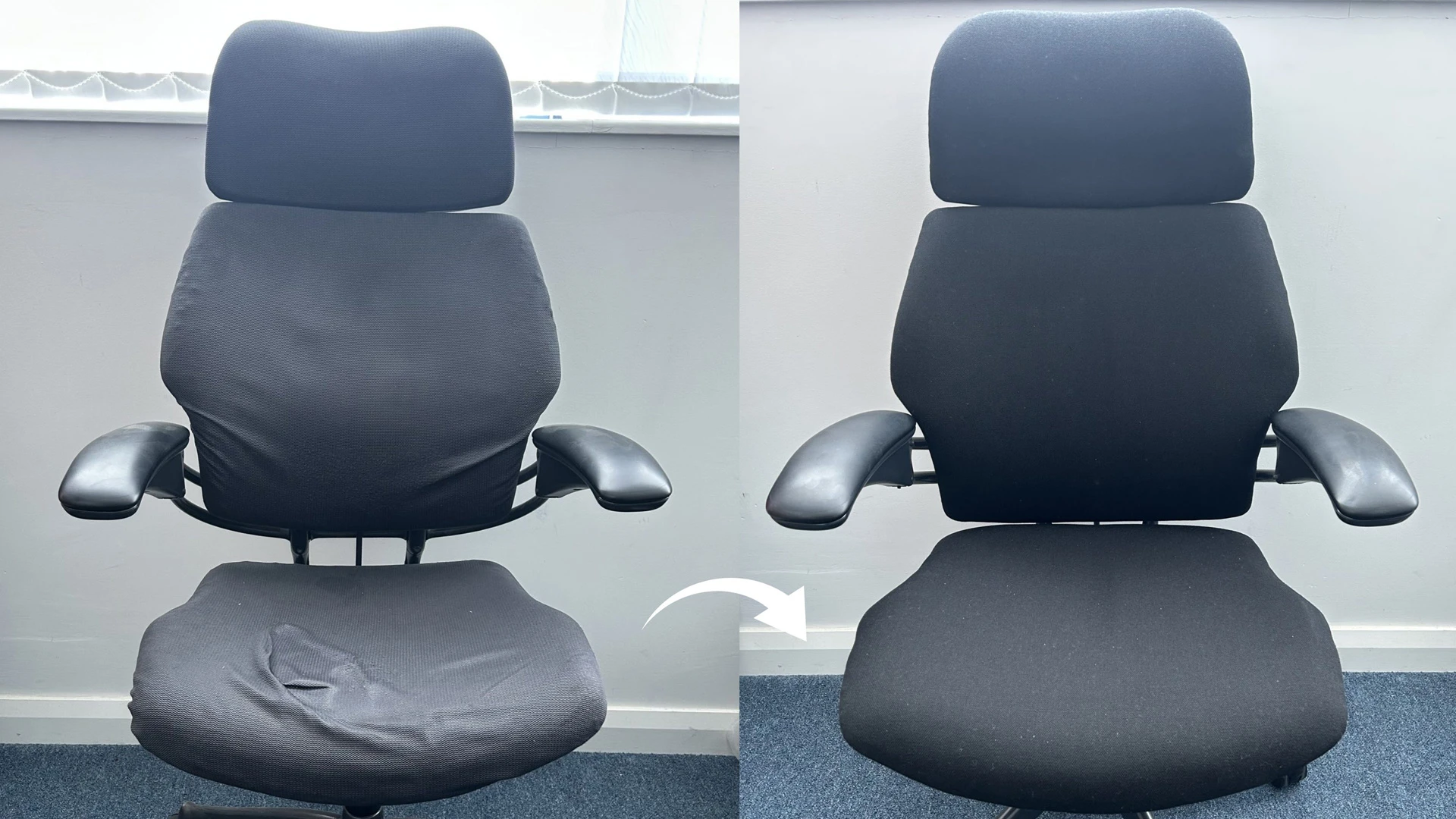
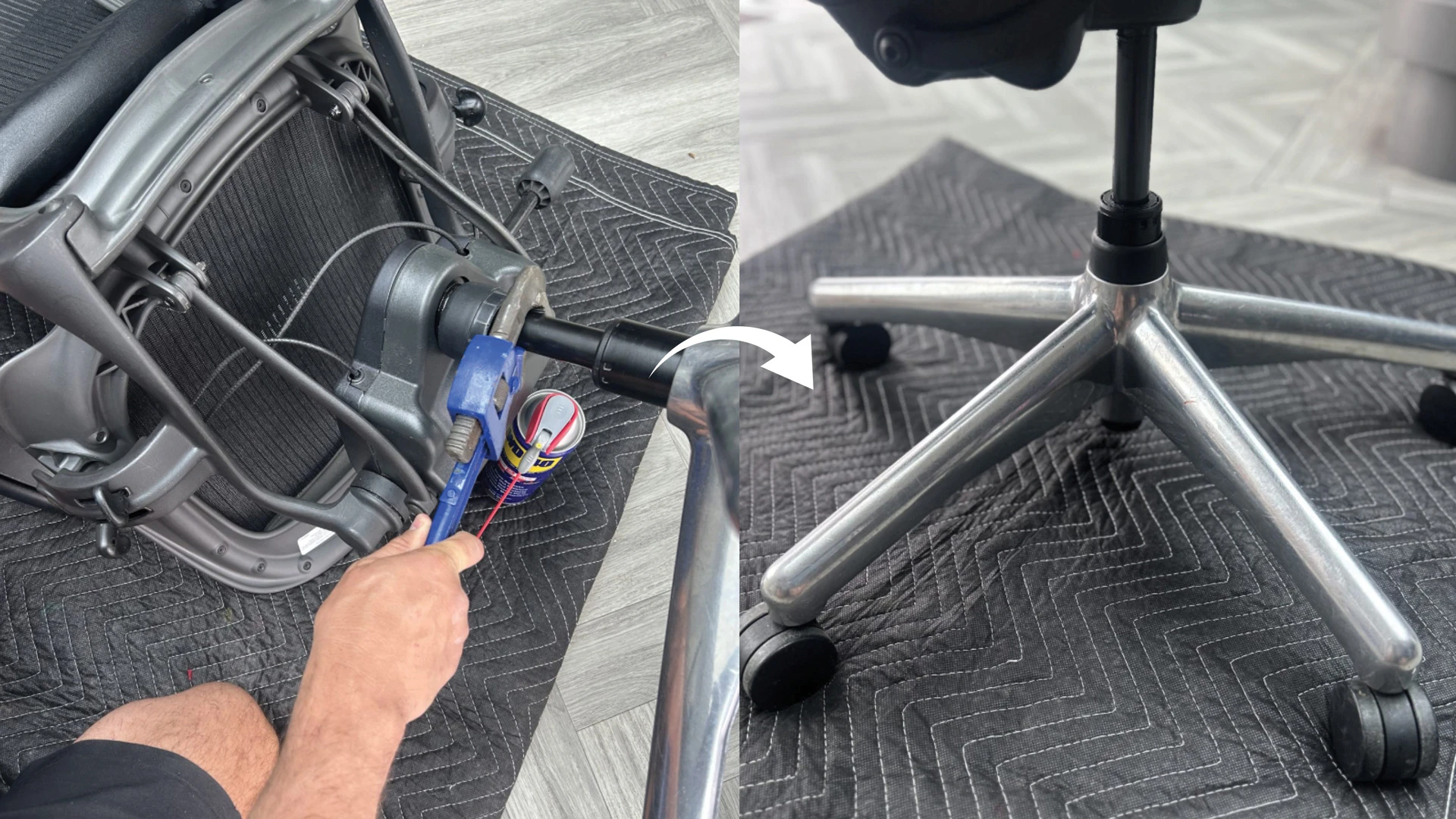
Repair My Office Chair leads businesses and families to local repair services.
For local networks to function well, products need to be identifiable and supported by information about their materials, components and repair needs. Being able to trace where products and their materials come from can make repair, refurbishment and reuse easier. Shorter, more connected supply chains can also increase transparency, helping products remain in use for longer.
Design and Territory: Eight actions for a local future
The examples explored throughout this article offer a range of answers to our initial question:
“What could furniture systems look like if they were more deeply connected to a place?”
The answer is not necessarily to replace global systems with entirely local ones. Instead, it may mean building stronger relationships between resources, ecosystems, makers, knowledge, communities and the products themselves.
These ideas also resonate with the work of visual artist and design educator Lia Krucken. In her book Design and Territory (“Design e Território,” original book name in Portuguese), Krucken proposes eight actions that offer useful inspiration for a more locally connected furniture supply chain:
- Recognize - Understand your territory: its resources, communities, traditions and hidden potential.
- Activate - Build networks between designers, makers, producers and researchers.
- Communicate - Tell the story behind materials, techniques and people.
- Protect - Preserve cultural heritage, local knowledge and ecosystems.
- Support - Combine traditional skills with innovation, technology and new opportunities.
- Promote - Raise awareness around local value, sustainable production and responsible consumption.
- Develop - Create products and services connected to local needs, resources and communities.
- Consolidate - Build long-term cooperation networks.
The future of furniture may therefore not be entirely local nor fully global. It could be more distributed in its production, more attentive to regional material resources, more connected to local knowledge, and better equipped to keep products in use through repair, refurbishment and reuse. These approaches can also contribute to wider sustainability goals -- supporting local economies and communities, responsible production, climate action and healthier ecosystems.
When furniture systems become more deeply connected to places, furniture can carry more than function. It can carry the stories of its materials, the knowledge of its makers, the character of its territory, and the relationships that allow it to live on.
Share your local furniture projects, practices and ideas. How are you helping to reshape the future of furniture? Email us at [email protected]. We'd love to hear from you, and promise to respond.
>>> Read the other articles in the 'Long Live Furniture!' series.
SOURCES
Squaring the Circle: Policies from Europe’s Circular Economy Transition
Locally produced
Building a circular supply chain
Sustaining the Local: An Alternative Approach to Sustainable Design
Contributions of Slow Design to the valorization of local identities in sustainable processes
Locally Productive, Globally Connected Self-sufficient Cities
How Local Food Systems Supports Sustainability and Food Access
Design and Territory: Valuing Local Identities and Products
AtFAB Open Source Furniture
Opendesk – a Global Platform for Local Making
Sustainable Wood Furniture - Pfeiferstudio
Uprooted Collection – Jorge Penades
Felted wool as a poly-quality mono-material - Mareen Baumeister
Metiz celebrates Artisan Collaborations at Colourful Mexican Studio
The Wicker Story
'The community is the client': How Fernando Laposse turns craft toward rural regeneration
Repair my Office Chair
Furniture Engineers USA
Locally produced
Building a circular supply chain
Sustaining the Local: An Alternative Approach to Sustainable Design
Contributions of Slow Design to the valorization of local identities in sustainable processes
Locally Productive, Globally Connected Self-sufficient Cities
How Local Food Systems Supports Sustainability and Food Access
Design and Territory: Valuing Local Identities and Products
AtFAB Open Source Furniture
Opendesk – a Global Platform for Local Making
Sustainable Wood Furniture - Pfeiferstudio
Uprooted Collection – Jorge Penades
Felted wool as a poly-quality mono-material - Mareen Baumeister
Metiz celebrates Artisan Collaborations at Colourful Mexican Studio
The Wicker Story
'The community is the client': How Fernando Laposse turns craft toward rural regeneration
Repair my Office Chair
Furniture Engineers USA